



الصفحة 17
الصفحة 17

IUTAM symposium on size effects on material and structural behavior at micron- and nano-scales ; Proceedings of the IUTAM Symposium held in Hong Kong, China, 31 May - 4 June, 2004
A collection of twenty five written contributions by distinguished invited speakers from seven countries to the IUTAM Symposium on Size Effects on Material and Structural Behavior at Micron- and Nano-scales. It contains basic theoretical and experimental aspects of the recent advances in the mechanics research of various size effects.

IUTAM Symposium on Multiscale Modelling of Damage and Fracture Processes in Composite Materials ; Proceedings of the IUTAM Symposium held in Kazimierz Dolny, Poland, 23-27 May 2005
This volume constitutes the Proceedings of the IUTAM Symposium. The main aim of the Symposium was to discuss the basic principles of damage growth and fracture processes in different types of composites: ceramic, polymer and metal matrix composites, cement and bituminous composites and wood. Nowadays, it is widely recognized that important macroscopic properties like the macroscopic stiffness and strength, are governed by processes that occur at one to several scales below the level of observation starting from nanoscale.

IUTAM Symposium on Mechanical Behavior and Micro-Mechanics of Nanostructured Materials ; Proceedings of the IUTAM Symposium held in Beijing, China, June 27-30, 2005
Contains the proceedings of the IUTAM Symposium on Mechanical Behavior and Micro-mechanics of Nanostructured Materials, held in Beijing, China, June 27-30, 2005. This work is intended for those working in solid mechanics, materials science, solid state physics, and biomaterials.
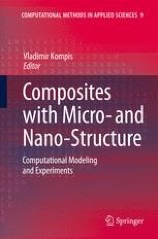
Composites with micro- and nano-structure : Computational modeling and experiments
The book contains atomistic and continuum numerical methods and experimental validation for composite materials reinforced with particles or fibres, porous materials, homogenization and other important topics for research in this field.
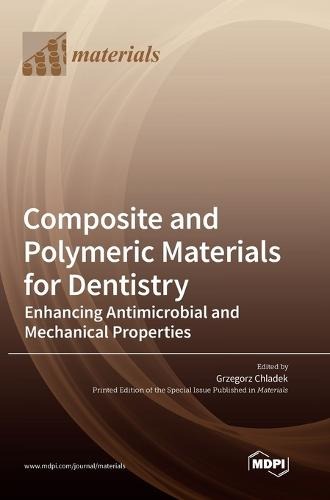
Composite and polymeric materials for dentistry: enhancing antimicrobial and mechanical properties
Focuses on enhancing antimicrobial and mechanical properties of polymeric materials and composites for dentistry. In recent years, special attention has been focused on the possibility of giving materials new or improved properties by the introduction of nano or submicron size additives, fibers or whiskers. Another area of research is the application of antibacterial monomers, which can be copolymerized in resins to kill oral pathogenic microflora. In addition, we are currently looking for new data regarding colonization of dental materials by pathogenic microbes and their influence on the other properties. Further, there are many new commercially available materials which should be investigated to verify their properties, which is important from the point of view of clinical practice. Original new research and reviews related to any of the topics mentioned above indicate the current directions of development of dental materials.
Complexity in chemistry, biology, and ecology
This book, written by an international team of experts, introduces the reader to various aspects of complexity theory and its applications. It illustrates the latest trends in science to go beyond the mechanistic Newtonian view of the world by shifting the focus to self-organization, adaptation, and emergent phenomena. The authors discuss these properties of complex systems in biology, ecology and chemistry along with the structure and interconnectedness of the "layers" of complexity. The qualitative description is complemented by a discussion of methods for complexity quantification. Networks are covered in detail as a universal language of the complex world.
Complex Engineered Systems : Science Meets Technology
This volume examines the difficulties that arise in creating highly complex engineered systems and new approaches that are being adopted. Topics addressed range from the formal representation and classification of distributed networked systems to revolutionary engineering practices inspired by biological evolution. By bringing together the latest research in Complex Engineered Systems, this book sheds light on the current state and future course of this emerging field.

Circular RNAs
Guide readers through circular RNA purification, in silico characterization, circRNA detection, sequence validation, quantification , techniques related to gain- and loss-of-function approaches, circular RNA synthesis, split ligation, engineering, nanoparticle packaging, RNA modifications on circular RNA biogenesis, RNA translation potential, and vaccines based on circular RNAs.
Chitosan-based nanocomposite materials : fabrication, characterization and biomedical applications
Discovery in the use of chitosan-based nanocomposites in biomedical applications, including the scope to which these novel materials have been incorporated by the community. It provides an exceptional insight into the strategies for the synthesis and chemical modifications of chitosan, characterization techniques, their use as anticancer agents, antimicrobial, antiviral, and antifungal agents, their role in the biomedical field, and applications in drug delivery, gene therapy, dentistry, orthopedics, etc. This book will also emphasize the challenges with previous signs of progress and way for further research, details relating to the current pioneering technology, and future perspectives with a multidisciplinary approach. Furthermore, it presents up-to-date information on the economics, toxicity, and regulations related to these novel materials.
Chitosan : properties and applications in bioengineering
Presents a review of chitosan, including information regarding its structure, main properties, available sources, extraction, and processing techniques. It presents the different applications of chitosan as a biomaterial in fields such as medicine and the agricultural, cosmetology, pharmaceutical, and food industries to have readers obtain a more technical vision of the current use of this biopolymer.
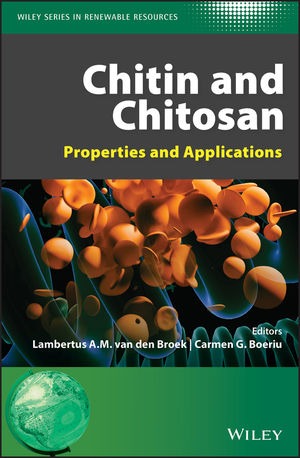
Chitin and Chitosan : Properties and Applications
Chitin and Chitosan: Properties and Applications presents a comprehensive review of the isolation, properties and applications of chitin and chitosan. These promising biomaterials have the potential to be broadly applied and there is a growing market for these biopolymers in areas such as medical and pharmaceutical, packaging, agricultural, textile, cosmetics, nanoparticles and more.
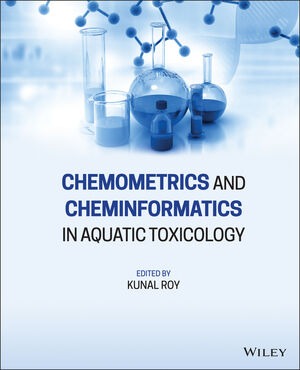
Chemometrics and Cheminformatics in Aquatic Toxicology
Chemometrics and Cheminformatics in Aquatic Toxicology delivers an exploration of the existing and emerging problems of contamination of the aquatic environment through various metal and organic pollutants, including industrial chemicals, pharmaceuticals, cosmetics, biocides, nanomaterials, pesticides, surfactants, dyes, and more. The book discusses different chemometric and cheminformatic tools for non-experts and their application to the analysis and modeling of toxicity data of chemicals to various aquatic organisms.
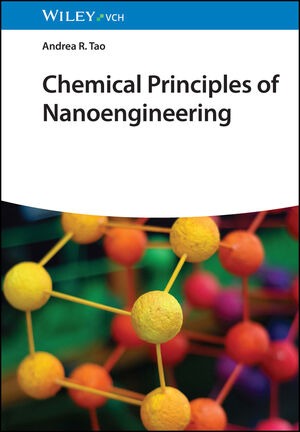
Chemical principles of nanoengineering
Nanomaterials, which possess at least one dimension lower than 100 nanometers, are increasingly at the forefront of technological and chemical innovation. The properties of these uniquely minute materials give them distinctive applications across a huge range of industries and research fields. It is therefore critical that the next generation of engineers and materials scientists understand these materials, their chemical properties, and how they form bonds

Charge Migration in DNA : Perspectives from Physics, Chemistry, and Biology
Charge migration through DNA has been the focus of considerable interest in recent years. A deeper understanding of the nature of charge transfer and transport along the double helix is important in fields as diverse as physics, chemistry and nanotechnology. It has also important implications in biology, in particular in DNA damage and repair. This book presents contributions from an international team of researchers active in this field.
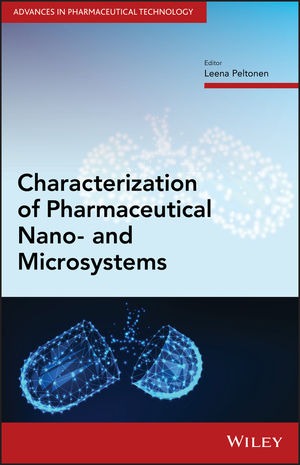
Characterization of Pharmaceutical Nano- and Microsystems
Offers readers a full understanding of the basic physicochemical characteristics, material properties and differences between micro- and nanosystems. It explains how and why greater experience and more reliable measurement techniques are required as particle size shrinks, and the measured phenomena grow weaker.
CFN Lectures on Functional Nanostructures : Vol.1
This book contains a selection of lectures from the first Summer School organized by the Center for Functional Nanostructures (CFN) at the University of Karlsruhe. The mission of the CFN is to carry out research in the following areas: nanophotonics, nanoelectronics, molecular nanostructures and nanostructured materials. The aim of the summer schools is mainly to exchange new ideas and illustrate emerging research methodologies through a series of lectures. This is reflected by both the selection of topics addressed in the present volume as well as the tutorial aspect of the contributions.
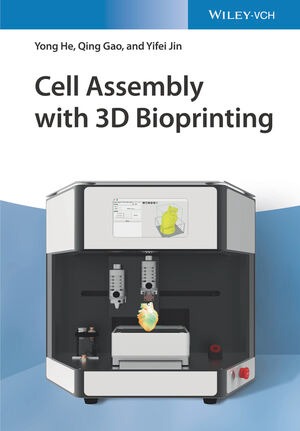
Cell assembly with 3D bioprinting
Detailed, highly illustrated chapters cover different bioprinting approaches and their applications, including coaxial bioprinting, digital light projection, direct ink writing, liquid support bath-assisted 3D printing, and microgel-, microfiber-, and microfluidics-based biofabrication. The book includes practical examples of 3D bioprinting, a protocol for typical 3D bioprinting, and relevant experimental data drawn from recent research.
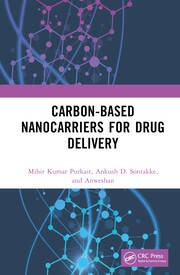
Carbon-based nanocarriers for drug delivery
Carbon-Based Nanocarriers for Drug Delivery enlists the latitudes and advancements in the synthesis processes, functionalization, and applications of carbon-based nanomaterials (CBNs) in targeted drug delivery systems (DDSs). It covers the applicability and suitability of CBNs as nanocarriers for efficient drug delivery application via elucidating the recent advancements in CBNs, their functionalized and innovative derivatives, and the relevant case studies. The book explores the necessity, efficacy, toxicological aspects, and challenges for the application of CBN in targeted DDSs.
Carbon Nanotubes : From Basic Research to Nanotechnology
A nanotube can bend easily but still is very robust. The nanotubes can be manipulated and contacted to external electrodes. Their diameter is in the nanometer range, whereas their length may exceed several micrometers, if not several millimeters. In diameter, the nanotubes behave like molecules with quantized energy levels, while in length, they behave like a crystal with a continuous distribution of momenta. Depending on its exact atomic structure, a single-wall nanotube –that is to say a nanotube composed of just one rolled-up graphene sheet– may be either a metal or a semiconductor. The nanotubes can carry a large electric current, they are also good thermal conductors.
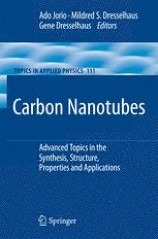
Carbon Nanotubes : Advanced Topics in the Synthesis, Structure, Properties and Applications
The carbon nanotubes field has evolved substantially since the publication of the bestseller "Carbon Nanotubes: Synthesis, Structure, Properties and Applications". The present volume builds on the generic aspects of the aforementioned book, which emphasizes the fundamentals, with the new volume emphasizing areas that have grown rapidly since the first volume, guiding future directions where research is needed and highlighting applications. The volume also includes an emphasis on areas like graphene, other carbon-like and other tube-like materials because these fields are likely to affect and influence developments in nanotubes in the next 5 years.
