



الصفحة 17
الصفحة 17

Computational earthquake physics ; Part I
The book is divided into two parts: The present volume - Part I - focuses on microscopic simulation, scaling physics, dynamic rapture and wave propagation, earthquake generation, cycle and seismic pattern. Topics covered range from numerical developments, rupture and gouge studies of the particle model, Liquefied Cracks and Rayleigh Wave Physics, studies of catastrophic failure and critical sensitivity, numerical and theoretical studies of crack propagation, developments in finite difference methods for modeling faults, long time scale simulation of interacting fault systems, modeling of crustal deformation, through to mantle convection.

Comets and the Origin and Evolution of Life
Nine years after the publication of Comets and the Origin and Evolution of Life, one of the pioneering books in Astrobiology, this second edition revisits the role comets may have played in the origins and evolution of life. Recent analyses of Antarctic micrometeorites and ancient rocks in Australia and South Africa, the continuing progress in discovering complex organic macromolecules in comets, protostars and interstellar clouds, new insights into organic synthesis in comets, and numerical simulations of comet impacts on the Earth and other members of the solar system yield a spectacular wealth of new results.

Colloidal Transport in Porous Media
Colloids are known to be the often neglected phase for the transport of pollutants in aquatic ecosystems. The book covers the basics of abiotic colloid characterization, of biocolloids and biofilms, the resulting transport phenomena and their engineering aspects. The subject is presented from an international group of leading specialists devoted to colloidal sciences. The contributions include theoretical considerations, results from model experiments as well as field studies. The information given will serve students and scientists interested in the analytical, chemical, microbiological, geological and hydrological aspects of material transport in aquatic systems and soils.

Cold-Water Corals and Ecosystems
Following the exciting exploration of hot vent and cold seep ecosystems, the rediscovery of cold-water coral ecosystems with high-technology instrumentation is currently another hot topic in multidisciplinary marine research. Conventionally, coral reefs are regarded as restricted to warm and well-illuminated tropical seas, not associated with cold and dark waters of higher latitudes. However, ongoing scientific missions have shed light on the global significance of this overlooked ecosystem. Cold-water coral ecosystems are involved in the formation of large seabed structures such as reefs and giant carbonate mounds, and they represent unexploited paleo-environmental archives of earth history. Like their tropical cousins, cold-water coral ecosystems harbour rich species diversity. Despite the great water depths, commercial interests overlap more and more with the coral occurrences. Human activities already impinge directly on cold-water coral reefs causing severe damage to this vulnerable ecosystem. In this volume, the current key institutions involved in cold-water coral research have contributed 62 state-of-the-art articles from geology and oceanography to biology and conservation.

Cold Region Atmospheric and Hydrologic Studies. The Mackenzie GEWEX Experience: Vol.2: Hydrologic Processes
This book presents decade-long advances in atmospheric research in the Mackenzie River Basin in northern Canada, which encompasses environments representative of most cold areas on Earth. Collaborative efforts by a team of about 100 scientists and engineers have yielded knowledge entirely transferable to other high latitude regions in America, Europe and Asia. Emphases are placed on the investigation of processes (including storm genesis, precipitation, moisture and energy fluxes and frost), and the improvement and application of a suite of models and remote sensing to enhance the assessment of climate variability and water resources.

Cold Region Atmospheric and Hydrologic Studies : The Mackenzie GEWEX Experience ; Vol.1 : Atmospheric Dynamics
This book presents decade-long advances in atmospheric research in the Mackenzie River Basin in northern Canada, which encompasses environments representative of the coldest areas on Earth.

Cold Aqueous Planetary Geochemistry with FREZCHEM : From Modeling to the Search for Life at the Limits
At the core of the technical chapters is the FREZCHEM model, initially developed over many years by one of the authors to quantify aqueous electrolyte properties and chemical thermodynamics at subzero temperatures. FREZCHEM, of general relevance to biogeochemists and geochemical modelers, cold planetary scientists, physicochemists and chemical engineers, is subsequently applied to the exploration of biogeochemical applications to solar systems bodies in general, and to speculations about the limits for life in cold environments in particular.

Coastal Fluxes in the Anthropocene : The Land-Ocean Interactions in the Coastal Zone Project of the International Geosphere-Biosphere Programme
In global coastal zones, the major fabric of goods and services for human welfare as well as global changes are extraordinarily visible. They are shaped by natural Earth systems processes on a planetary scale, which are reflected in a continuously adapting coastal environment. Now, in the "Anthropocene", human society is a greater catalyst for change - impacting and modifying coastal processes. This book synthesizes knowledge on coastal and riverine material fluxes, biogeochemical processes and indications of change, and the human influence, before looking at future research and management needs. It is a milestone rather than a destination on the journey which continues under the new International Geosphere-Biosphere Programme (IGBP), the International Human Dimensions Programme on Global Environmental Change (IHDP) and the LOICZ II (Land-Ocean Interactions in the Coastal Zone) Project.

Coal combustion byproducts and environmental issues
Coal Combustion Byproducts and Environmental Issues addresses the major implications and critical issues surrounding coal combustion products and their impact upon the environment. It provides essential information for scientists conducting research on coal and coal combustion products, but also serves as a valuable reference for a wide variety of researchers and other professionals in the energy industry and in the fields of public health, engineering, and environmental sciences. The ultimate goal of this volume is to benefit both our economy and our environment as humanity enters the second half of the fossil fuel era.

Cloud-Resolving Modeling of Convective Processes
Introduces the framework of cloud-resolving model, methodologies for analysis of modeling outputs, and validation of simulations with observations. The book details important scientific findings in the aspects of surface rainfall processes, precipitation efficiency, dynamic and thermodynamic processes associated with tropical convection, diurnal variations, radiative and cloud microphysical processes associated with development of cloud clusters, air-sea coupling on convective scales, climate equilibrium states, and remote sensing applications.

Cloud Optics
Clouds affect the climate of the Earth, and they are an important factor in the weather. Therefore, their radiative properties must be understood in great detail. This book summarizes current knowledge on cloud optical properties, for example their ability to absorb, transmit, and reflect light, which depends on the clouds’ geometrical and microphysical characteristics such as sizes of droplets and crystals, their shapes, and structures. In addition, problems related to the image transfer through clouds and cloud remote sensing are addressed in this book in great detail. This book can be an important source of information on theoretical cloud optics for cloud physicists, meteorologists and optical engineers.
Mathematical Modelling for Sustainable Development
Mathematics needs Sustainable Development. When science was gradually reinvented in European medieval societies, it was legitimised as contributing to the disclosure of God’s divine creation. The conflicts that emerged became well known as a result of the clash between Galileo and the Church. Science found a new legitimacy through recognition that it was a powerful force against superstition. In the Enlightenment the argument was pushed forward by attributing Progress to the advancement of science: science could produce a better world by promoting rationality. In our modern society, science has become intimately linked to technology. Science for its own sake unfortunately rarely has positive outcomes in terms of research grant applications. Meanwhile, science and technology, and the progress they are supposed to produce, meet with wide scale scepticism. We all know of the current global problems: climate change, resource depletion, a thinning ozone layer, space debris, declining biodiversity, malnutrition, dying ecosystems, global inequity, and the risk of unprecedented nuclear wars
Mathematical Methods for Engineers and Geoscientists
This book introduces and explains classical and modern mathematical procedures as applied to the real problems confronting engineers and geoscientists. Written in a manner that is understandable for students across the breadth of their studies, it lays out the foundations for mastering difficult and sometimes confusing mathematical methods.
Mathematical Foundation of Geodesy : Selected Papers of Torben Krarup
This volume contains selected papers by Torben Krarup, one of the most important geodesists of the 20th century. His writings are mathematically well founded and scientifically relevant. In this impressive collection of papers he demonstrates his rare innovative ability to present significant topics and concepts. Modern students of geodesy can learn a lot from his selection of mathematical tools for solving actual problems. The collection contains the famous booklet "A Contribution to the Mathematical Foundation of Physical Geodesy" from 1969, the unpublished "Molodenskij letters" from 1973, the final version of "Integrated Geodesy" from 1978, "Foundation of a Theory of Elasticity for Geodetic Networks" from 1974, as well as numerous trend setting papers on the theory of adjustment.
Mass Extinction
The present book combines three main aspects: five major mass extinctions; contributions on some other minor extinctions; and more importantly contributions on the current mass extinction.

Martin Waldseemüller’s 'Carta marina' of 1516 : Study and transcription of the long legends
This book presents the first detailed study of one of the most important masterpieces of Renaissance cartography, Martin Waldseemüller’s Carta marina of 1516. By transcribing, translating into English, and detailing the sources of all of the descriptive texts on the map, as well as the sources of many of the images, the book makes the map available to scholars in a wholly unprecedented way.
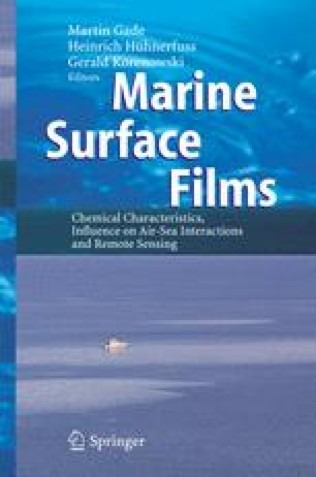
Marine Surface Films : Chemical Characteristics, Influence on Air-Sea Interactions and Remote Sensing
Since the late 1960s, various groups have investigated the influence of marine surface films on mechanisms dominating energy and mass transfer across the ocean/atmosphere interface. However, a compendium summarizing the state-of-the-art research in this field is still missing. The book fills this gap and transfers the accumulated knowledge to the scientific community. After a brief historical chapter basic chemical insights are presented, followed by theoretical and experimental approaches carried out in laboratory facilities. Air-sea interaction experiments are then described and finally, remote sensing applications with sea slicks and crude oil spills are presented.
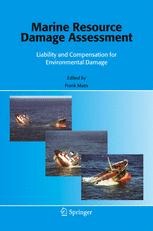
Marine resource damage assessment : Liability and compensation for environmental damage
MARE-DASM research focused on: (i) the estimation and distribution of marine contaminants in order to assess their long term effects (ecotoxicology); (ii) the integration of these result into a Biological Effects SubModel and a mathematical model assessing the risks associated with accidental spillage of oil at sea and the damage this can cause (modelling); (iii) the assessment of the willingness to pay for ecological damage, based on the Contingent Valuation Method (economics); (iv) the development and evaluation of measures to be taken in order to guarantee a sustainable use of the Belgian part of the North Sea, taking into account the economic and social interests and values (social economics); (v) the potential to develop technical and legal procedures that allow ecological damage to the marine environment to be evaluated and compensated, taking into account constraints in national and international liability legislation (legal).
Marine Organic Matter : Biomarkers, Isotopes and DNA
The oceans contain a great biodiversity of marine organisms. They include a rich variety of unusual genes and biochemistries and hence a diverse array of organic compounds ranging from colourful carotenoids and chlorophylls to lipids with structures ranging from the simple to the complex. This volume brings together ten chapters on the occurrence and identification of the lipid biomarkers and of pigments in marine waters. It describes how they can be used in conjunction with stable isotopes and molecular biology to ascertain the sources and fate of organic matter (both natural and pollutant) in the sea and underlying sediments. The authors are each experts in their field and the chapters provide both an overview of the state-of-the-art and knowledge gaps together with abundant detail to satisfy the needs of specialists and non-specialists alike.
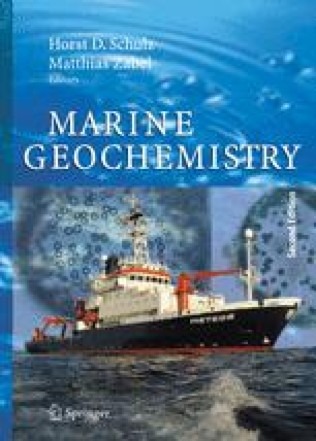
Marine Geochemistry
Since 1980 a considerable amount of scientific research dealing with geochemical processes in marine sediments has been carried out. This textbook summarizes the state of the art in this field of research. The topics comprise the examination of sedimentological and physical properties of the sedimentary solid phase, of pore water and pore water constituents, organic matter as the driving force of most microbiological processes, biotic and abiotic redox reactions, carbonates and stable isotopes as proxies for paleoclimate reconstruction, metal enrichments in ferromanganese nodules and crusts as well as in hot vents and cold seeps on the seafloor. A new chapter describes properties, occurrence and formation of gas hydrates in marine sediments. The textbook ends with a chapter on model conceptions and computer models to quantify processes of early diagenesis.
