



الصفحة 16
الصفحة 16
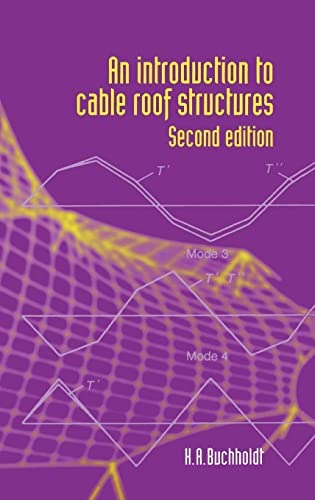
An introduction to cable roof structures ; 2nd ed.
Provides structural engineers with a concise introduction to the architectural, structural and technological aspects of cable roofs, and supplies sufficient information for engineers to carry out their own designs. The improved methods for generating wind and earthquake histories have been included as the trend in modern design codes seem increasingly to require that dynamic response of other forms of non-linear structures such as guyed masts is considered at the design stage.
Algal Chemical Ecology
This is the first ever book devoted entirely to the chemical ecology of algae. Algae from both marine and freshwater habitats are covered, as are macroalgae (seaweeds) and microalgae (including phytoplankton). While its main emphasis is on the ecological rather than chemical aspects of the field, the book also includes a unique introductory chapter intended as a primer on algal natural products chemistry for ecologists. It elucidates the roles of chemical defenses in various regions and habitats, of DMSP, oxidative burst responses, and herbivore offense. Topics such as algal sensory chemical ecology and defenses against ultraviolet radiation are also treated, and an introduction to the chemical ecology of phytoplankton is provided.
Agriculture and Climate Beyond 2015 : A New Perspective on Future Land Use Patterns
Interactions between agriculture, climate and patterns of land use are complex. Major changes in agriculture, and land use patterns are foreseen in the next couple of decades in response to shifts in climate, greenhouse gas management initiatives, population growth and other forces. The book explores key interactions between changes in agriculture, patterns of land use and efforts to reduce greenhouse emissions from agriculture. The volume is based on inter-disciplinary science and policy interactions, exploring the way land use may aid in addressing or be affected by the onset of climate change and alterations in food demand. Future forces shaping land use decisions are examined, and its sensitivity to climate change is highlighted. Patterns of land use and the agricultural role in climate change mitigation are explored. Also, policy and social responses to the new perspectives on future land use patterns are identified. The perspective of the book is beyond the year 2015.
Agricultural biodiversity and biotechnology in economic development
The topics addressed in this book are of vital importance to the survival of humankind. Agricultural biodiversity, encompassing genetic diversity as well as human knowledge, is the base upon which agricultural production has been built, and protecting this resource is critical to ensuring the capacity of current and future generations to adapt to unforeseen challenges. Agricultural biodiversity underpins the productivity of all agricultural systems and is particularly important for poor and food-insecure farmers, who maintain highly diverse production systems in response to the marginal and risky production conditions they operate under. Understanding the importance of agricultural biodiversity in the livelihoods of the food insecure and enhancing its performance through the use of a variety of tools, including biotechnology, is a critically important issue in the world today

Agent Technology from a Formal Perspective
The field of agent & multi-agent systems is experiencing tremendous growth. At the same time the field of formal methods is blossoming and has proven its importance in industrial and government applications. The FAABS (Formal Approaches to Agent-Based Systems) workshops, merging the concerns of the two fields, provided a timely and compelling platform on which the growing concerns and requirement of agent-based systems users that systems should be accompanied by behavioral assurances, could be discussed. This book has arisen from the overwhelming response to FAABS ’00, ’02 & ’04 and all chapters are updated or represent new research, and are designed to provide a more in-depth treatment of the topic. Examples of how others have applied formal methods to agent-based systems are included, plus formal method tools & techniques that readers can apply to their own systems.
Africa-Europe Research and Innovation Cooperation : Global Challenges, Bi-regional Responses
Concerned with the evolution and achievements of cooperation in research and innovation between Africa and Europe, and points to the need for more diversified funding and finance mechanisms, and for novel models of collaboration to attract new actors and innovative ideas. It reflects on the political, economic, diplomatic and scientific rationale for cooperation, while also examining practical developments, illustrated with examples, in the fields of food security, health, and climate change. The need to mobilise scientific knowledge and to ensure equality and fairness in the cooperation are recurrent themes. Africa-Europe Cooperation in Research and Innovation is essential reading for policy makers and researchers in international relations and science diplomacy.

Adverse Food Reaction
Adverse food reaction is a broad term indicating a link between an ingestion of a food and an abnormal response. Adverse reactions to foods, aside from those considered toxic, are caused by a particular individual intolerance towards commonly tolerated foods. Intolerance derived from an immunological mechanism is referred to as Food Allergy, the non-immunological form is called Food Intolerance. IgE-mediated food allergy is the most common and dangerous type of adverse food reaction. It is initiated by an impairment of normal Oral Tolerance to food in predisposed individuals (atopic). Food allergy produces respiratory, gastrointestinal, cutaneous and cardiovascular symptoms but often generalized, life-threatening symptoms manifest at a rapid rate-anaphylactic shock.
Advancing Human Assessment : The Methodological, Psychological and Policy Contributions of ETS
Describes the extensive contributions made toward the advancement of human assessment by scientists from one of the world’s leading research institutions, Educational Testing Service. The book’s four major sections detail research and development in measurement and statistics, education policy analysis and evaluation, scientific psychology, and validity. Many of the developments presented have become de-facto standards in educational and psychological measurement, including in item response theory (IRT), linking and equating, differential item functioning (DIF), and educational surveys like the National Assessment of Educational Progress (NAEP), the Programme of international Student Assessment (PISA), the Progress of International Reading Literacy Study (PIRLS) and the Trends in Mathematics and Science Study (TIMSS). In addition to its comprehensive coverage of contributions to the theory and methodology of educational and psychological measurement and statistics,
Advances in XML information retrieval and Evaluation ; 4th International workshop of the initiative for the evaluation of XML retrieval, INEX 2005, Dagstuhl Castle, Germany, November 28-30, 2005. Revised and Selected Papers
Content-oriented XML retrieval has been receiving increasing interest due to the widespread use of eXtensible Markup Language (XML), which is becoming a standard document format on the Web, in digital libraries,and publishing. By exploiting the enriched source of syntactic and semantic information that XML markup provides, XML information retrieval (IR) systems aim to implement a more focused retrieval strategy and return document components, so-called XML elements – instead of complete documents – in response to a user query. This focused retrieval approach is of particular bene?t for collections containing long documents or documents covering a wide variety of topics (e.g., books, user manuals, legal documents, etc.), where users’ e?ort to locate relevant content can be reduced by directing them to the most relevant parts of the documents.

Advances in visual computing ; Vol. 4292 ; 2nd International symposium, ISVC 2006, Lake Tahoe, NV, USA, November 6-8, 2006, Proceedings, Part II
This year, the program consisted of 13 oral sessions, one poster session, ten special tracks, and six keynote presentations. The response to the call for - pers was very strong. We received more than twice the papers received last year. Specifcally, we received over 280 submissions for the main symposium from which we accepted 65 papers for oral presentation (23% acceptance) and 56 papers for poster presentation (20% acceptance). Special track papers were solicited separately through the Organizing and Program Committees of each track. A total of 57 papers were accepted for presentation in the special tracks. All papers were reviewed with an emphasis on potential to contribute to the state of the art in the ?eld. Selection criteria included accuracy and originality of ideas, clarity and signi?cance of results, and presentation quality. The review process was quite rigorous, involving two to three independent blind reviews followed by several days of discussion.

Advances in Visual Computing ; Vol. 4291 ; 2nd International Symposium, ISVC 2006, Lake Tahoe, NV, USA, November 6-8, 2006, Proceedings, Part I
This year, the program consisted of 13 oral sessions, one poster session, ten special tracks, and six keynote presentations. The response to the call for - pers was very strong. We received more than twice the papers received last year. Specifcally, we received over 280 submissions for the main symposium from which we accepted 65 papers for oral presentation (23% acceptance) and 56 papers for poster presentation (20% acceptance). Special track papers were solicited separately through the Organizing and Program Committees of each track. A total of 57 papers were accepted for presentation in the special tracks. All papers were reviewed with an emphasis on potential to contribute to the state of the art in the ?eld. Selection criteria included accuracy and originality of ideas, clarity and signi?cance of results, and presentation quality. The review process was quite rigorous, involving two to three independent blind reviews followed by several days of discussion. During the discussion period we tried to correct anomalies and errors that might have existed in the initial reviews.

Advances in multiple Sclerosis and Experimental Demyelinating Diseases
Challenging Charcot’s hypothesis that inflammatory response is the primary contributor to demyelination, Dr. Rodriguez and colleagues take a fresh, bold look at the causes and possible treatments of MS.Assuming oligodendrocyte injury as a prerequisite to MS, the authors explore viruses, toxins and genetic defects as possible culprits. They present novel methods to interrupt and reverse demyelination. This book examines the correlation between axonal loss and clinical deficits, including the implied role of the CD8+ T cell and perforin. It assesses proteases, specifically, kallikrein 6, which are strongly associated with active demyelination. By directing natural autoantibodies against oligodendrocytes that demonstrate remyelination in animal models, the authors envision clinical trials for remyelination enhancement.

Advances in flavonoids for human health and prevention of diseases
In response to the recent upsurge of interest in the therapeutic potential of medicinal plants, with their promising phenolic compounds, this new book offers an important overview of advances in the applications of flavonoids for health. The book explores the nutritional and pharmacological properties of polyphenols and flavonoids, including their ability to prevent the start and development of diseases and how they aid in the management of several chronic pathological illnesses, including cancer, diabetes, cardiovascular disease, neuro-degenerative illness and aging, pregnancy-induced disorders, and others. Also discussed in depth are the properties, classes, and degrees that formulate a phenolic compound and which subsequently supports the development of drugs/products with health benefits.

Advances in Energy System Optimization : Proceedings of the 2nd International Symposium on Energy System Optimization
The papers presented in this book address diverse challenges in decarbonizing energy systems, ranging from operational to investment planning problems, from market economics to technical and environmental considerations, from distribution grids to transmission grids, and from theoretical considerations to data provision concerns and applied case studies.

Adsorption and Diffusion
Molecular Sieves - Science and Technology covers, in a comprehensive manner, the science and technology of zeolites and all related microporous and mesoporous materials. Authored by renowned experts, the contributions to this handbook-like series are grouped together topically in such a way that each volume deals with a specific sub-field. Volume 7 is treating fundamentals and analyses of adsorption and diffusion in zeolites including single-file diffusion, i.e. phenomena of basic importance, especially with respect to separation processes and catalysis. Various methods of measuring adsorption and diffusion are described and discussed, i.e. techniques such as chromatographic, gravimetric and barometric uptake and desorption, nuclear magnetic resonance, infrared spectroscopy, interference microscopy, neutron scattering, frequency response as well as proton profiling.

Adaptive Techniques for Dynamic Processor Optimization : Theory and Practice
This book discusses the different approaches and responses to adaptive techniques used for processor power, frequency and functionality optimization. Adaptive Techniques for Dynamic Processor Optimization: Theory and Practice includes chapter contributions that explore promising approaches and present the supporting data.

250 Things a Landscape Architect Should Know
In this book 50 landscape architects from Europe, North and South America, Asia and Australia each give five responses. These include practitioners and teachers, young start-ups as well as internationally established firms. The publication illustrates the complex and dynamic nature of the discipline, and presents a diverse cross-section of the core expertise of this field. At the same time, it allows the reader to trace the individual attitudes into which geographical conditions, social contexts and political circumstances flow.
10 Years Southeast European Cooperative Initiative : From Dayton to Brussels
The Southeast European Cooperative Initiative (SECI) was the first international instrument for "peace keeping and peace making". Conceived by the United States with full partnership and participation of the European Union, SECI was a response to the Dayton Agreement. SECI was convinced that sending troops and diplomats did not suffice. It called for a new strategy and approach that would promote economic and social development through regional cooperation. SECI understood that despite their differences, the countries of South East Europe shared many mutual concerns. For the international community, SECI was a prelude to a broader instrument - the Stability Pact for South Eastern Europe, launched in 1999. The approach was a success! This compendium of documents, agreements, analyses and essays gives a glimpse into decision-making processes and results achieved.
