



الصفحة 15
الصفحة 15

Genetic surgery : from genes to solutions
As a tool for modifying the genome, gene editing technologies has developed rapidly in recent years, the application of these technologies in basic biomedical research has yielded significant advances in identifying and studying key molecular targets relevant to human diseases and their treatment. The clinical translation of genome editing techniques offers unprecedented biomedical engineering capabilities in the diagnosis, prevention, and treatment of disease or disability...

Genetic Basis for Respiratory Control Disorders
The objective of the book is to supply state-of-the-art contributions about all aspects of respiratory control genetics, from the molecular to the system level. The book aims to review the full spectrum of available knowledge, which starts with early physiological studies in health and disease in humans and studies in rodents that suggested a hereditary component to respiratory control. The spectrum extends to recent work elucidating crucial molecular aspects of respiratory control development, from early embryonic specifications in the neural tube to the function of respiratory rhythm generators.

Genes, development, and cancer : The life and work of Edward B. Lewis
Edward B. Lewis' science is the bridge linking experimental genetics as conducted in the first half of the twentieth century, and the powerful molecular genetic approaches that revolutionized the field in its last quarter. For the first time Lewis' key publications in the fields of genetics, developmental biology, radiation and cancer are compiled within one volume.

General Concepts in Integrated Pest and Disease Management
The first volume of the Integrated Management of Plant Pests and Diseases book series presents general concepts on integrated pest and disease management, organized in three sections. Section one (modeling, management, environment) includes chapters on infection models, resurgence and replacement. The second section (emerging technologies) includes remote sensing and information technology. In the third section (molecular aspects) the management of insect-borne viruses with transmission interference.

Gene Therapy of Autoimmune Disease
Gene Therapy of Autoimmune Diseases comprehensively reviews research in gene therapy for autoimmune diseases with viral or non-viral vectors. Gene therapy offers the possibility of long-term, continuous delivery of a wide variety of immunosuppressive, anti-inflammatory, or tolerance-inducing agents. Moreover, highly specific genetically modified cells can be produced. This book discusses the most promising avenues in this exciting new field.

Gene Therapy and Gene Delivery Systems
Advances in Biochemical Engineering/Biotechnology reviews actual trends in modern biotechnology. Its aim is to cover all aspects of this interdisciplinary technology where knowledge, methods and expertise are required for chemistry, biochemistry, micro-biology, genetics, chemical engineering and computer science

Galactose Regulon of Yeast : From Genetics to Systems Biology
The galactose regulon of yeast is one of the best studied regulons. It is an ideal paradigm for demonstrating fundamental and evolving concepts in biology and is used in this book as a model system to explain various facets of conventional and modern biology. The book starts with a brief historical overview on yeast research, i.e. early observations in enzyme adaptation, classical genetics, formulating hypotheses based on genetic inference. This is followed by molecular genetics of the galactose regulon, isolation of genes and testing of the hypotheses. The power of mutational analysis in deciphering molecular mechanisms is conveyed. Further, contemporary topics such as genomics, evolution, single cell analysis of transcriptional switching, binary and graded responses, biological consequences of feed back regulation in genetic circuits, and stochasticity are addressed.
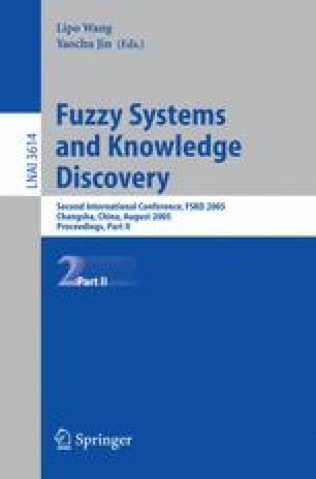
Fuzzy systems and knowledge discovery ; Vol. 3614 ; 2nd International Conference, FSKD 2005, Changsha, China, August 27-29, 2005, Proceedings, Part II
This book and its sister volume, LNAI 3613 and 3614, constitute the proce- ings of the Second International Conference on Fuzzy Systems and Knowledge Discovery (FSKD 2005), jointly held with the First International Conference on Natural Computation (ICNC 2005, LNCS 3610, 3611, and 3612) from - gust 27–29, 2005 in Changsha, Hunan, China. FSKD 2005 successfully attracted 1249 submissions from 32 countries/regions (the joint ICNC-FSKD 2005 received 3136 submissions). After rigorous reviews, 333 high-quality papers, i. e. , 206 long papers and 127 short papers, were included in the FSKD 2005 proceedings, r- resenting an acceptance rate of 26. 7%. The ICNC-FSKD 2005 conference featured the most up-to-date research - sults in computational algorithms inspired from nature, including biological, e- logical, and physical systems. It is an exciting and emerging interdisciplinary area in which a wide range of techniques and methods are being studied for dealing with large, complex, and dynamic problems. The joint conferences also promoted cross-fertilization over these exciting and yet closely-related areas, which had a signi?cant impact on the advancement of these important technologies. Speci?c areas included computation with words, fuzzy computation, granular com- tation, neural computation, quantum computation, evolutionary computation, DNA computation, chemical computation, information processing in cells and tissues, molecular computation, arti?cial life, swarm intelligence, ants colony, arti?cial immune systems, etc. , with innovative applications to knowledge d- covery, ?nance, operations research, and more.

Fuzzy systems and knowledge discovery ; Vol. 3613 ; 2nd International Conference, FSKD 2005, Changsha, China, August 27-29, 2005, Proceedings, Part I
This book and its sister volume, LNAI 3613 and 3614, constitute the proce- ings of the Second International Conference on Fuzzy Systems and Knowledge Discovery (FSKD 2005), jointly held with the First International Conference on Natural Computation (ICNC 2005, LNCS 3610, 3611, and 3612) from - gust 27–29, 2005 in Changsha, Hunan, China. FSKD 2005 successfully attracted 1249 submissions from 32 countries/regions (the joint ICNC-FSKD 2005 received 3136 submissions). After rigorous reviews, 333 high-quality papers, i. e. , 206 long papers and 127 short papers, were included in the FSKD 2005 proceedings, r- resenting an acceptance rate of 26. 7%. The ICNC-FSKD 2005 conference featured the most up-to-date research - sults in computational algorithms inspired from nature, including biological, e- logical, and physical systems. It is an exciting and emerging interdisciplinary area in which a wide range of techniques and methods are being studied for dealing with large, complex, and dynamic problems. The joint conferences also promoted cross-fertilization over these exciting and yet closely-related areas, which had a signi?cant impact on the advancement of these important technologies. Speci?c areas included computation with words, fuzzy computation, granular com- tation, neural computation, quantum computation, evolutionary computation, DNA computation, chemical computation, information processing in cells and tissues, molecular computation, arti?cial life, swarm intelligence, ants colony, arti?cial immune systems, etc. , with innovative applications to knowledge d- covery, ?nance, operations research, and more.

Functional ultrastructure: Atlas of tissue biology and pathology
The quality of data represented by the a growing tendency to substitute modern light mic- images of cells and tissues had been perfected to a very scopic techniques for electron microscopy because it is high level by the great microscopists of the era including less technically demanding and is more readily available. This atlas reminds us that the images that we see in leading tion obtained by electron microscopy is invaluable and journals for the most part do not reach the same techni- has no substitute.

Functional MRI : Basic principles and clinical applications
This practical and timely volume presents an overview of the principles of fMRI and explains key concepts, including scanning methodologies, experimental research design, and data analysis. Informative discussions cover the technical and clinical challenges associated with fMRI. A neuroanatomical atlas adds to the sensible approach and serves as a useful reference by clearly illustrating normal functioning for important areas of the brain.

Functional Molecular Nanostructures
in This book some recent advances in the structural design of nanoscale assemblies are shown, along with examples from the following areas: supramolecular catalysis, photoactive assemblies, molecular recognition and switches, and electroactive assemblies.The last decade has witnessed an unprecedented pursuit of discrete, nanoscale supramolecular aggregates, built by modern methods of self-assembly strategies. Several efficient new synthetic methods have been developed for engineering spectacular multicomponentsupramolecular aggregates.

Functional Hydrogels in Drug Delivery : Key Features and Future Perspectives
Deals with the synthesis and characterization of hydrogels specifically used as drug delivery systems. Each chapter includes the most recent updates about the different starting materials employed--whether natural and synthetic--and the improvement, such as modifications of synthetic approach and polymerization technique, of their physicochemical and biological properties to synthetize high performing carriers for specific uses, i.e. stimuli-responsive materials, molecularly imprinted polymers, mucoadhesive materials, carrier for the delivery of high molecular weight drugs, and gene-delivery.

Fruits and Nuts
Genome Mapping and Molecular Breeding in Plants presents the current status of the elucidation and improvement of plant genomes of economic interest. The focus is on genetic and physical mapping, positioning, cloning, monitoring of desirable genes by molecular breeding and the most recent advances in genomics. The series comprises seven volumes: Cereals and Millets; Oilseeds; Pulses, Sugar and Tuber Crops; Fruits and Nuts; Vegetables; Technical Crops; and Forest Trees. Fruits and nuts form the largest group among crop plants. Several constraints such as long life cycle, heterozygosity and large plant size caused comparatively slow research progress in the past. The chapters on 20 fruit and nut crops authored by 56 renowned scientists from 12 countries include for the first time comprehensive reviews on mango, banana, olive, pineapple, pistachio, persimmon and papaya. Other crops covered are apple, grape, cherry, plum, peach, pear, apricot, strawberry, raspberry, blueberry, almond, citrus and avocado.

Frontiers of multifunctional integrated nanosystems ; Proceedings of the NATO ARW on Frontiers of molecular-scale science and technology of nanocarbon, nanosilicon and biopolymer integrated nanosystems,Ilmenau, Germany from 12 to 16 July 2003
Presents exciting new developments of the early 21st century. Significant progress has been made in nanotechnology of building blocks for integrated nanosystems, single and assembled molecules, nanoparticles characterisation, and multifunctional applications of nanosystems. The realisation and the application of novel multifunctional nanosystems in electronics, optics, biomedicine (nano-bioelectronic devices based on DNA and proteins, silicon nanocrystal memory devices, monolithically integrated silicon photonics, nanocapsules, biosensor nanosystems) are described by well known experts. This multi-disciplinary, scientific display of cutting-edge research across the entire spectrum of nanoscience and nanotechnology of inorganic, and organic systems, as well as systems for electronics photonics, and spintronics demonstrates that researching nanocarbon, nanosilicon, biomolecular integrated nanosystems, and developing their new applications, is a complex and exiting topic that will continue to attract scientists and engineers for many years to come.

Frontiers of Computational Science ; Proceedings of the International Symposium on Frontiers of Computational Science 2005
With the dramatic increase in speed and capacity of modern computers, computational approaches are becoming of crucial importance in various fields of science and engineering. Computational science is the interdisciplinary science, which promotes systematic development of methodologies and framework of computational approaches, basic studies of algorithms and soft-computation technologies and vast areas of applications. This volume is the proceedings of International Symposium on Frontiers of Computational Science 2005, containing papers from 7 plenary and keynote lecturers, 17 invited lecturers and 33 contributed papers. This book discusses the high-level use of computers in a wide variety of areas such as fluid mechanics, material and genome sciences.

Frontiers in Quantum Systems in Chemistry and Physics
The basic theory of matter on the nanoscale is quantum mechanics and the application of quantum mechanics to the study of the many-body problem in molecules and materials is a rapidly developing field of research. Frontiers in Quantum Systems in Chemistry and Physics defines the leading edge; hence it describes the new theoretical developments available to a wider audience and presents theories which provide, for example, new insights into the structure of increasing complex molecular systems or molecules in a variety of environments. New computational techniques and practices are accessed, exploiting the wide range of equipment available to the researcher from “leadership” class supercomputers to distributed workstations and the internet.

From Innate Immunity to Immunological Memory
The ability to remember an antigenic encounter for several decades, even for a life time, is one of the fundamental properties of the immune system. This phenomenon known as "immunological memory", is the foundation upon which the concept if vaccination rests. Therefore, understanding the mechanisms by which immunological memory is regulated is of paramount importance. Recent advances in immunology, particularly in the field of innate immunity, suggest that the innate immune system plays fundamental roles in influencing immunological memory. Indeed, emerging evidence suggests that events that occur early, within hours if not minutes of pathogen or vaccine entry profoundly shape the quantity, quality and duration of immunological memory. The present volume assembles a collection of essays from leading experts that span the entire spectrum research from understanding the molecular mechanisms of innate immune recognition, to dendritic cell function, to the generation and maintenance of antigen-specific B and T-cell responses.

Free-Radical-Induced DNA Damage and Its Repair : A Chemical Perspective
Understanding of the molecular basis of DNA damage and its repair has increased dramatically in recent years, and substantial knowledge now exists concerning the products arising from free-radical attack on DNA. Free-radical DNA damage may lead to mutations, cancer, and cell death. Free radicals have various sources, notably ionizing radiation and oxidative stress. In radiotherapy for cancer and with some anticancer drugs, use is made of cell death by excessive DNA damage. The mechanisms leading to products of free-radical attack which have been studied in models and with small double-stranded DNA fragments are discussed in detail, and the basics of the underlying free-radical chemistry are dealt with in separate chapters.

Free Energy Calculations : Theory and Applications in Chemistry and Biology
This volume sets out to present a coherent and comprehensive account of the concepts that underlie different approaches devised for the determination of free energies. The reader will gain the necessary insight into the theoretical and computational foundations of the subject and will be presented with relevant applications from molecular-level modelling and simulations of chemical and biological systems. Both formally accurate and approximate methods are covered using both classical and quantum mechanical descriptions. A central theme of the book is that the wide variety of free energy calculation techniques available today can be understood as different implementations of a few basic principles.
