


تحسين النتائح
ترتيب حسب
من
الى

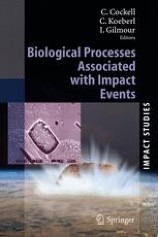
The biological effects of asteroid and comet impacts have been widely viewed as primarily destructive. The role of an impactor in the K/T boundary extinctions has had a particularly important influence on thinking concerning the role of impacts in ecological and biological changes. th During the 10 and final workshop of the ESF IMPACT program during March 2003, we sought to investigate the wider aspects of the involvement of impact events in biological processes, including the beneficial role of these events from the prebiotic through to the ecosystem level. The ESF IMPACT programme (1998-2003) was an interdisciplinary effort that is aimed at understanding impact processes and their effects on the Earth environment, including environmental, geological and biological changes.
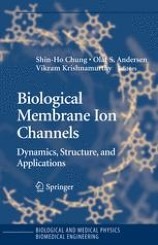
Ion channels are biological nanotubes that are formed by membrane proteins. Because ion channels regulate all electrical activities in living cells, understanding their mechanisms at a molecular level is a fundamental problem in biology. This book deals with recent breakthroughs in ion-channel research that have been brought about by the combined effort of experimental biophysicists and computational physicists, who together are beginning to unravel the story of these exquisitely designed biomolecules. With chapters by leading experts.
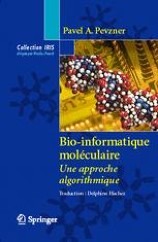
Deals with genetic maps, from the problem of sequence comparison and alignment, including DNA chips and genomic rearrangement. It thus covers a wide variety of topics relating to algorithmic and combinatorial processing of questions arising from molecular bioinformatics and biotechnology.
Bioinformatics as well as Computational Intelligence are undoubtedly remarkably fast growing fields of research and real-world applications with enormous potential for current and future developments. "Bioinformatics using Computational Intelligence Paradigms" contains recent theoretical approaches and guiding applications of biologically inspired information processing systems(Computational Intelligence) against the background of bioinformatics. This carefully edited monograph combines the latest results of Bioinformatics and Computational Intelligence and offers a promising cross-fertilisation and interdisciplinary work between these growing fields.
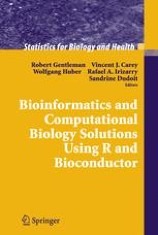
Bioconductor is a widely used open source and open development software project for the analysis and comprehension of data arising from high-throughput experimentation in genomics and molecular biology. Bioconductor is rooted in the open source statistical computing environment R. This volume's coverage is broad and ranges across most of the key capabilities of the Bioconductor project, including: Importation and preprocessing of high-throughput data from microarray, proteomic, and flow cytometry platforms / Curation and delivery of biological metadata for use in statistical modeling and interpretation. / Statistical analysis of high-throughput data, including machine learning and visualization,modeling and visualization of graphs and networks. This book is a dynamic document. Code underlying all of the computations that are shown is made available on a companion website, and readers can reproduce every number, figure, and table on their own computers.
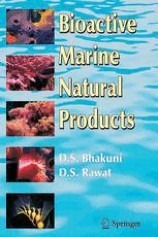
Bioactive Marine Natural Products is the first book available that covers all aspects of bioactive marine natural products. It fills the void in the literature for bioactive marine natural products. The book covers various aspects of marine natural products and it is hoped that all the major classes of bioactive compounds are included. Different classes of marine organisms and the separation and isolation techniques are discussed. The chemistry and biology of marine toxins, peptides, alkaloids, nucleosides and prostanoids are discussed in detail. Biological, toxicological and clinical evaluations are also dealt with to ensure that the book may be adopted at any stage by any practicing organic chemist or biologist, working in academia or in R&D divisions of pharmaceutical companies. Each chapter in the book includes an abstract to highlight the major points discussed in the text and concluding remarks are given. References to books, monographs, review articles and original papers are provided at the end of each chapter.
This volume contains 10 chapters. The contributions are from researchers famous in their respective fields and the chapters contain high quality reviews on topics related to the chemo-biological studies of several different heterocyclic groups. The first chapter from Saracoglu reviews the functionalization of indoles and the pyrroles via Michael additions, as these compounds have potential for their biological activities. In second chapter Men ́endez reviews the chemistry of the welwitindolinones. Topcu and Demirkiran, in the third chapter, describe the chemistry and biological studies of lignans from Taxus species, including their biosynthesis and recent strategies for the synthesis of lignans.
This volume contains nine more contributions from expert researchers of the?eld, providing readers with in depth and current research results regarding therespective topics. In the?rst chapter, Flemming et al. review the chemistry, biosynthesis, metabolism and biological activities of tetrahydrocannabinol and its deri- tives. Hansch and Verma contribute to the quantitative structure-activity re- tionship (QSAR) analysis of heterocyclic topoisomerase I and II inhibitors. These inhibitors, knowntoinhibit either enzyme, actasantitumoragentsand are currently used in chemotherapy and in clinicaltrials. In the third chapter, Khan reviews some aspects of molecular modeling studies on biologically active alkaloids.
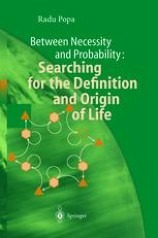
This study investigates the major theories of the origins of life in light of modern research with the aim of distinguishing between the necessary and the optional and between deterministic and random influences in the emergence of what we call ‘life.’ Life is treated as a cosmic phenomenon whose emergence and driving force should be viewed independently from its Earth-bound natural history. The author synthesizes all the fundamental life-related developments in a comprehensive scenario, and makes the argument that understanding life in its broadest context requires a material-independent perspective that identifies its essential fingerprints.
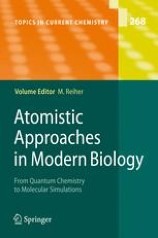
This volume of Topics in Current Chemistry presents an overview of atomistic theoreticalmethodsapplied tomolecular biologicalsystems. Itthus repesents abottom-upview of chemistryonbiologyfroma theoreticalperspective. The chapters arearrangedsuchthat important issuesareconsidered startingfrom a quantum mechanical perspective and proceeding to a molecular mechanics and molecular dynamics descriptiono fthemotionoftheelementaryparticles involved.which are responsible for the properties and function of biomolecules. Depending on the length and time scales relevant for a given phenomenon to be investigated, tailored theoretical methods are required to account for these. If one is interested in large scale motions of molecules, a molecul- mechnanics-based description willbeappropriate.
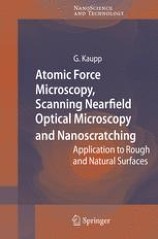
Making a clear distinction is made between nano- and micro-mechanical testing for physical reasons, this monograph describes the basics and applications of the supermicroscopies AFM and SNOM, and of the nanomechanical testing on rough and technical natural surfaces in the submicron range down to a lateral resolution of a few nm. New or improved instrumentation, new physical laws and unforeseen new applications in all branches of natural sciences (around physics, chemistry, mineralogy, materials science, biology and medicine) and nanotechnology are covered as well as the sources for pitfalls and errors.
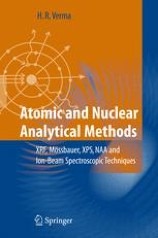
This book is a blend of analytical methods based on the phenomenon of atomic and nuclear physics. It comprises comprehensive presentations about X-ray Fluorescence (XRF), Mössbauer Spectroscopy (MS), X-ray Photoelectron Spectroscopy (XPS), Neutron- Activation Analysis (NAA), Particle Induced X-ray Emission Analysis (PIXE), Rutherford Backscattering Analysis (RBS), Elastic Recoil Detection (ERD), Nuclear Reaction Analysis (NRA), Particle Induced Gamma-ray Emission Analysis (PIGE), and Accelerator Mass Spectrometry (AMS). These techniques are commonly applied in the fields of medicine, biology, environmental studies, archaeology or geology et al. and pursued in major international research laboratories.
Astrobiology, a new exciting interdisciplinary research field, seeks to unravel the origin and evolution of life wherever it might exist in the Universe. The current view of the origin of life on Earth is that it is strongly connected to the origin and evolution of our planet and, indeed, of the Universe as a whole. We are fortunate to be living in an era where centuries of speculation about the two ancient and fundamental problems: the origin of life and its prevalence in the Universe are being replaced by experimental science. The subject of Astrobiology can be approached from many different perspectives. This book is focused on abiogenic organic matter from the viewpoint of astronomy and planetary science and considers its potential relevance to the origins of life on Earth and elsewhere. Guided by the review papers in this book, the concluding chapter aims to identify key questions to motivate future research and stimulate astrobiological applications of current and future research facilities and space missions. Today’s rich array of new spacecraft, telescopes and dedicated scientists promises a steady flow of discoveries and insights that will ultimately lead us to the answers we seek.
The present volume focuses on three main subtopics (biological water, protein solutions as well as transport and replication), presenting for each of the them the on-going debates on recent results. The role of water in biological processes, the mechanisms of protein folding, the phases and cooperative effects in biological solutions, the thermodynamic description of replication, transport and neural activity, all are subjects that are revised in this volume, based on new experiments and new theoretical interpretations.
it focus on applications of demographic models, while extending its scope to matrix models for stage-classified populations.first introduce the life table to describe age-specific mortality, and then use it to develop theory for stable populations and the rate of population increase. This theory is then revisited in the context of matrix models, for stage-classified as well as age-classified populations. Reproductive value and the stable equivalent population are introduced in both contexts, and Markov chain methods are presented to describe the movement of individuals through the life cycle. Applications of mathematical demography to population projection and forecasting, kinship, microdemography, heterogeneity, and multi-state models are considered.
This book demonstrates the applications of synchrotron radiation in certain aspects of cell microbiology, specifically non-destructive elemental analyses, chemical-state analyses and imaging (distribution) of the elements within a cell. The basics for understanding and applications of synchrotron radiation are also described to make the contents easier to be understood for a wide group of researchers in medical and biological sciences who might not be familiar with the physics of synchrotron radiation. The two main techniques that are discussed in this book are the x-ray fluorescence spectroscopy (XRF) and the x-ray fine structure analysis (XAFS).
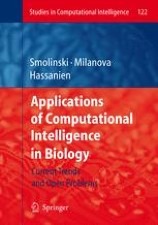
The purpose of this book is to provide a medium for such an exchange of expertise and concerns. In order to achieve the goal, we have solicited cont- butions from both computational intelligence as well as biology researchers.
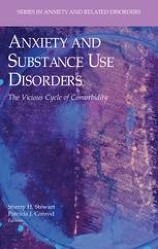
Anxiety and Substance Use Disorders: The Vicious Cycle of Comorbidity addresses this gap with dispatches from the frontlines of research and treatment. Thirty-four international experts offer findings, theories, and intervention strategies for this common form of dual disorder both across types of substances (alcohol, tobacco, street and prescription drugs) and the range of anxiety disorders (PTSD, social phobia, panic disorder, OCD) to give the reader comprehensive knowledge in a practical format. Informed by the reciprocal relationship between the two types of disorders
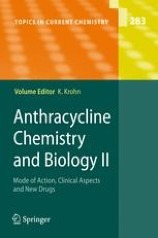
This series presents critical reviews of the present position and future trends in modern chemical research. It contains short and concise reports on chemistry, each written by the world renowned experts. The series is still valid and useful after five or ten years. More information as well as the electronic version of the whole content is available at: springerlink.com.
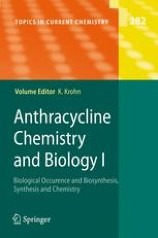
"This book … covers many different aspects of the origin, chemistry, and biosynthesis of one of the oldest but most important classes of anticancer agents. … In summary, the book is nicely produced, very well edited, and should serve as a valuable source of information … . This book will serve as an inspiration for scientists and students in the areas of chemistry, drug discovery, and biological evaluation. It should be an essential addition to institutional library collections … ."

سوريا - اتستراد درعا - غباغب
+963-15 2050 - 15 860 380 /1/2/3 - 11 662 3900