


تحسين النتائح
ترتيب حسب
من
الى

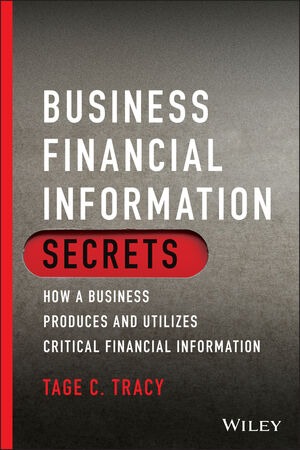
Business Financial Information Secrets shows you how to produce, understand, and utilize financial information to the greatest effect for your business and the economy at large. This book guides you through the surprisingly clean and simple process of proper accounting and reporting, regardless of your organization’s size or structure. Cash flow and business capital management are covered extensively throughout the book as without a thorough understanding of these all-important concepts, you could be lacking critical information about the lifeline of your business.
Business Education in Emerging Market Economies discusses the impact of business education on emerging markets and explores curricular innovation, pedagogical approaches, and strategic alliances in the context of industrializing economies. Emerging markets consist of eighty percent of the world's population and some 75% of its trade growth in the foreseeable future according to the U.S. Department of Commerce. The potential economic growth of emerging markets has prompted a need to understand the dynamics of these markets, their business institutions, and their educational systems. The pressures of globalization and the recent economic reforms that swept across emerging, developing, and transitioning, economies have had a positive impact on the demand for business education and business knowledge from the developed and industrialized countries. As a result, many methods were developed to transfer know-how from the developed markets including learning through imitation, using western style pedagogical approaches, attending universities in industrialized countries, learning through experience and practice, and using information technology. The conclusion we reach is that business and management education in emerging markets is fast changing the way in which these markets operate and are perceived – business educators are catalysts for greater economic integration.
Business cycle theory has been one of the fastest growing fields in modern nonlinear economic dynamics. The book is centered around models of multiplier-accelerator type, emerging from Samuelson's seminal work, later developed into nonlinear formats by Hicks and Goodwin. These models left open ends, as the tools then available did not permit more systematic analysis.

Learn why ethical behavior is so important and how to recognize potential pitfalls that involve much more than memorizing rules. You master the skills to develop a corporate culture of integrity that maintains stakeholder support and enables directors and auditors to complete their jobs. You also learn how to use ethical strategies to make decisions, as this edition examines the latest information on governance scandals, legal liability and professional accounting and auditing issues.
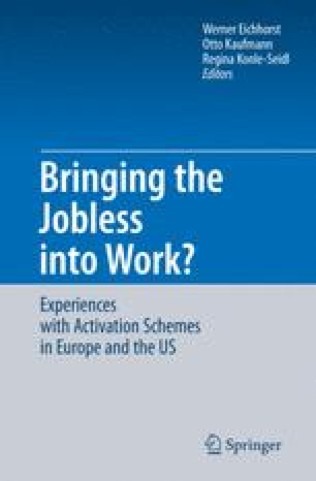
Over the last decade, many industrialized countries shifted from passive unemployment and welfare benefit regimes and traditional active labor market and social policies to activation strategies by making benefit receipt conditional upon accepting job offers or participation in active labor market schemes. But countries differ with regard to the design of activation instruments and their implementation, the definition of target groups and the effects of activation in the national labor market setting. This volume provides an up-to-date overview of activation strategies in unemployment benefit systems and social assistance in selected European countries and the US. A particular focus lies on the development of activation schemes, governance and implementation as well as on the outcomes of activation in terms of labor market and social integration. The volume is the first to address these issues both from a socio-economic and a legal perspective.

1 The tools of modern portfolio theory are in general use in the equity markets, either in the form of portfolio optimization software or as an accepted frame- 2 work in which the asset managers think about stock selection. In the ?xed income market on the other hand, these tools seem irrelevant or inapplicable. Bond portfolios are nowadays mainly managed by a comparison of portfolio 3 4 risk measures vis ¶a vis a benchmark. The portfolio manager’s views about the future evolution of the term structure of interest rates translate th- selves directly into a positioning relative to his benchmark, taking the risks of these deviations from the benchmark into account only in a very crude 5 fashion, i.e. without really quantifying them probabilistically. This is quite surprising since sophisticated models for the evolution of interest rates are commonly used for interest rate derivatives pricing and the derivation of ?xed 6 income risk measures.
Blockchain technology and artificial intelligence (AI) have the potential to transform how the accounting and financial services industries engage with the business, stakeholder and consumer communities. Presenting a blend of technical analysis with current and future applications, this book provides professionals with an action plan to embrace and move forward with these new technologies in financial and accounting organizations.
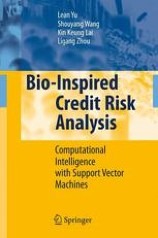
Credit risk analysis is one of the most important topics in the field of financial risk management. Due to recent financial crises and regulatory concern of Basel II, credit risk analysis has been the major focus of financial and banking industry. Especially for some credit-granting institutions such as commercial banks and credit companies, the ability to discriminate good customers from bad ones is crucial. The need for reliable quantitative models that predict defaults accurately is imperative so that the interested parties can take either preventive or corrective action. Hence credit risk analysis becomes very important for sustainability and profit of enterprises. In such backgrounds, this book tries to integrate recent emerging support vector machines and other computational intelligence techniques that replicate the principles of bio-inspired information processing to create some innovative methodologies for credit risk analysis and to provide decision support information for interested parties.
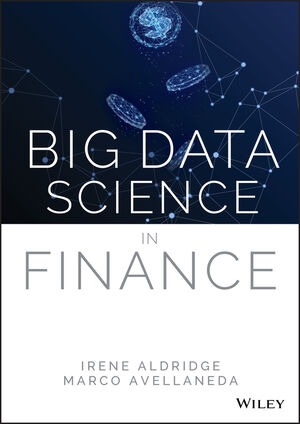
Explains the mathematics, theory, and methods of Big Data as applied to finance and investing Examines the mathematics, theory, and practical use of the revolutionary techniques that are transforming the industry. Designed for mathematically-advanced students and discerning financial practitioners alike, this energizing book presents new, cutting-edge content based on world-class research taught in the leading Financial Mathematics and Engineering programs in the world. Marco Avellaneda, a leader in quantitative finance, and quantitative methodology author Irene Aldridge help readers harness the power of Big Data. Provides a complete account of Big Data that includes proofs, step-by-step applications, and code samples Explains the difference between Principal Component Analysis (PCA) and Singular Value Decomposition (SVD) Covers vital topics in the field in a clear, straightforward manner Compares, contrasts, and discusses Big Data and Small Data Includes Cornell University-tested educational materials such as lesson plans, end-of-chapter questions, and downloadable lecture slides
Combines energy economics and big data modeling analysis in energy conversion and management and comprehensively introduces the relevant theories, key technologies, and application examples of the smart energy economy. With the help of time series big data modeling results, energy economy managers develop reasonable and feasible pricing mechanisms of electricity price and improve the absorption capacity of the power grid. In addition, they also carry out scientific power equipment scheduling and cost–benefit analysis according to the results of data mining, so as to avoid the loss caused by accidental damage of equipment. Energy users adjust their power consumption behavior through the modeling results provided and achieve the effect of energy saving and emission reduction while reasonably reducing the electricity expenditure.

Investigates why, despite more and more resources devoted to safety training, expectations are not entirely met, particularly in the industrial sectors that have already achieved a high safety level. It not only reflects the most precious viewpoints of experts from different disciplines, different countries, with experiences in various industrial fields at the cutting edge of theories and practices in terms of safety, professionalization and their relationships. It also consolidates the positioning of the Foundation for an Industrial Safety Culture, highlighting what is currently considered at stake in terms of safety training, taking into account the system of constraints the different stakeholders are submitted to. It reports some success stories as well as elements which could explain the observed plateau in terms of outcome. It identifies some levers for evolution for at-risk industry and outlines a possible research agenda to go further with experimental solutions.
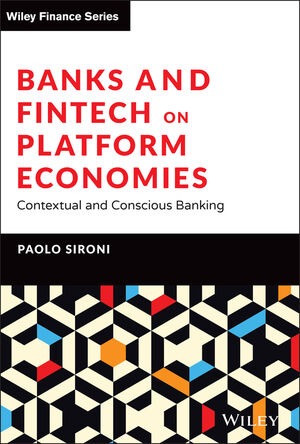
In Banks and Fintech on Platform Economies: Contextual and Conscious Banking, accomplished fintech professional and author Paolo Sironi delivers an insightful examination of how platform theory, born outside of financial services, will make its way inside banking and financial markets to radically transform the way firms do business.

The book has three parts. Part I describes the characteristics and historical origins of these markets. Part II examines the contemporary bond markets and shows how they contribute to general welfare, describes the relationship between the banking sector and capital markets, and assesses prospects for reform in Asia's governmental and corporate debt markets. Part III explains the micro-level impediments and obstacles that must be the first targets of any reform efforts, provides an appraisal of attempts at regional cooperation to stimulate structural reform, and lastly contributes proposals to accelerate the growth and reach of bond markets throughout Asia.

This book considers the effects of COVID-19 on accounting, particularly with regard to the role of artificial intelligence in accounting in the post-pandemic business environment. The contributions in the book consider a variety of sectors that have been affected by the pandemic, such as the stock market, forensic accounting, Bitcoin, as well as the economic and educational responses to the pandemic and the aftermath felt by both developing and developed countries.
With the continuing dispersion of the global digital network and performance improvements of information and communication technologies, resource-poor start-ups with online business models have emerged in large numbers. These firms are able to deploy their competitive advantages across their country borders early in their life-cycle and engage in international commerce at a fast pace. An increased immediacy between the firms and the globally accessible customer is observed. Julia Christofor’s study aims to analyze the conditions of the initial internationalization decision in the Net Economy. Based on Information Systems, International Entrepreneurship, and Entrepreneurship literature, factors, which constitute the internationalization propensity, are derived. The results of this study suggest that a holistic perspective including the founder, business model and the firm level should be considered when explaining the internationalization propensity of entrepreneurs.
It is designed to be a "first port of call" for people wishing to study efficiency and productivity analysis. The book provides an accessible introduction to the four principal methods involved: econometric estimation of average response models; index numbers; data envelopment analysis (DEA); and stochastic firontier analysis (SFA). For each method, we provide a detailed introduction to the basic concepts, give some simple numerical examples, discuss some of the more important extensions to the basic methods, and provide references for further reading. In addition, we provide a number of detailed empirical applications using real-world data.

Provides a comprehensive yet compact survey of the growth of American economic influence in Europe since the 1880s. Three distinct but cumulative waves of Americanization are identified. Americanization was (and still is) a complex process of technological, political, and cultural transfer, and this overview explains why and how the USA and the American model of industrial capitalism came to be accepted as the dominant paradigm of political economy in today's Europe. Americanization of the European Economy summarizes the ongoing discussion by business historians, sociologists, and political scientists and makes it accessible to all types of readers who are interested in political and economic development.
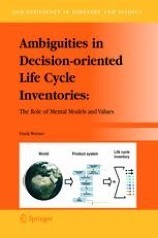
Shows for the first time how mental models and values influence this attribution in the life cycle inventory step of LCA. One of the key findings is that the different management rules for a sustainable use of materials must be taken into account for the attribution of material and energy flows to a product. Otherwise, improvement options recommended by an LCA might turn out to even worsen the environmental situation if reassessed from a meta-perspective. As a consequence of this book, the claim of unambiguitiy (‘objectivity’) of the life cycle inventory must be abandoned. A group-model building process for LCA is developed that allows one to grasp the decision makers' mental models and values in the inventory analysis on a case- and situation-specific basis. Only by this, LCA results will become relevant in a decision-making process. Two case studies on the modelling of recycling and other end-of-life options of aluminium windows and beech wood railway sleepers in LCA complement the methodological part.

This book provides a clear holistic conceptual framework of CISS-F (competitiveness, inclusiveness, sustainability, scalability and access to finance) to analyse the efficiency of value chains of high value agricultural commodities in India. It is based on the understanding that agriculture is an integrated system that connects farming with logistics, processing and marketing. Farmer’s welfare being central to any agricultural policy makes it very pertinent to study how a value chain works and can be strengthened further to realize this policy goal.
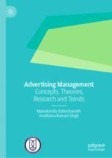
Explores the concept of advertising and the different ways advertising is understood and evaluated. It dives deep into planning, designing, and executing advertising campaigns on different mediums. It discusses the theoretical and research parts of advertising by critically examining how over the years various hierarchical models and theories are developed by advertising experts. It examines various models and theories that explain why and how advertising is successful in persuading customers target audiences to buy a product or accept an idea for behavioural change.

سوريا - اتستراد درعا - غباغب
+963-15 2050 - 15 860 380 /1/2/3 - 11 662 3900