



الصفحة 140
الصفحة 140
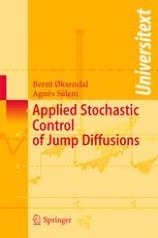
Applied Stochastic Control of Jump Diffusions
The main purpose of the book is to give a rigorous, yet mostly nontechnical, introduction to the most important and useful solution methods of various types of stochastic control problems for jump diffusionsThe types of control problems covered include classical stochastic control, optimal stopping, impulse control and singular control. Both the dynamic programming method and the maximum principle method are discussed, as well as the relation between them. Corresponding verification theorems involving the Hamilton-Jacobi Bellman equation and/or (quasi-)variational inequalities are formulated. There are also chapters on the viscosity solution formulation and numerical methods.The text emphasises applications, mostly to finance. All the main results are illustrated by examples and exercises appear at the end of each chapter with complete solutions. This will help the reader understand the theory and see how to apply it.The book assumes some basic knowledge of stochastic analysis, measure theory and partial differential equations.
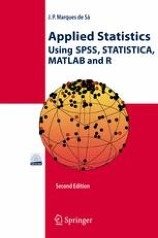
Applied Statistics Using SPSS, STATISTICA, MATLAB and R
The book provides a comprehensive coverage of the main statistical analysis topics important for practical applications such as data description, statistical inference, classification and regression, factor analysis, survival data and directional statistics.
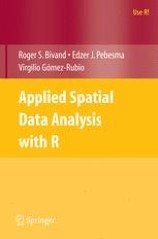
Applied Spatial Data Analysis with R
Applied Spatial Data Analysis with R is divided into two basic parts, the first presenting R packages, functions, classes and methods for handling spatial data, The second part showcases more specialised kinds of spatial data analysis, including spatial point pattern analysis, interpolation and geostatistics, areal data analysis and disease mapping.
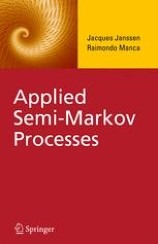
Applied Semi-Markov Processes
The book presents homogeneous and non-homogeneous semi-Markov processes, as well as Markov and semi-Markov rewards processes. These concepts are fundamental for many applications, but they are not as thoroughly presented in other books on the subject as they are here.This book is intended for graduate students and researchers in mathematics, operations research and engineering; it might also appeal to actuaries and financial managers, and anyone interested in its applications for banks, mechanical industries for reliability aspects, and insurance companies.
Applied scanning probe methods X : Biomimetics and industrial applications
The success of the Springer Series Applied Scanning Probe Methods I–VII and the rapidly expanding activities in scanning probe development and applications worldwide made it a natural step to collect further speci c results in the elds of development of scanning probe microscopy techniques (Vol. VIII), characterization (Vol. IX), and biomimetics and industrial applications (Vol. X). These three volumes complement the previous set of volumes under the subject topics and give insight into the recent work of leading specialists in their respective elds. Following the tradition of the series, the chapters are arranged around techniques, characterization and biomimetics and industrial applications. Volume VIII focuses on novel scanning probe techniques and the understanding of tip/sample interactions. Topics include near eld imaging, advanced AFM, specialized scanning probe methods in life sciences including new self sensing cantilever systems, combinations of AFM sensors and scanning electron and ion microscopes, calibration methods, frequency modulation AFM for application in liquids, Kelvin probe force microscopy, scanning capacitance microscopy, and the measurement of electrical transport properties at the nanometer scale.
Applied Research in Uncertainty Modeling and Analysis
For a long time uncertainty has been considered synonymous with random, stochastic, statistic, or probabilistic. Since the early sixties views on uncertainty have become more heterogeneous. In the past forty years numerous tools that model uncertainty, above and beyond statistics, have been proposed by several engineers and scientists. The tool/method to model uncertainty in a specific context should really be chosen by considering the features of the phenomenon under consideration, not independent of what is known about the system and what causes uncertainty. In this fascinating overview of the field, the authors provide broad coverage of uncertainty analysis/modeling and its application. Applied Research in Uncertainty Modeling and Analysis presents the perspectives of various researchers and practitioners on uncertainty analysis and modeling outside their own fields and domain expertise. Rather than focusing explicitly on theory, the authors use real-world examples to demonstrate the strength of the chosen methodology. Applied Research in Uncertainty Modeling and Analysis concentrates on general aspects of uncertainty, modeling, and methods, and focuses on various applications, included Biomedical Engineering, Chemical Engineering, Structural Engineering, and Transportation Engineering.
Applied Quantitative Finance
Applied Quantitative Finance (2nd edition) provides a comprehensive and state-of-the-art treatment of cutting-edge topics and methods. It provides solutions to and presents theoretical developments in many practical problems such as risk management, pricing of credit derivatives, quantification of volatility and copula modelling. The synthesis of theory and practice supported by computational tools is reflected in the selection of topics as well as in a finely tuned balance of scientific contributions on practical implementation and theoretical concepts. This linkage between theory and practice offers theoreticians insights into considerations of applicability and, vice versa, provides practitioners comfortable access to new techniques in quantitative finance.
Applied Proof Theory : Proof Interpretations and Their Use in Mathematics
Ulrich Kohlenbach presents an applied form of proof theory that has led in recent years to new results in number theory, approximation theory, nonlinear analysis, geodesic geometry and ergodic theory (among others). This applied approach is based on logical transformations (so-called proof interpretations) and concerns the extraction of effective data (such as bounds) from prima facie ineffective proofs as well as new qualitative results such as independence of solutions from certain parameters, generalizations of proofs by elimination of premises. The book first develops the necessary logical machinery emphasizing novel forms of Gödel's famous functional ('Dialectica') interpretation. It then establishes general logical metatheorems that connect these techniques with concrete mathematics. Finally, two extended case studies (one in approximation theory and one in fixed point theory) show in detail how this machinery can be applied to concrete proofs in different areas of mathematics.
Applied Probability and Statistics
This text is designed for a one-semester course on Probability and Statistics. The exposition unfolds systematically from an introductory chapter to such topics as random variables and vectors, stochastic processes, estimation, testing and regression. The topics are well chosen and the presentation is enriched by many examples from real life. Following every chapter, the reader will find many original, solved and unsolved problems and hundreds of multiple choice questions, enabling those unfamiliar with the topics to master them. Additionally appealing are the interesting historical notes on the mathematicians mentioned throughout and a useful bibliography. A distinguishing character of the book is the thorough and succinct handling of the various topics.
Applied Physiology in Intensive Care Medicine
A series of short papers published in Intensive Care Medicine since 2002 under the heading Physiologic Notes attempts to capture the essence of the physiologic perspectives that underpin both our understanding of disease and response to therapy. Tis present volume combines the complete list of these Physiologic Notes up until July 2006 with the ass o ciated review articles over the same in terval that also address edthese central issues.

Applied pharmacology for the dental hygienist ; 9th ed.
Provides an in-depth understanding of the pharmacologic principles needed for safe and effective dental treatment and oral health care. It discusses drug properties and mechanisms of action, dosages, intended effects, interactions, and adverse reactions — both for the medications a patient may already be taking and for the drugs prescribed by the dentist.

Applied pharmacology for the dental hygienist ; 8th ed.
Provides you with an in-depth understanding of the pharmacologic principles needed for safe and effective dental treatment and oral health care. It discusses drug properties and mechanisms of action, dosages, intended effects, interactions, and adverse reactions - both for the medications a patient may already be taking and for the drugs prescribed by the dentist. This new edition has been updated throughout to give you a firm foundation in pharmacology in order to assess and educate patients so they can maintain optimal oral health!
Applied Peritoneal Dialysis : Improving Patient Outcomes
This book offers a comprehensive guide to peritoneal dialysis (PD). Home dialysis, and more specifically PD, is growing in popularity in the US. By conservative estimates, experts suggest that 45 percent of dialysis patients in the US can be on home dialysis. However, the current penetration rate is only 10 percent. This is changing with an expected major increase in the next 5 years. One of the reasons for the low uptake is that many nephrologists lack comfort and confidence in using PD as a dialysis modality.
Applied Pattern Recognition
The main goal of this book is to cover some of the latest application domains of pattern recognition while presenting novel techniques that have been developed or customized in those domains.
Applied Partial Differential Equations : A Visual Approach
This book presents selected topics in science and engineering from an applied-mathematics point of view. The described natural, socioeconomic, and engineering phenomena are modeled by partial differential equations that relate state variables.
Applied Parallel Computing ; State of the Art in Scientific Computing
Introduction The PARA workshops in the past were devoted to parallel computing methods in science and technology. There have been seven PARA meetings to date: PARA’94, PARA’95 and PARA’96 in Lyngby, Denmark, PARA’98 in Umea, ? Sweden, PARA 2000 in Bergen, N- way, PARA 2002 in Espoo, Finland, and PARA 2004 again in Lyngby, Denmark. The ?rst six meetings featured lectures in modern numerical algorithms, computer science, en- neering, and industrial applications, all in the context of scienti?c parallel computing. This meeting in the series, the PARA 2004 Workshop with the title “State of the Art in Scienti?c Computing.
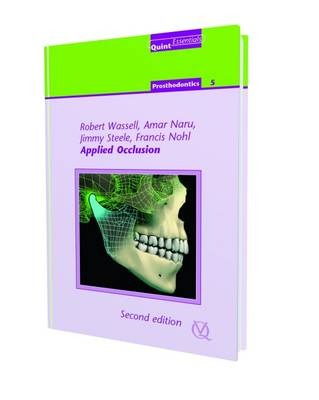
Applied Occlusion : QuintEssentials of Dental Practice ; Vol. 29
Includes many new illustrations, highlighted practical tips, and updates to the text with the most recent advances in the literature. The narrated 3D animations on the accompanying DVD clarify the effects of jaw movement, and comprehensive clinical videos demonstrate the process of investigating and managing real-life occlusal problems. The authors of this practical guide bring occlusal concepts and techniques to life and demystify them for dentists and students alike.
Applied Multivariate Statistical Analysis
This book presents the tools and concepts of multivariate data analysis in a way that is understandable for non-mathematicians and practitioners who face statistical data analysis.
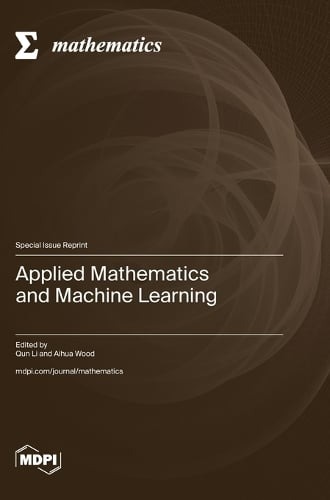
Applied mathematics and machine learning
The simultaneous availability of large datasets and high-performance computing capability in recent years has enabled the rapid development of powerful machine learning algorithms. On the one hand, state-of-the-art machine learning techniques have transformed many areas of science and engineering; on the other hand, theoretical discoveries in mathematical algorithms, differential equations, and statistical inferences, to name a few, have provided the foundation for the exploration of new multidisciplinary models for solving practical problems. This Special Issue endeavors to continue the journey that started in our previous Special Issue (Applied Mathematics and Computational Physics) by providing a platform for researchers from both academia and industry, as well as government, to present their new computational methods that have engineering and physics applications.
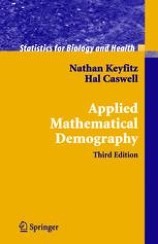
Applied Mathematical Demography
it focus on applications of demographic models, while extending its scope to matrix models for stage-classified populations.first introduce the life table to describe age-specific mortality, and then use it to develop theory for stable populations and the rate of population increase. This theory is then revisited in the context of matrix models, for stage-classified as well as age-classified populations. Reproductive value and the stable equivalent population are introduced in both contexts, and Markov chain methods are presented to describe the movement of individuals through the life cycle. Applications of mathematical demography to population projection and forecasting, kinship, microdemography, heterogeneity, and multi-state models are considered.
