



الصفحة 132
الصفحة 132
Macroscopic Transport Equations for Rarefied Gas Flows : Approximation Methods in Kinetic Theory
This book discusses classical and modern methods to derive macroscopic transport equations for rarefied gases from the Boltzmann equation, for small and moderate Knudsen numbers, i.e.as well as the new order of magnitude method, which avoids the short-comings of the classical methods, but retains their benefits.

Macro-Engineering : A Challenge for the Future
Macro-engineering involves the large-scale modification and manipulation of natural systems for the benefit of mankind. The primary goals of some Earth-based macroprojects described in this book are power production, land reclamation, food production, climate change, environment, water, transport and coastal protection. Other Earth or space projects considered here have a more futuristic ring, but our present-day technical skill makes their realization possible. Earth-based macroprojects usually combine different aspects and aims. They have a major impact on the ecology of a region and the inhabitants' means of living (like tourism, fishing, shipping). Its effects may be felt worldwide, like the rise in global sea level after the damming and evaporation of large ocean gulfs for power production, or the change in climate following the regional reduction of solar insolation.

Macroeconomic Risk Management Against Natural Disasters : Analysis focussed on governments in developing countries
Natural disasters cause considerable economic damage. While developed countries usually are able to cope with the impacts of natural hazards, developing countries are faced with severe consequences for their resources. In order to prevent long-term macroeconomic repercussions, governments need a comprehensive disaster risk management strategy.Budgetary resources are allocated to pre-disaster risk management strategies to reduce the probability of financing gaps. The framework and model approach allows cross country comparisons as well as the assessment of financial vulnerability, macroeconomic risk, and risk management strategies.

Macroeconomic modelling of R&D and innovation policies
This book encompasses a collection of in-depth analyses showcasing the challenges and ways forward for macroeconomic modelling of R&D and innovation policies. Based upon the proceedings of the EC-DG JRC-IEA workshop held in Brussels in 2017, it presents cutting-edge contributions from a number of leading economists in the field. It provides a comprehensive overview of the current academic and policy challenges surrounding R&D as well as of the state-of-the-art modelling techniques.

Macrocyclic Chemistry : Current Trends and Future Perspectives
Macrocyclic Chemistry: Current Trends and Future Perspectives illustrates essential concepts in this expanding research field covering both basic and applied studies. Written by well-known experts from around the world, the topics of the chapters range from new macrocyclic architectures with different functions and self-assembly processes through to the modeling and dynamics of such systems. The content also reflects on application possibilities in analytical chemistry, separation processes, material preparation and medicine. Thus this book serves as a creative source of research strategies and methodic tools.

Mack Scogin Merrill Elam : Knowlton Hall
Mack Scogin Merrill Elam Architects/Knowlton Hall provides a comprehensive look at this impressive new work using sketches, models, renderings, working drawings, and photographs. it is accompanied by commentaries from the architects and critics who explore both the technical and contextual elements of the work
Machining: Fundamentals and Recent Advances
Machining is one of the most important manufacturing processes. Parts manufactured by others processes often require further operations before the product is ready for application. Machining is the broad term used to describe the removal of material from a work-piece. Machining processes can be applied to work metallic and non-metallic materials such as polymers, wood, ceramics and composites.
Machine-learning-assisted intelligent processing and optimization of complex systems
Focuses on the most recent developments in intelligent optimization methods and their applications in various test cases. The reprint covers various topics, including distributed multiagent modeling, metaheuristic algorithms, multisource data fusion, mobile computing and mobile sensing, machine learning-based intelligent processing for modeling complex manufacturing systems, and data-driven intelligent modeling
Machine learning methods for reverse engineering of defective structured surfaces
Pascal Laube presents machine learning approaches for three key problems of reverse engineering of defective structured surfaces: parametrization of curves and surfaces, geometric primitive classification and inpainting of high-resolution textures. The proposed methods aim to improve the reconstruction quality while further automating the process. The contributions demonstrate that machine learning can be a viable part of the CAD reverse engineering pipeline.
Machine Learning in Computer Vision
The goal of this book is to address the use of several important machine learning techniques into computer vision applications. An innovative combination of computer vision and machine learning techniques has the promise of advancing the field of computer vision, which contributes to better understanding of complex real-world applications. The effective usage of machine learning technology in real-world computer vision problems requires understanding the domain of application, abstraction of a learning problem from a given computer vision task, and the selection of appropriate representations for the learnable (input) and learned (internal) entities of the system. In this book, we address all these important aspects from a new perspective: that the key element in the current computer revolution is the use of machine learning to capture the variations in visual appearance, rather than having the designer of the model accomplish this. As a bonus, models learned from large datasets are likely to be more robust and more realistic than the brittle all-design models.
Machine learning for neurodegenerative disorders : advancements and applications
Explores the application of machine learning to the understanding, early diagnosis, and management of neurodegenerative disorders. With a specific focus on its role in ongoing clinical trials, the book covers essential topics such as data collection, pre-processing, feature extraction, model development, and validation techniques. It delves into the applications of neuroimaging techniques like magnetic resonance imaging (MRI), computed tomography (CT), and positron emission tomography (PET) in the diagnosis and understanding of neurodegenerative disorders. Additionally, the book examines various machine-learning algorithms employed for biomarker discovery in neurodegenerative disorders. It highlights the role of neuroinformatics and big data analysis in advancing the understanding and management of neurodegenerative disorders. Furthermore, the book reviews future prospects and presents the ethical considerations and regulatory challenges associated with implementing machine learning approaches in the diagnosis, treatment, and prevention of neurodegenerative disorders.

Machine Learning for Multimodal Interaction ; Vol.4299 ; 3rd International Workshop, MLMI 2006, Bethesda, MD, USA, May 1-4, 2006, Revised Selected Papers
This book contains a selection of refereed papers presented at the 3rd Workshop on Machine Learning for Multimodal Interaction (MLMI 2006), held in Bethesda MD, USA during May 1–4, 2006.

Machine Learning for Multimodal Interaction ; Vol.3869 ; 2nd International Workshop, MLMI 2005, Edinburgh, UK, July 11-13, 2005, Revised Selected Papers
The papers are organized in topical sections on multimodal processing, HCI and applications, discourse and dialogue, emotion, visual processing, speech and audio processing, and NIST meeting recognition evaluation

Machine Learning for Multimodal Interaction ; Vol.3361 : 1st International Workshop, MLMI 2004, Martigny, Switzerland, June 21-23, 2004, Revised Selected Papers
his book contains a selection of refereed papers presented at the 1st Wo- shop on Machine Learning for Multimodal Interaction (MLMI 2004), held at the “Centre du Parc,” Martigny, Switzerland, during June 21–23, 2004. The workshop was organized and sponsored jointly by three European projects, – AMI, Augmented Multiparty Interaction, http://www.amiproject.org – PASCAL, Pattern Analysis, Statistical Modeling and Computational Learning, http://www.pascal-network.org – M4, Multi-modal Meeting Manager, http://www.m4project.org as well as the Swiss National Centre of Competence in Research (NCCR): – IM2: Interactive Multimodal Information Management, http://www.im2.ch MLMI 2004 was thus sponsored by the European Commission and the Swiss National Science Foundation.

Machine Learning for Multimodal Interaction ; 5th International Workshop, MLMI 2008, Utrecht, The Netherlands, September 8-10, 2008. Proceedings
The 12 revised full papers and 15 revised poster papers presented together with 5 papers of a special session on user requirements and evaluation of multimodal meeting browsers/assistants were carefully reviewed and selected from 47 submissions. The papers cover a wide range of topics related to human-human communication modeling and processing, as well as to human-computer interaction, using several communication modalities. Special focus is given to the analysis of non-verbal communication cues and social signal processing, the analysis of communicative content, audio-visual scene analysis, speech processing, interactive systems and applications.
Machine Learning for Multimedia Content Analysis
Challenges in complexity and variability of multimedia data have led to revolutions in machine learning techniques. Multimedia data, such as digital images, audio streams and motion video programs, exhibit richer structures than simple, isolated data items. A number of pixels in a digital image collectively conveys certain visual content to viewers. A TV video program consists of both audio and image streams that unfold the underlying story. To recognize the visual content of a digital image, or to understand the underlying story of a video program, we may need to label sets of pixels or groups of image and audio frames jointly.
Machine learning for cyber-physical systems: selected papers from the international conference ML4CPS 2023
Contains selected papers from the international conference ML4CPS – Machine Learning for Cyber-Physical Systems, which was held in Hamburg (Germany), from 29 to 31 March 2023. Cyber-physical systems are adaptive and learning: they analyze their environment and, based on observations, learn patterns, associations and predictive models. Typical applications are condition monitoring, predictive maintenance, image processing and diagnostics. Machine learning is the key technology for these developments.

Machine Learning for Cyber Physical Systems : Selected papers from the International Conference ML4CPS 2018
Presents new approaches to Machine Learning for Cyber Physical Systems, experiences and visions. Cyber Physical Systems are characterized by their ability to adapt and to learn: They analyze their environment and, based on observations, they learn patterns, correlations and predictive models. Typical applications are condition monitoring, predictive maintenance, image processing and diagnosis. Machine Learning is the key technology for these developments.
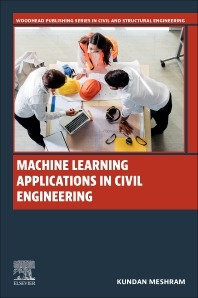
Machine Learning Applications in Civil Engineering
Discusses machine learning and deep learning models for different civil engineering applications. These models work for stochastic methods wherein internal processing is done using randomized prototypes. The book explains various machine learning model designs that will assist researchers to design multi domain systems with maximum efficiency. It introduces Machine Learning and its applications to different Civil Engineering tasks, including Basic Machine Learning Models for data pre-processing, models for data representation, classification models for Civil Engineering Applications, Bioinspired Computing models for Civil Engineering, and their case studies.
Machine Learning and Robot Perception
Presents some of the most recent research results in the area of machine learning and robot perception. The chapters represent new ways of solving real-world problems. This book will appeal to researchers, senior undergraduate/postgraduate students, application engineers and scientists.
