



الصفحة 13
الصفحة 13

Experimental models of multiple sclerosis
This book combines for the first time the different experimental models for MS (including immune-mediated and viral) under one roof, and highlights aspects that are different or shared among these experimental models. It’s aim is to improve our understanding of this devastating disease and help us think about potential additional therapies for it.

Existence: Semantics and Syntax
This collection is an important contribution to the semantic and syntactic analysis of the expression of existence. The volume focuses on the three main linguistic constructions expressing existence: copular clauses, existential sentences, and (in)definiteness. The papers analyze the interaction between the basic notion of existence and pervasive phenomena of natural language, such as quantification and presupposition. The contributions represent state of the art research on theoretical and comparative issues related to the expression of existence, and make extensive reference to the semantic and syntactic facts of English and of various other languages. The richness of new data and the juxtaposition of different theoretical stances bring a number of new questions into focus.

Evolution of Italian Enterprises in the 20th Century
During the first two-thirds of the 20th century the themes of sectorial structure and compared performance prevail in Italian economic historiography. In the last part of the century, in contrast, attention is focused on the behavior of single economic actors and their micro-economic strategies. This book intends to act as a bridge between the two approaches, and reconstructs - through an original study based on a plurality of methodologies - the secular journey of Italian industrial enterprise

Evolution from Cellular to Social Scales
Evolution is a critical challenge for many areas of science, technology and development of society. The book reviews general evolutionary facts such as origin of life and evolution of the genome and clues to evolution through simple systems. Emerging areas of science such as "systems biology" and "bio-complexity" are founded on the idea that phenomena need to be understood in the context of highly interactive processes operating at different levels and on different scales. This is where physics meets complexity in nature, and where we must begin to learn about complexity if we are to understand it. Similarly, there is an increasingly urgent need to understand and predict the evolutionary behavior of highly interacting man-made systems, in areas such as communications and transport, which permeate the modern world. The same applies to the evolution of human networks such as social, political and financial systems, where technology has tended to vastly increase both the complexity and speed of interaction, which is sometimes effectively instantaneous.

Everglades Experiments: Lessons for Ecosystem Restoration
This work covers both the structural and functional responses of the Everglades ecosystem via experimental and gradient studies on microbial activity, algal responses, macroinvertebrate populations, macrophyte populations, and productivity in response to alterations to nutrients in soil and water, hydrologic changes, and fire. Importantly, this volume reclassifies the Everglades, provides a comparison of historic and current ecological processes, and presents a new working hydrologic paradigm, which collectively provides essential lessons for the restoration of this vast peatland complex

Eutrophication in the Baltic Sea : Present Situation, Nutrient Transport Processes, Remedial Strategies
This book takes a holistic process-based ecosystem perspective on the eutrophication in the Baltic Sea, with a focus on the factors regulating how the system would respond to changes in nutrient loading. This includes a very special process for the Baltic Sea: land uplift. After being depressed by the glacial ice, the land is now slowly rising adding vast amounts of previously deposited nutrients and clay particles to the system.

Etiology and Morphogenesis of Congenital Heart Disease : From Gene Function and Cellular Interaction to Morphology
This volume focuses on the etiology and morphogenesis of congenital heart diseases. It reviews in detail the early development and differentiation of the heart, and later morphologic events of the cardiovascular system, covering a wide range of topics such as gene functions, growth factors, transcription factors and cellular interactions that are implicated in cardiac morphogenesis and congenital heart disease. This book also presents recent advances in stem cell and cell sheet tissue engineering technologies which have the potential to provide novel in vitro disease models and to generate regenerative paradigms for cardiac repair and regeneration

Essentials of Restenosis : For the Interventional Cardiologist
Essentials of Restenosis provides the practicing cardiologists and biologists an elaborate review of the current advances in the field. The book explore the process of restenosis from bench to bedside, encompassing in equal detail the newest scientific findings of the biological mechanisms as well as the progression in development of diagnostics and treatments. The volume also provides the reader with a basic understanding of the biological process and the latest diagnostics and treatments of the disease, with an up-to-date detailed discussion of the most important recent findings.

Essentials of pharmacodynamics and drug action
Provides a comprehensive exploration of the dynamic field of pharmacology and its fundamental principles. It delves into the intricate interactions between drugs and the human body, focusing on pharmacokinetics, which explains the dynamics of drug actions in the body, and pharmacodynamics, which uncovers the mechanisms through which drugs exert their effects. The book also emphasizes the crucial aspects of therapeutics and gene-based therapy, shedding light on modern approaches to disease treatment.

Essential Fish Habitat Mapping in the Mediterranean
This book presents latest advances in EFH mapping and modelling and introduces the environmental approach to EFH identification through the combined use of latest technologies and advanced techniques, such as Remote Sensing, Geographic Information Systems and Spatial Statistics.The contents of this book include overviews and comparisons of different approaches on species habitat modelling, methods to identify teleconnection patterns between large-scale meteo-oceanic phenomena and local environmental variation, and EFH maps for cephalopod, shrimp, hake, anchovy, sardine, and swordfish resources in the Mediterranean.

Essential Cardiology : Principles and Practice
The ideal textbook of cardiology lies between the very detailed and enormous encyclopedias of cardiology and the diminutive manuals and handbooks that provide a quick but superficial tour of the field. Clive Rosendorff, md, phd, and a panel of researchers and clinician-scientists, who are all leaders in their fields, create such a text with their second edition of Essential Cardiology: Principles and Practice. Drawing on years of practical experience, as well as the enormous number of recent scientific and clinical advances.

Error Correction Codes for Non-Volatile Memories
In ECC for Non-Volatile Memories the authors expose the basics of coding theory needed to understand the application to memories, as well as the relevant design topics, with reference to both NOR and NAND Flash architectures. A collection of software routines is also included for better understanding.

Epigenetics in oncology
Covers the most recent advances in RNA/histone/DNA epigenetics in Oncology. RNA/histone/DNA epigenetics have been shown to play pivotal roles in cancer initiation, progression, maintenance and drug response/resistance, tumor microenvironment, cancer stem cell self-renewal, cancer metabolism, and tumor immune evasion. In particular, research in RNA cancer epigenetics has made impressive progress in the last few years. Individual chapters in Part I (focusing on RNA epigenetics) are devoted to RNA modifications in Cancer Metabolism and Microenvironment, Cancer Stem Cell Biology, Immune Surveillance, Solid Tumors and Tumor Immunity, and Hematopoietic Malignancies, as well as to RNA editing in Cancer. Chapters in Part II and III of the book focus on histone epigenetics and DNA epigenetics, respectively.

Environmental History of the Rhine-Meuse Delta : An ecological story on evolving human–environmental relations coping with climate change and sea-level rise
This book presents the environmental history of the Delta of the lowland rivers Rhine and Meuse, an ecological story on evolving human–environmental relations coping with climate change and sea-level rise. It offers a combination of in-depth ecology and environmental history, dealing with exploitation of land and water, the use of everything nature provided, the development of fisheries and agriculture, changes in biodiversity of higher plants, fish, birds, mammals and invasive exotics. It is the first comprehensive book written in English on the integrated environmental history of the Delta, from prehistoric times up to the present day. It covers the l- acy of human intervention, the inescapable fate of reclaimed, nevertheless subs- ing and sinking polders, ‘bathtubs’ attacked by numerous floods, reclaimed in the Middle Ages and unwittingly exposed to the rising sea level and the increasing amplitude between high and low water in the rivers. The river channels, constricted and regulated between embankments, lost their flood plains, silted up, degraded and incised. Cultivation of raised bog deposits led to oxidation and compacting of peat and clay, resulting in progressive subsidence and flooding; arable land had to be changed into grassland and wetland. For millennia muscular strength and wind and water powers moulded the country into its basic form. From 1800 onwards, acceleration and scaling up by steam power and electricity, and exponential popu- tion growth, resulted in the erection of human structures ‘fixed forever’, and severe pressure on the environment.

Environmental Bioremediation Technologies
Environmental contamination from both natural and anthropogenic sources is, today, a major environmental concern due to pervasiveness and persistence of many toxicants. It is considered as an inevitable evil of our progress and modernization. To decontaminate the soils, sediments and waters, polluted by anthropogenic activities, the scientists and technologists have evolved different technologies over the years. Although we have to pay high cost for physical and chemical environmental technologies, but they are not eco-friendly and safe. Hence, it was deeply realized to develop viable technologies employing microbes and plants to remediate not only metallic residues and radionuclides, but also the xenobiotic compounds like PCBs, PAHs, PCPs, petroleum sludge and the military wastes. No doubt, the scientists have also got some success in this endeavour and as the result, many companies are in place today to promote the sale of plant or microbe-based technologies to deal with specific environmental contamination challenges. Besides, these technologies are se- driven and do not disturb the sites in cleaning process.
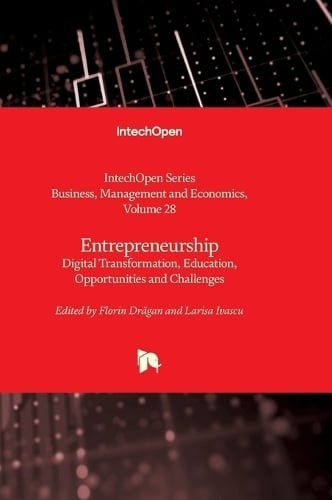
Entrepreneurship : Digital transformation, education, opportunities and challenges ; Vol. 28
Digital transformation and artificial intelligence play an important role in entrepreneurship. this book adopts a multidisciplinary approach to entrepreneurship, exploring how entrepreneurial processes contribute to developing new products and services and innovative business models. recent shifts in business models focus on digital transformation and well-being. entrepreneurship is evolving with innovative approaches, and artificial intelligence is revolutionizing marketing strategies and market engagement. this volume presents a comprehensive overview of entrepreneurship, digital transformation, and entrepreneurial education.

Enhancing urban environment by environmental upgrading and restoration ; Proceedings of the NATO Advanced Research Workshop on enhancing urban environment : environmental upgrading of municipal pollution control facilities and restoration of urban waters, Rome, Italy from 6 - 9 November 2003.
As urban areas keep growing, water infrastructure ages, and the requirements on environmental protection become more rigorous, there is a continual need for upgrading water pollution control facilities and restoring degraded urban waters. Such issues are addressed in this book by focusing on five major topics: (a) Upgrading stormwater management facilities, (b) Retrofitting / upgrading combined sewer overflow (CSO) facilities, (c) Optimising/upgrading sewage treatment plant performance, (d) Urban stream restoration, and (e) Challenges in restoring urban environment. Each chapter contains some overview papers followed by research or case study papers. Besides presentations of new approaches and accomplishments in the field of upgrading and restoration, several papers provide analysis of vast needs in this field in several countries of Central and Eastern Europe, which either recently joined the European Union (EU) or are preparing for accession, and need to comply with the existing EU directives dealing with environmental protection. As such, this book will be of primary interest to researchers and university lecturers dealing with environmental upgrading and restoration, environmental planners from all levels of government, municipal engineers and politicians, and finally the private industry representatives (consultants, private utilities and environmental technology suppliers) searching for new business opportunities among the new or aspiring members of EU.

Enhancing the Role of Ultrasound with Contrast Agents
This bookprovides an up-to-date overview on the clinical value of contrast agents in ultrasound. The volume moves from a background section on technique and methodology to the main sections on the clinical application of contrast ultrasound in the liver and in vascular diseases. A final section discusses results and prospects of contrast ultrasound modality in the other fields.

Enhancing the Dissolution Rate of Atorvastatin by Solid Dispersion Technique
In the last few decades, solid dispersion (SD) technology had been studied as an approach to produce an amorphous carrier to enhance the solubility, dissolution rate, and bioavailability of poorly water-soluble drugs. The use of suitable carrier and methodology in the preparation of SDs play a significant role in the biological behavior of the SDs. Atorvastatin is a statin group HMG-CoA reductase inhibitor drug that is commonly used to adverse cardiovascular events and to lower blood total cholesterol and LDL-cholesterol. the solubility of atorvastatin in water is very low (0.1 mg mL− 1), which results in reduced bioavailability. In order to enhance its solubility, we have prepared solid dispersions (SDs) of atorvastatin at different drug: polymer ratios (1:2, 1:10, 1:20,1:25 and 1:40), using polyethylene glycol 6000 as polymer and different preparation methods (co-precipitate and melting methods) The characterization of the SDs was performed using differential scanning calorimetry (DSC), Fourier transform infrared spectroscopy (FTIR) The solubility of AT was improved by the incorporation PEG6000.

Endovascular Aneurysm Repair : From Bench to Bed
Endovascular procedures have a tremendous impact upon modern patient care. This book summarizes covered stent-graft applications in the experimental and clinical settings. Excellent illustrations document the acute and chronic behavior of stent-grafts within the vascular system including diagnostic imaging, histologic work-up and schematic drawings. A large amount of experience on intravascular ultrasound-based repair of aortic pathologies is presented. Physicians interested in the endovascular field will find this book a very stimulating resource.
