


تحسين النتائح
ترتيب حسب
من
الى

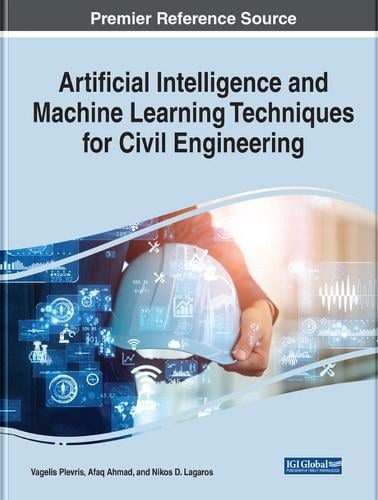
Offers state-of-the-art contributions in the area of AI and its applications in the field of civil engineering presenting methods and implementation of AI and machine learning in multiple facets of civil engineering
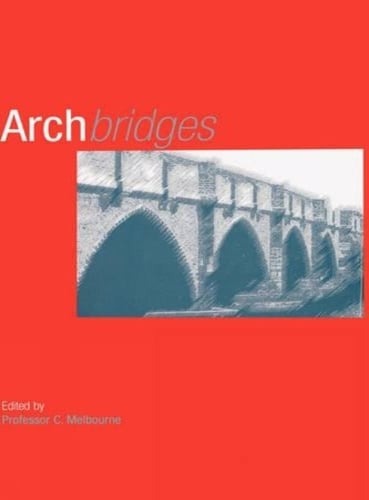
In the twentieth century bridge engineers have seen many changes. Advances in technology, materials and engineers understanding of structural behaviour and methods of analysis has presented opportunities for innovation and have led to increasingly sophisticated solutions to the basic problem of providing a bridge over an obstacle. However, despite these innovative technological changes, the masonry arch bridge has shown itself to be a durable, cost-effective structure, tolerant of its modern environment and out-performing many of its competitors.

This book is a practical guide to the detection and remedy of faults in claddings and fixings on buildings. It sets out the problems involved in common cladding systems for buildings, and relates these problems to all the materials used: stone, masonry, concrete and glass-reinforced composites.
Applied Geotechnics for Construction Projects 3 first presents the basic theoretical principles and rules governing the designing and validation of foundations; shallow, semi-deep and deep, then presents real foundation projects with a detailed comparison of the approaches and methods of calculating foundations in relation to the reference systems and rules in force, closely compared to and validated by the Eurocodes. The third chapter presents examples of foundation projects, covering high-side building rafts, strip footings, piles and embankments, enriched by an unprecedented level of experience in the field of foundations for civil and industrial construction projects.
Addresses the fundamental principles of soil mechanics and the role of water in geotechnical projects and assessments. Applied Geotechnics for Construction Projects 2 outlines the hydraulic properties of soils and the basic concepts of water in soil, detailing the principles of permeability measurement tests and giving concrete test cases, and then goes on to outline the basic notions of soil mechanics as applied in geotechnics: from consolidation to short- and long-term notions via the swelling phenomena of clayey soils, soil shear strength and slope stability. The third chapter presents a comprehensive overview of geotechnical expertise using examples of concrete projects either with or without damage in the context of geotechnical construction works.
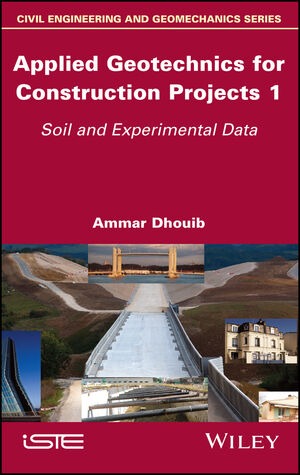
Applied Geotechnics for Construction Projects 1 first defines, identifies and classifies soils, exploring their complexities and weaknesses, and then outlines the basic principles of stresses and strains that establish and develop within soils. The third chapter of the book introduces and develops methods of soil investigation in order to experimentally determine the geotechnical parameters that are useful in the design stage of construction projects.
Povides readers with the tools needed to determine the probability of failure, and when multiplied by the consequences of failure, illustrates how to assess the risk of civil engineering problems. Presenting methods for quantifying uncertainty that exists in engineering analysis and design, with an emphasis on fostering more accurate analysis and design.
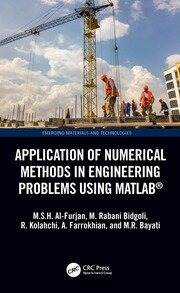
Presents an analysis of structures using numerical methods and mathematical modeling. This structural analysis also includes beam, plate, and pipe elements, and examines deflection and frequency or buckling loads. The various engineering theories of beams/plates/shells are comprehensively presented, and the relationships between stress and strain, and the governing equations of the structure are extracted. To solve governing equations with numerical methods, there are two general types, including methods based on derivatives or integrals. Derivative-based methods have the advantage of flexibility in modeling boundary conditions, low analysis time, and a very high degree of accuracy.
Provides a resource for students and researchers that includes current application of a multi-criteria, decision-making theory in various fields such as: environment, healthcare and engineering.
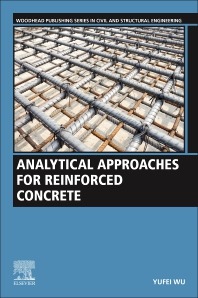
Applies deductive reasoning, logic and mathematics to RC. Laying out, deductively, the principles of RC, it encourages researchers to re-imagine and innovate using a solid conceptual framework. Sections consider the reasoning behind key theories, as well as problems that remain unsolved.
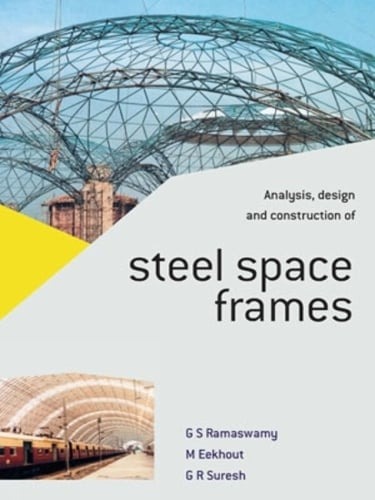
Space frames provide a lightweight solution to the problem of creating large span enclosures free from obstructions. They are employed in many major constrcution projects across the world, as documented in this authoritatively written volume.This is the first in-depth book to present all instances and applications of space frames in various engineering schemes. It uses case studies and numerous illustrations to examine steel space frames from their design to their structural engineering performance.
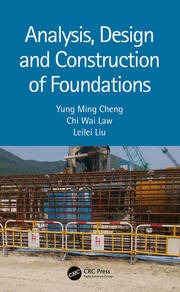
Outlines methods for analysis and design the construction of shallow and deep foundations with particular reference to case studies in Hong Kong and China, as well as a discussion of methods used in other countries. It introduces the main approaches used by geotechnical and structural engineers, and the precautions required for planning and designing foundation structures. Some computational methods and computer programs are reviewed to provide tools for performing more realistic analysis of foundation systems.
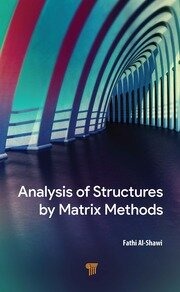
Deals with the analysis of engineering structures made of skeletal members and covers the type of structures that are commonly used in practice. It builds up on the subject matter dealing with matrix algebra, analysis of bar elements, special forms of members, stability and vibration of structures, and pin-connected, rigid-plane, and 3D frames. It treats the important step of formulating the overall stiffness matrix of a structure in a systematic and straightforward manner and uses simple mathematical approaches wherever possible.
Offers a superb introduction to theoretical and practical soil mechanics. Special attention is given to the risks of failure in civil engineering, and themes covered include stresses in soils, groundwater flow, consolidation, testing of soils, and stability of slopes. The basic principles of applied mechanics, that are frequently used, are offered in the appendices. The author’s considerable experience of teaching soil mechanics is evident in the many features of the book: it is packed with supportive color illustrations, helpful examples and references.
This book presents a comprehensive introduction to computational micromechanics, including basic homogenization theory, microstructural optimization and multifield analysis of heterogeneous materials. "An Introduction to Computational Micromechanics".
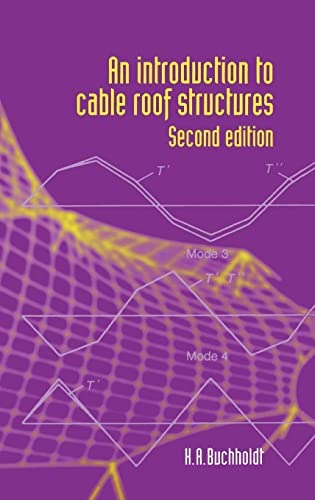
Provides structural engineers with a concise introduction to the architectural, structural and technological aspects of cable roofs, and supplies sufficient information for engineers to carry out their own designs. The improved methods for generating wind and earthquake histories have been included as the trend in modern design codes seem increasingly to require that dynamic response of other forms of non-linear structures such as guyed masts is considered at the design stage.
Achieves three primary goals: To improve the understanding and implementation of the Construction (Design and Management) Regulations 2015 To reduce errors during the design process via the effective implementation of design management strategy To embed the concept of safety in design
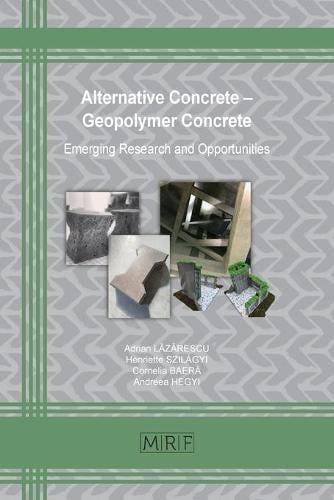
Focuses on fly ash-based alkali-activated geopolymer concrete, its production and characteristic properties. The re-use of waste materials and industrial by-products, such as fly ash, is not only economically of interest but also helps to reduce carbon dioxide emissions. The carbon footprint of these materials is much lower than that of concrete using ordinary Portland cement. They thus offer new sustainable solutions to the construction industry.
Details how Building Information Modelling is being successfully deployed in the planning, design, construction and future operation of the Istanbul New Airport, a mega-scale construction project incorporating a varying mix of infrastructures including terminals, runways, passenger gates, car parks, railways and roads. The book demonstrates how Airport Building Information Modelling (ABIM) is being used to: • facilitate collaboration, cooperation and integrated project delivery • manage subcontractors and eliminate cost over-runs • reduce waste on site and enhance overall quality • connect people in a virtual environment to encourage collaborative working • provide clients with an effective interface for lifecycle management including: design development, construction documentation, construction phases and BIM and Big Data Integration for future facilities management
Focuses on the safety assessment of existing structures subjected to multi-hazard scenarios through advanced numerical methods. Whereas the focus is on concrete dams and nuclear containment structures, the presented methodologies can also be applied to other large-scale ones. This book is composed of seven sections: Fundamentals: theoretical coverage of solid mechnics, plasticity, fracture mechanics, creep, / seismology, dynamic analysis, probability and statistics / Damage: that can affect concrete structures, such as cracking of concrete, AAR, chloride ingress, and rebar corrosion, / Finite Element: formulation for both linear and nonlinear analysis including stress, heat and fracture mechanics, / Engineering Models: for soil/fluid-structure interaction, uncertainty quantification, probablilistic and random finite element analysis, machine learning, performance based earthquake engineering, ground motion intensity measures, seismic hazard analysis, capacity/fragility functions and damage indeces, / Applications to dams through potential failure mode analyses, risk-informed decision making, deterministic and probabilistic examples, / Applications to nuclear structures through modeling issues, aging management programs, critical review of some analyses, / Other applications and case studies: massive RC structures and bridges, detailed assessment of a nuclear containment structure evaluation for license renewal.

سوريا - اتستراد درعا - غباغب
+963-15 2050 - 15 860 380 /1/2/3 - 11 662 3900