


تحسين النتائح
ترتيب حسب
من
الى


This volume provides an overview of climate change data, its effects on the structure and functioning of Antarctic ecosystems, and the occurrence and cycling of persistent contaminants. It discusses the unique physico-chemical characteristics of the Antarctic environment, ecophysiological adaptations of terrestrial and marine organisms, the transfer of contaminants in pelagic and neritic food chains and the possible consequences for animals at higher trophic levels.
Reflects the spirit and scientific excellence of the 18th ESACT meeting in different chapters. This book presents, in form of short papers, a high number of the contributions to the meeting, and has been prepared with the aim to provide a relevant reference of the research efforts in Animal Cell Technology
This volume relates the lessons learned from tumour biology applied to inflammation. This issue of Angiogenesis in Inflammation: Mechanisms and Clinical Correlates develops current knowledge on the mechanisms at the molecular and cellular levels as they relate to inflammation, including acute and chronic inflammation, neurogenic initiation, and the role of the multiple cellular components that comprise inflammation: granulocytes, macrophages, fibroblasts, dendritic cells and lymphocytes. This is related to inflammatory disease: not only the familiar angiogenesis dependent diseases of rheumatoid arthritis and psoriasis, but also loci such as the lung, gastric ulcers, the eye with uveitis, wound healing and periodontal disease and their therapy, how this knowledge may be used in the discovery of novel therapeutics. The volume brings together experts in each of these fields to link the molecular and cellular processes in angiogenesis to those of inflammation and disease, culminating in a discourse on areas for future therapies.
This book presents selected works of contemporary evolutionary morphologists and includes such topics as broad scale reconstructions of the brain and ear of dinosaurs, inference of locomotor habits from cancellous bone architecture in fossil primates, and a comparison of the independently evolved manipulating apparatuses in the lesser and giant pandas. Insight is provided into the application of modern noninvasive technologies, including digital imaging techniques and virtual 3D reconstruction, to the investigation of complex anatomical features and coherences. In combination with traditional methods, this allows for the formulation of improved hypotheses on coordinated function and evolution. The creation of virtual translucent specimens makes it possible to realize the age-old dream of the classical anatomists: looking through the skin into the inner organization of an organism. On full display here is the dramatic and promising impact that modern imaging techniques have on scientific progress in evolutionary morphology.

Active specific immunotherapy is a promising but investigational modality in the management of cancer patients. Currently, several different cancer vaccine formulations such as peptides, proteins, antigen-pulsed dendritic cells, whole tumor cells, etc. in combination with various adjuvants and carriers are being evaluated in clinical trials (1-3). To determine the optimal cancer
This book provides a practical introduction to analysing ecological data using real data sets collected as part of postgraduate ecological studies or research projects. The first part of the book gives a largely non-mathematical introduction to data exploration, univariate methods (including GAM and mixed modelling techniques), multivariate analysis, time series analysis (e.g. common trends) and spatial statistics. The second part provides 17 case studies, mainly written together with biologists who attended courses given by the first authors. The case studies include topics ranging from terrestrial ecology to marine biology.

Analgesics are among the oldest drugs described, albeit not necessarily for medicinaluse. Forexample,theSumeriansisolatedopioids(probablyfortheir euphoric effects) in the third millennium b. c. and the use of willow bark (salicin) for fever was ?rst reported in the eighteenth century. Both types of drugs are still in use, but today they are supplemented by a wide array of substances ranging from antidepressants to ion channel blockers. Not all of theseareprescribedbyphysicians. Manycompoundsaresoldoverthecounter and thus available to the public for self-medication. As a result, analgesics are also the most misused class of drugs and are the culprit for a multitude of healthproblemsdueto untoward sideeffects. Thisvolumeattemptstosummarizethecurrentstateofknowledgeonme- anisms underlying the various effects of these drugs, their side effect pro?les, and their indications and contraindications in clinical use.

Biological control is among the most promising methods for control of pests (including vectors), diseases and weeds. In this book ecological and societal aspects are for the first time treated together. In an ecological approach the aim is to evaluate the significance of certain biological properties like biodiversity and natural habitats. Also, it is important to see biological control from an organic (or ecological) farming point of view. In a societal approach terms like ‘consumer’s attitude’, ‘risk perception’, ‘learning and education’ and ‘value triangle’ are recognised as significant for biological production and human welfare.
Amino Acids Biosynthesis presents the current knowledge of fundamental as well as applied microbiology of amino acids. Topics discussed are the amino acid biosynthetic pathways, their genetic and biochemical regulation, transport of amino acids and genomics of producing microorganisms. The characterization of the control mechanisms of amino acid biosynthesis has revealed insights into principles of genetic and biochemical regulation, such as transcriptional regulators and a new class of regulatory elements, the riboswitch. The volume further deals with the metabolic engineering of microorganisms for the biotechnological production of amino acids for use as pharmaceuticals and, particularly, as food and feed additives.
With hundreds of tables and over 10,000 entries anyone who works or studies in the life sciences or those with a curious mind will find exact answers to many questions requiring comparative data. This book is a clearly laid out presentation of the plain facts of life from all areas of biology. None of those figures or superlatives that might seem exotic to the layman is left out. Biology comes alive by this comprehensive references work.

This book contains a survey of present-day research into the biomedical fundamentals of Alzheimer’s disease (AD). It contains 20 chapters dealing with widely ranging topics, all of which have a bearing upon the understanding and treatment of AD. Starting with a broad survey of the contribution that the various microscopical techniques (light microscopy, electron microscopy, atomic force microscopy)
Alzheimer’s Disease: Advances in Genetics, Cellular and Molecular Biology provides exciting, comprehensive and up-to-date summaries of the most important recent advances in the genetic, molecular, biochemical, and cell biological studies of AD. The studies and advances described in this volume will help to accelerate the process of rational drug discovery and soon serve to extend and enhance the mental health and lifespan of our burgeoning elderly population.
Few medical or scientific addresses have so unmistakeably made history as the presentation delivered by Alois Alzheimer on November 4th, 1906 in Tübingen. The celebratory event, "Alzheimer 100 Years and Beyond" organized on the initiative of the Alzheimer community in Germany and worldwide, in collaboration with the Fondation Ipsen, at the very site of the original lecture, namely the Institute of Psychiatry at the University of Tübingen in Germany from November 2nd to 5th, 2006, was the highlight of the Alzheimer Year. Over the last century of Alzheimer research (1906-2006), remarkable progress has been achieved. Most of the authors of the major discoveries and the people involved in research in this field will present, during the meeting and in this volume, the pioneering research explaining the conditions under which they were conducted. The goal of this book is to honor the work accomplished, to summarize the most important knowledge and to provide material for the history of science.
Splicing of primary RNA transcript, i.e. removal of introns and joining of exons to produce mature mRNAs competent for translation into proteins, is a quasi-systematic step of gene expression in higher organisms. However, this process is not unequivocal but can follow alternate pathways. Alternative splicing of a given transcript can therefore yield several distinct mRNAs encoding as many different proteins. Its full biological significance has not been appreciated until it was recognized that alternative splicing is so general as to affect about 75% of all human genes. Therefore, alternative splicing not only vastly increases protein diversity but also offers numerous opportunities for aberrant splicing events with pathological consequences.

Provides a collection of protocols that will allow researchers to further explore the multiple, fascinating activities of Alpha-1 Antitrypsin (AAT) isoforms in innate immunity, and gene therapy. Written in the highly successful Methods in Molecular Biology series format, chapters include introductions to their respective topics, lists of the necessary materials and reagents, step-by-step, readily reproducible laboratory protocols, and tips on troubleshooting and avoiding known pitfalls.
This book provides a logical introduction to the limits for enzyme function as dictated by the factors that are limits for life. This book presents a complete description of all the mechanisms used for changing enzyme acticity. Eight enzymes are used as model systems after extensive study of their mechanisms. Wherever possible, the human form of the enzyme is used to illustrate the regulatory features.

This book reports on the latest advances in allelopathy through the contributions of leading scientists in the field. The book addresses the history of allelopathy, the science of allelochemicals, and the application of allelopathy in agriculture and forestry. An emphasis on both methodology and application makes Allelopathy a truly practical reference for scientists, researchers and students of plant science, agriculture, forestry, terrestrial ecology and environmental science.
This book provides the reader relevant information about actual knowledge about the process of allelopathy, covering all aspects from the molecular to the ecological level. Special relevance is given to the physiological and ecophysiological aspects of allelopathy. Several ecosystems are studied and methodological considerations are taken into account in several different chapters. The book has been written to be useful both for Ph.D. students and for senior researchers, so the chapters include all necessary information to be read by beginners, but they also include a lot of useful information and discussion for the initiated.
This book is organized around the indication that allelochemicals can be employed for biological control of plant pathogens and plant diseases. Specifically, this volume focuses on (i) discovery and development of natural product based fungicides for agriculture, (ii) direct use of allelochemicals as well as indirect effects through cover crops and organic amendments for plant parasitic pest control and (iii) application of allelopathy in pest management.
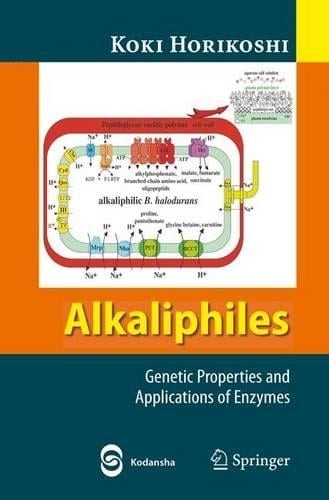
The pioneering work of Dr. Koki Horikoshi on the discovery, research and applications of alkaliphilic bacteria are described here in their entirety. The isolation, distribution and taxonomy of alkaliphilic microorganisms as well as their cell structure and physiology are discussed for a basic understanding of these entities. The molecular biology and genome sequencing of some alkaliphilic bacterial strains are also presented. Part II of the volume focuses on enzymes of alkaliphiles and their applications. These include alkaline proteases, starch-degrading enzymes and numerous others. Some of these enzymes are currently in wide commercial use as laundry detergent additives and in wastewater treatment. Alkaliphiles are a relatively recent field of research that will no doubt provide avenues to a wide range of further discoveries and applications for a new generation of workers in bioscience and technology.

سوريا - اتستراد درعا - غباغب
+963-15 2050 - 15 860 380 /1/2/3 - 11 662 3900