


تحسين النتائح
ترتيب حسب
من
الى

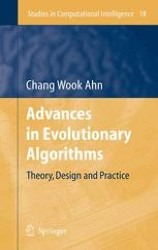
The goal of this book is to provide effective optimization algorithms for solving a broad class of problems quickly, accurately, and reliably by employing evolutionary mechanisms. In this regard, five significant issues have been investigated: Bridging the gap between theory and practice of GEAs, thereby providing practical design guidelines. Demonstrating the practical use of the suggested road map. Offering a useful tool to significantly enhance the exploratory power in time-constrained and memory-limited applications. Providing a class of promising procedures that are capable of scalably solving hard problems in the continuous domain. Opening an important track for multiobjective GEA research that relies on decomposition principle.
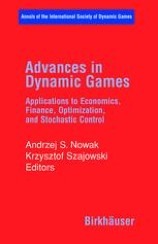
This book focuses on various aspects of dynamic game theory, presenting state-of-the-art research and serving as a guide to the vitality and growth of the field and its applications. The selected chapters, written by experts in their respective disciplines, are an outgrowth of presentations originally given at the 9th International Symposium of Dynamic Games and Applications. Featured throughout are useful tools for researchers and practitioners who use game theory for modeling in many disciplines.

This collection of selected contributions gives an account of recent developments in dynamic game theory and its applications, covering both theoretical advances and new applications of dynamic games in such areas as pursuit-evasion games, ecology, and economics.
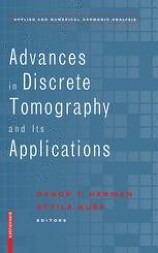
Advances in Discrete Tomography and Its Applications is a unified presentation of new methods, algorithms, and select applications that are the foundations of multidimensional image reconstruction by discrete tomographic methods. The self-contained chapters, written by leading mathematicians, engineers, and computer scientists, present cutting-edge research and results in the field.Three main areas are covered: foundations, algorithms, and practical applications. Following an introduction that reports the recent literature of the field, the book explores various mathematical and computational problems of discrete tomography including new applications.
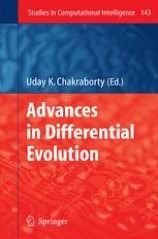
Differential evolution is arguably one of the hottest topics in today's computational intelligence research. This book seeks to present a comprehensive study of the state of the art in this technology and also directions for future research.
Presents a careful selection of relevant applications of CI methods for transport, logistics, and supply chain management problems. The chapters illustrate the current state-of-the-art in the application of CI methods in these fields and should help and inspire researchers and practitioners to apply and develop efficient methods.

Brings together solicited contributions from experts in the various areas of communication/control networks referring to both networks under control (control in networks) as well as networked control systems (control over networks).
Covers advances in automatic differentiation theory and practice. Computer scientists and mathematicians will learn about recent developments in automatic differentiation theory as well as mechanisms for the construction of robust and powerful automatic differentiation tools. Computational scientists and engineers will benefit from the discussion of various applications, which provide insight into effective strategies for using automatic differentiation for inverse problems and design optimization.
Acollection of world class paper articles addressing the following topics: Image and Pattern Recognition: Compression, Image processing, Signal Processing Architectures, Signal Processing for Communication, Signal Processing Implementation, Speech Compression, and Video Coding Architectures. Languages and Systems: Algorithms, Databases, Embedded Systems and Applications, File Systems and I/O, Geographical Information Systems, Kernel and OS Structures, Knowledge Based Systems, Modeling and Simulation, Object Based Software Engineering, Programming Languages, and Programming Models and tools. Parallel Processing: Distributed Scheduling, Multiprocessing, Real-time Systems, Simulation Modeling and Development, and Web Applications. New trends in computing: Computers for People of Special Needs, Fuzzy Inference, Human Computer Interaction, Incremental Learning, Internet-based Computing Models, Machine Intelligence, Natural Language Processing, Neural Networks, and Online Decision Support System.
Presents new optimization algorithms designed to improve the efficiency of tool paths for five-axis NC machining of sculptured surfaces. The book introduces the reader to fundamental issues involved in the tool path planning such as the kinematics of five-axis machines, types of 5 axis machines, part surface representation, machining strips, optimal tool orientation, gouging avoidance and forward step error. It also introduces new methods of optimization based on research conducted by the authors, including schemes performed in the spatial domain, angular domain as well as procedures to optimize the initial setup. The book can be used by undergraduate and graduate students and researchers in the field of NC machining and CAD/CAM as well as by the corporate research groups for advanced optimization of cutting operations.
This book presents a sample of the most recent research concerning the application of computational intelligence techniques and internet technology in computer games. The contents include: - COMMONS GAME in intelligent environment - Adaptive generation of dilemma-based interactive narratives - Computational intelligence in racing games - Evolutionary algorithms for board game players with domain knowledge - The ChessBrain project - Electronic market games - EVE’s entropy - Capturing player enjoyment in computer games This book is directed to researchers, practicing engineers/scientists and students.
Advanced Control of Industrial Processes presents the concepts and algorithms of advanced industrial process control and on-line optimisation within the framework of a multilayer structure. Relatively simple unconstrained nonlinear fuzzy control algorithms and linear predictive control laws are covered, as are more involved constrained and nonlinear model predictive control (MPC) algorithms and on-line set-point optimisation techniques.Advances in Industrial Control aims to report and encourage the transfer of technology in control engineering. The rapid development of control technology has an impact on all areas of the control discipline. The series offers an opportunity for researchers to present an extended exposition of new work in all aspects of industrial control.
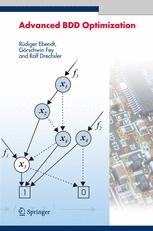
This book gives a modern presentation of the established as well as of recent concepts. Latest results in BDD optimization are given, c- ering di?erent aspects of paths in BDDs and the use of e?cient lower bounds during optimization. The presented algorithms include Branch ? and Bound and the generic A -algorithm as e?cient techniques to - plore large search spaces. ? The A -algorithm originates from Arti?cial Intelligence (AI), and the EDA community has been unaware of this concept for a long time. Re- ? cently, the A -algorithm has been introduced as a new paradigm to explore design spaces in VLSI CAD. Besides AI search techniques, the book also discusses the relation to another ?eld of activity bordered to VLSI CAD and BDD optimization: the clausal representation as a SAT problem.

Adaptive Voltage Control in Power Systems, a self-contained blend of theory and novel application, is an in-depth treatment of such adaptive control schemes. The reader moves from power-system-modelling problems through illustrations of the main adaptive control systems (self-tuning, model-reference and nonlinearities compensation) to a detailed description of design methods: Kalman filtering, parameter-identification algorithms and discrete-time controller design are all represented. Case studies address applications issues in the implementation of adaptive voltage control.
Adaptive spatial filters are powerful algorithms for electromagnetic brain imaging that enable high-fidelity reconstruction of neuronal activity. This book describes the technical advances of adaptive spatial filters for electromagnetic brain imaging by integrating and synthesizing available information and describes various factors that affect its performance.
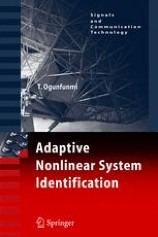
Adaptive Nonlinear System Identification: The Volterra and Wiener Model Approaches introduces engineers and researchers to the field of nonlinear adaptive system identification. The book includes recent research results in the area of adaptive nonlinear system identification and presents simple, concise, easy-to-understand methods for identifying nonlinear systems. These methods use adaptive filter algorithms that are well known for linear systems identification. They are applicable for nonlinear systems that can be efficiently modeled by polynomials.After a brief introduction to nonlinear systems and to adaptive system identification, the author presents the discrete Volterra model approach. This is followed by an explanation of the Wiener model approach. Adaptive algorithms using both models are developed. The performance of the two methods are then compared to determine which model performs better for system identification applications.
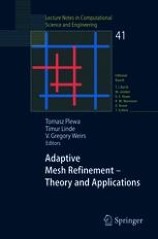
Advanced numerical simulations that use adaptive mesh refinement (AMR) methods have now become routine in engineering and science. Originally developed for computational fluid dynamics applications these methods have propagated to fields as diverse as astrophysics, climate modeling, combustion, biophysics and many others. The underlying physical models and equations used in these disciplines are rather different, yet algorithmic and implementation issues facing practitioners are often remarkably similar. Unfortunately, there has been little effort to review the advances and outstanding issues of adaptive mesh refinement methods across such a variety of fields. This book attempts to bridge this gap. The book presents a collection of papers by experts in the field of AMR who analyze past advances in the field and evaluate the current state of adaptive mesh refinement methods in scientific computing.
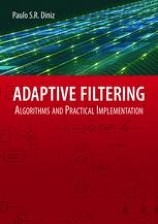
The book presents basic concepts of adaptive signal processing and filtering in a concise and straightforward manner. It concentrates on on-line algorithms whose adaptation occurs whenever a new sample of each environment signal is available. The material also illustrates block algorithms using a sub-band filtering framework whose adaptation occurs when a new block of data is available.
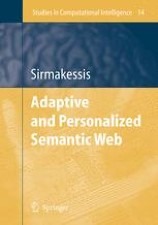
Web Personalization can be defined as any set of actions that can tailor the Web experience to a particular user or set of users. To achieve effective personalization, organizations must rely on all available data, including the usage and click-stream data (reflecting user behaviour), the site content, the site structure, domain knowledge, as well as user demographics and profiles. In addition, efficient and intelligent techniques are needed to mine this data for actionable knowledge, and to effectively use the discovered knowledge to enhance the users' Web experience.
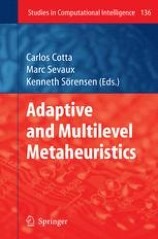
This volume presents recent advances in the area of adaptativeness in metaheuristic optimization, including up-to-date reviews of hyperheuristics and self-adaptation in evolutionary algorithms, as well as cutting edge works on adaptive, self-adaptive and multilevel metaheuristics, with application to both combinatorial and continuous optimization.

سوريا - اتستراد درعا - غباغب
+963-15 2050 - 15 860 380 /1/2/3 - 11 662 3900