



الصفحة 12
الصفحة 12

Knowledge science, engineering and management ; 13th International Conference, KSEM 2020, Hangzhou, China, August 28–30, 2020, Proceedings, Part II
Constitutes the refereed proceedings of the 13th International Conference on Knowledge Science, Engineering and Management, KSEM 2020, held in Hangzhou, China, in August 2020.* The 58 revised full papers and 27 short papers were carefully reviewed and selected from 291 submissions. The papers of the first volume are organized in the following topical sections: knowledge graph; knowledge representation; knowledge management for education; knowledge-based systems; and data processing and mining. The papers of the second volume are organized in the following topical sections: machine learning; recommendation algorithms and systems; social knowledge analysis and management; text mining and document analysis; and deep learning.

IUTAM symposium on topological design optimization of structures, machines and materials ; Status and perspectives
Contains the refereed and edited versions of papers presented at the IUTAM Symposium on Topological Design Optimization of Structures. The IUTAM Symposium provided a forum for the exchange of ideas for - ture developments in the area of topological design optimization. This enc- passed the application to ?uid-solid interaction problems, acoustics problems, and to problems in biomechanics, as well as to other multiphysics problems.
Computational analysis and deep learning for medical care : Principles, methods, and applications
Focuses on the sophisticated methods for improving dye extraction and dyeing properties which will minimize the use of bioresource products. This book also brings out the innovative ways of wet chemical processing to alleviate the environmental impacts arising from this sector.
Clinical Blood Pool MR Imaging
MR Angiography covers the basic techniques, safety, efficacy, image processing and pharmaco-economic details to successfully implement a new level of MRA image quality with this new contrast agent.

Chinese Computational Linguistics ; 19th China National Conference, CCL 2020, Hainan, China, October 30 – November 1, 2020, Proceedings
This book constitutes the proceedings of the 19th China National Conference on Computational Linguistics, CCL 2020, held in Hainan, China, in October/November 2020. The 32 full and 2 short papers presented in this volume were carefully reviewed and selected from 99 submissions. They were organized in topical sections named: fundamental theory and methods of computational linguistics; information retrieval, dialogue and question answering; text generation and summarization; knowledge graph and information extraction; machine translation and multilingual information processing; minority language information processing; language resource and evaluation; social computing and sentiment analysis; and NLP applications.
Case-Based Reasoning on Images and Signals
This book is the first edited book that deals with the special topic of signals and images within Case-Based Reasoning (CBR). It offers different learning capabilities, for all phases of a signal-interpreting system, that satisfy different needs during the development process of a signal-interpreting system.

Cartoony story app = تطبيق قصة كارتونية
The translation of textual narratives into immersive visual representations poses a significant challenge in the field of artificial intelligence. Traditional cartoon generation techniques face formidable technical challenges and require substantial resources. Research efforts towards direct video synthesis from text have encountered obstacles in developing efficient techniques. In parallel, researchers propose an alternative approach involving the generation of dynamic sequences of images portraying children's story narratives. This approach includes applying various visual effects to highlight motion, interaction, and excitement in storytelling. By dynamically generating a sequence of images reflecting the narrative's progression and applying diverse visual effects, this alternative method offers a flexible and practical solution to cartoon generation challenges, providing an efficient and effective experience akin to video while retaining the magical appeal of visual storytelling. ...
Brainlesion: Glioma, Multiple Sclerosis, Stroke and Traumatic Brain Injuries ; 7th International Workshop, BrainLes 2021, Held in Conjunction with MICCAI 2021, Virtual Event, September 27, 2021, Revised Selected Papers, Part I
The content of thebook covers the current state-of-the-art literature on federated learning applications for cancer research and Vclinical oncology analysis, as well as an overview of the deep learning approaches improving the current standard of care for brain lesions and current neuroimaging challenges. It is also focusing on the accepted BrainLes workshop submissions, is to provide an overview of new advances of medical image analysis in all the aforementioned brain pathologies. It brings together researchers from the medical image analysis domain, neurologists, and radiologists working on at least one of these diseases. The aim is to consider neuroimaging biomarkers used for one disease applied to the other diseases.
Brain-inspired computing ; 4th International Workshop, BrainComp 2019, Cetraro, Italy, July 15–19, 2019, Revised Selected Papers
The 11 papers presented in this volume were carefully reviewed and selected for inclusion in this book. They deal with research on brain atlasing, multi-scale models and simulation, HPC and data infra-structures for neuroscience as well as artificial and natural neural architectures.

Blind Equalization and System Identification : Batch Processing Algorithms, Performance and Applications
Discrete-time signal processing has had a momentous impact on advances in engineering and science over recent decades. The rapid progress of digital and mixed-signal integrated circuits in processing speed, functionality and cost-effectiveness has led to their ubiquitous employment in signal processing and transmission in diverse milieux. Topics covered include: • SISO, MIMO and 2-d non-blind equalization (deconvolution) algorithms. • SISO, MIMO and 2-d blind equalization (deconvolution) algorithms. • SISO, MIMO and 2-d blind system identification algorithms. • algorithm analyses and improvements. • applications of SISO, MIMO and 2-d blind equalization/identification algorithms.

Biometrics and Identity Management ; 1st European Workshop, BIOID 2008, Roskilde, Denmark, May 7-9, 2008. Revised Selected Papers
This volume constitutes the post-conference proceedings of the First European Workshop on Biometrics and Identity Management, BIOID 2008, held in Roskilde, Denmark, during May 7-9, 2008.

Biomedical Simulation; 4th International Symposium, ISBMS 2008, London, UK, July 7-8, 2008 Proceedings
This book constitutes the refereed proceedings of the 4th International Symposium on Biomedical Simulation, ISBMS 2008, held in London, UK, in July 2008.

Biomedical Image Registration ; 3rd International Workshop, WBIR 2006, Utrecht, The Netherlands, July 9-11, 2006, Proceedings
This book constitutes the thoroughly refereed post-proceedings of the Third International Workshop on Biomedical Image Registration. The 20 revised full papers and 18 revised poster papers presented were carefully reviewed and selected for inclusion in the book. The papers cover all areas of biomedical image registration; methods of registration, biomedical applications, and validation of registration.
Biomedical data mining for information retrieval : Methodologies, techniques, and applications
Discusses data mining, biomedical image processing, information retrieval with broad coverage of basic scientific applications. covers the topic of mining biomedical text, images and visual features towards information retrieval. Biomedical and health informatics is an emerging field of research at the intersection of information science, computer science, and healthcare and brings tremendous opportunities and challenges due to easily available and abundant biomedical data for further analysis. The aim of healthcare informatics is to ensure the high-quality, efficient healthcare, better treatment and quality of life by analyzing biomedical and healthcare data including patient’s data, electronic health records (EHRs) and lifestyle. Previously, it was a common requirement to have a domain expert to develop a model for biomedical or healthcare; however, recent advancements in representation learning algorithms allows us to automatically to develop the model. Biomedical image mining, a novel research area, due to the vast amount of available biomedical images, increasingly generates and stores digitally.

Biologically Inspired Approaches to Advanced Information Technology ; 2nd International Workshop, BioADIT 2006, Osaka, Japan 26-27, 2006, Proceedings
This book contains 30 articles and three abstracts of invited talks presented at The Second International Workshop on Biologically Inspired Approaches for Advanced Information Technology,The workshop is intended to provide an e?ective forum for original research results in the ?eld of bio-inspired approaches to advanced information technologies. It also serves to foster the connection between biological paradigms and solutions to building the next-generation information systems.

Biological and medical data analysis ; Vol. 3745 ; 6th International symposium, ISBMDA 2005, Aveiro, Portugal, November 10-11, 2005, Proceedings
The 6th International Symposium on Biological and Medical Data Analysisaimed to become a place where researchersinvolved in these diverse but increas-ingly complementary areas could meet topresent and discuss their scientificresults.The papers in this volume discuss issues from statistical models to archi-tectures and applications to bioinformatics and biomedicine. They cover bothpractical experience and novel research ideas and concepts.

Bioimage Data Analysis Workflows
This book provides students and researchers in the life sciences with essential practical information on how to quantitatively analyze data images. It refrains from focusing on theory, and instead uses practical examples and step-by step protocols to familiarize readers with the most commonly used image processing and analysis platforms such as ImageJ, MatLab and Python.
Bézier and Splines in image processing and machine vision
Digital image processing and machine vision have grown considerably during the last few decades. Of the various techniques, developed so far splines play a positive and significant role in many of them. This book deals with various image processing and machine vision problems efficiently with splines.
Beginning Python : From novice to professional
Ten different projects illustrate the concepts introduced in the book. You will learn how to create a P2P file-sharing application and a web-based bulletin board, and how to remotely edit web-based documents and create games. Author Magnus Lie Hetland is an authority on Python and previously authored Practical Python. He also authored the popular online guide, Instant Python Hacking, on which both books are base
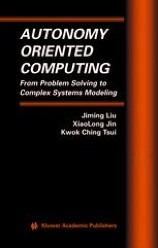
Autonomy oriented computing : From problem solving to complex systems modeling
Autonomy Oriented Computing explores the important theoretical and practical issues in AOC, by analyzing methodologies and presenting experimental case studies. The book serves as a comprehensive reference source for researchers, scientists, engineers, and professionals in all fields concerned with this promising new development in computer science. It can also be used as a main or supplementary text in graduate and undergraduate programs across a broad range of computer-related disciplines, including Robotics and Automation, Amorphous Computing, Image Processing and Computer Vision, Programming Paradigms, Computational Biology, and many others. The first part of the book, Fundamentals, describes the basic concepts and characteristics of an AOC system, and then it enumerates the critical design and engineering issues faced in AOC system development. The second part of the book, AOC in Depth, provides a detailed analysis of methodologies and case studies to evaluate the use of AOC in problem solving and complex system modeling. The final chapter reviews the essential features of the AOC paradigm and outlines a number of possibilities for future research and development.
