



الصفحة 12
الصفحة 12

European E-Democracy in Practice
This book explores how digital tools and social media technologies can contribute to better participation and involvement of EU citizens in European politics. By analyzing selected representative e-participation projects at the local, national and European governmental levels, it identifies the preconditions, best practices and shortcomings of e-participation practices in connection with EU decision-making procedures and institutions

European cultural diplomacy and Arab Christians in Palestine, 1918–1948 : Between contention and connection
This book investigates the transnationally connected history of Arab Christian communities in Palestine during the British Mandate (1918-1948) through the lens of the birth of cultural diplomacy.

European citizenship after Brexit : Freedom of movement and rights of residence
This book investigates European citizenship after Brexit, in light of the functionalist theory of citizenship. No matter its shape, Brexit will impact significantly on what has been labelled as one of the major achievements of EU integration: Citizenship of the Union. For the first time an automatic and collective lapse of status is observed. It is a form of involuntary loss of citizenship en masse, imposed by the automatic workings of the law on EU citizens of exclusively British nationality. It does not however create statelessness and it is likely to be tolerated under international law. This loss of citizenship is connected to a reduction of rights, affecting not solely the former Union citizens but also second country nationals in the United Kingdom and their family members.

European capital markets law
Examines the underlying concepts from a broadly interdisciplinary perspective. The 3rd edition deals with 3 central developments: the project of the capital markets union; sustainable finance; and the further digitalisation of financial instruments and securities markets. Throughout the book emphasis is placed on legal practice, and frequent reference is made to the key decisions of supervisory authorities and courts

European Aeronautics : The Southwestern Axis
The book covers both the analysis of the major producer of civil aircraft (EADS/Airbus) located in the region and its relation with the cluster of enterprises within those regions.

Europe : I Struggle, I Overcome
Wilfried Martens has devoted his entire life to politics: as student leader, youth activist, President of the Flemish Christian Democrats, Prime Minister of Belgium, President of the European People's Party and European statesman. In his autobiography Martens offers the inside story on running a complex country like Belgium, fighting for European integration and unification, and transforming the European People's Party into a strong, united centre-right movement and leading European political family. Above all, this is book about the intricacies of European politics and its guiding ideas, values and principles.
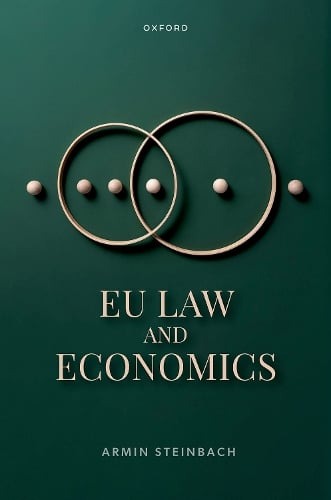
EU law and economics
Examines the design and evolution of European law from the perspective of economics. It draws on various branches of the economic sciences including rational choice and game theory, and institutional and behavioural economics to expand our understanding of EU law and its effects. It seeks to complement doctrinal research on EU law by generating insights.

EU External Action in International Economic Law : Recent Trends and Developments
The topic of the external action of the EU within international economic law, with a special focus on investment law. The aim of the volume is to provide the reader with an appraisal of the most recent trends and developments that have characterised a field that has been rapidly evolving and in which the EU has imposed itself as a leading actor.

EU Digital Copyright Law and the End-User
This book is the first comprehensive exploration of the legal framework of EU digital copyright law from the perspective of the ‘end-user’. This multi-faceted actor of the digital environment is a consumer of copyrighted works, a file-sharer of these works on the Internet, and a possible follow-on creator, who builds upon pre-existing digitised materials. All of these activities raise significant issues for national, European and international legal systems.

Ethics and Civil Drones : European Policies and Proposals for the Industry
Disseminates some of the results of the European H2020 AiRT Project (Technology transfer of RPAs for the creative industry).

Equity Valuation Using Multiples : An Empirical Investigation
Andreas Schreiner examines the role of multiples in equity valuation. He transforms the standard multiples valuation method into a comprehensive framework for using multiples in valuation practice, which corresponds to economic theory and is consistent with the results of a broad empirical study of European and U.S. equity markets.

Equitable research partnerships : A global code of conduct to counter ethics dumping
This book offers insights into the development of the ground-breaking Global Code of Conduct for Research in Resource-Poor Settings (GCC) and the San Code of Research Ethics. Using a new, intuitive moral framework predicated on fairness, respect, care and honesty, both codes target ethics dumping – the export of unethical research practices from a high-income setting to a lower- or middle-income setting. The book is a rich resource of information and argument for any research stakeholder who opposes double standards in research. It will be indispensable for applicants to European Union framework programmes, as the GCC is now a mandatory reference document for EU funding.

EQ-5D value sets
For various reasons, cost benefit analysis is usually rejected in favour of cost-effectiveness or cost-utility analyses, often involving the estimation of the incremental cost per Quality Adjusted Life Year (QALY) gained (Drummond et al, 2005). The estimation of QALYs gained requires valuations for all relevant health states on a scale anchored at 1 = Full health and 0 = Dead. The EQ-5D is widely used in this context and a number of value sets are available for all the health states generated by the EQ-5D descriptive system. These can be readily applied to health outcomes measured as EQ-5D profiles. EQ-5D has become one of the valuation approaches recommended by several reimbursement authorities and academic bodies in European countries

Environmental Governance in Latin America
The multiple purposes of nature – livelihood for communities, revenues for states, commodities for companies, and biodiversity for conservationists – have turned environmental governance in Latin America into a highly contested arena. In such a resource-rich region, unequal power relations, conflicting priorities, and trade-offs among multiple goals have led to a myriad of contrasting initiatives that are reshaping social relations and rural territories. This edited collection addresses these tensions by unpacking environmental governance as a complex process of formulating and contesting values, procedures and practices shaping the access, control and use of natural resources. Contributors from various fields address the challenges, limitations, and possibilities for a more sustainable, equal, and fair development. In this book, environmental governance is seen as an overarching concept defining the dynamic and multi-layered repertoire of society-nature interactions, where images of nature and discourses on the use of natural resources are mediated by contextual processes at multiple scales.

Enhancing urban environment by environmental upgrading and restoration ; Proceedings of the NATO Advanced Research Workshop on enhancing urban environment : environmental upgrading of municipal pollution control facilities and restoration of urban waters, Rome, Italy from 6 - 9 November 2003.
As urban areas keep growing, water infrastructure ages, and the requirements on environmental protection become more rigorous, there is a continual need for upgrading water pollution control facilities and restoring degraded urban waters. Such issues are addressed in this book by focusing on five major topics: (a) Upgrading stormwater management facilities, (b) Retrofitting / upgrading combined sewer overflow (CSO) facilities, (c) Optimising/upgrading sewage treatment plant performance, (d) Urban stream restoration, and (e) Challenges in restoring urban environment. Each chapter contains some overview papers followed by research or case study papers. Besides presentations of new approaches and accomplishments in the field of upgrading and restoration, several papers provide analysis of vast needs in this field in several countries of Central and Eastern Europe, which either recently joined the European Union (EU) or are preparing for accession, and need to comply with the existing EU directives dealing with environmental protection. As such, this book will be of primary interest to researchers and university lecturers dealing with environmental upgrading and restoration, environmental planners from all levels of government, municipal engineers and politicians, and finally the private industry representatives (consultants, private utilities and environmental technology suppliers) searching for new business opportunities among the new or aspiring members of EU.

English in the German-Speaking World
Borrowings from English in present-day German, as well as the use of English in public places, is also discussed, as is the use of English by non-Germans living in Germany, and the situation of Germany as a country with English as a foreign language.

Engineering societies in the agents world V : 5th international workshop, ESAW 2004, Toulouse, France, October 20-22, 2004 : revised selected and invited papers
The ?rst workshop “Engineering Societies in the Agents World” (ESAW) was held in August 2000, in conjunction with the 14th European Conference on Arti?cial Intelligence (ECAI 2000) in Berlin. It was launched by a group of - searchers who thought that the design and development of MASs (multi-agent systems) not only needed adequate theoretical foundations but also a call for new techniques, methodologies and infrastructures to develop MASs as arti?cial societies. The second ESAW was co-located with the European Agent Summer School (ACAI 2001) in Prague, and mostly focused on logics and languages, middleware, infrastructures and applications. In Madrid, the third ESAW c- centrated on models and methodologies and took place with the “Cooperative Information Agents” workshop (CIA 2002). The fourth ESAW in London was the ?rst one that ran as a stand-alone event: apart from the usual works on methodologies and models, it also stressed the issues of applications and m- tidisciplinary models. Based on the success of previous ESAWs, and also given that the di?cult challenges in the construction of arti?cial societies are not yet fully addressed, the ?fth ESAW workshop was organized in the same spirit as its predecessors.

Engineering Knowledge in the Age of the Semantic Web ; 15th International Conference, EKAW 2006, Podebrady, Czech Republic, October 6-10, 2006, Proceedings
The 15th International Conference on Knowledge Engineering and Knowledge Management (2006), held on October 6-10, 2006 in Pod? ebrady,Czech Republic, followed a long tradition of European Knowledge Acquisition Workshops (from 1987),whicheventuallyacquiredtheformatofconference(in2000)whilekeeping their open-minded and interactive spirit. During the nearly 20 year lifespan of the series, the discipline of knowledge engineering (KE) evolved greatly. While knowledge acquisition (KA) techniques dominated in the very ?rst years, formal approaches to knowledge-based inf- ence and variousnew streamssuch as knowledgediscoveryfrom data/textslater cameinto play. During thelate1990sandafterwards,EKAWbecamea founding community for ontology and Semantic Web Research, which was also re?ected in the sub-titles of the 2002 and 2004 editions: “Ontologies and the Semantic Web” and “Engineering Knowledge in the Age of the Semantic Web,” resp- tively.

Energy Poverty : (Dis)Assembling Europe's Infrastructural Divide
Aims to consolidate and advance debates on European and global energy poverty by exploring the political and infrastructural drivers and implications of the condition across a variety of spatial scales. It highlights the need for a geographical conceptualization of the different ways in which household-level energy deprivation both influences and is contingent upon disparities occurring at a wider range of spatial scales. There is a strong focus on the relationships among energy transformation, institutional change and place-based factors in determining the nature and location of energy-related injustices. The book also explores how patterns and structures of energy poverty have changed over time, as evidenced by some of the common measures used to describe the condition. In part, this means investigating the makeup of energy poor demographics across various social and spatial cleavages. More broadly, it also argues that energy sector reconfigurations are both reflected in and shaped by various domains of social and political organization, especially in terms of creating poverty-relevant outcomes.

Encounters and Practices of Petty Trade in Northern Europe, 1820–1960 : Forgotten Livelihoods
Uncovers one important, yet forgotten, form of itinerant livelihoods, namely petty trade, more specifically how it was practiced in Northern Europe during the period 1820–1960. It investigates how traders and customers interacted in different spaces and approaches ambulatory trade as an arena of encounters by looking at everyday social practices. Petty traders often belonged to subjugated social groups, like ethnic minorities and migrants, whereas their customers belonged to the resident population. How were these mobile traders perceived and described? What goods did they peddle? How did these commodities enable and shape trading encounters? What kind of narratives can be found, and whose? These questions pertaining to daily practices on a grass-root level have not been addressed in previous research.
