



الصفحة 12
الصفحة 12

Environmental Risk Assessment : Quantitative Measures, Anthropogenic Influences, Human Impact
The world is a dirty place and getting dirtier all the time. The reasons for this ever-increasing lack of cleanliness are not hard to find, being basically caused by the actions of the six billion people who inhabit the planet. The needs of the people for air, water, food, housing, clothing, heating, materials, oil, gas, minerals, metals, chemicals, and so forth have, over the centuries, given rise to a variety of environmental problems that have been exacerbated or been newly created by the industrialization of the world, the increase in population, and the increase in longevity of the population. The costs of cleaning even fractions of the known environmental problems are truly enormous, as detailed in the volume Environmental Risk Analysis (I. Lerche and E. Paleologos, 2001, McGraw-Hill). The chances of causing new environmental problems, and their associated costs of clean up, are equally challenging in terms of anthropogenic influences and also of the natural environmental problems that can be triggered by humanity.

Environmental Problems of Central Asia and their Economic, Social and Security Impacts
entral Asia is a developing region with great potential, but there are valid concerns that current resource management practices are not sustainable, particularly with regard to the management of water resources. Recent changes in social structures, accompanied by regional climate change, have caused substantial environmental changes leading to security concerns in the region. As a result, the local economy has been significantly impacted to the extent that the potential for social unrest is of great concern.

Environmental Policy Analyses : Learning from the Past for the Future - 25 Years of Research
The criteria used to select the fifteen contributions in this book were their impact on the scientific debate at the time of their publication, their validity for p- sent conceptualizations of policy analysis in the field of the environment, and their contribution to the development of policy analysis as a whole . Moreover, the selected contributions mainly focus on empirical appli- tions in the field of environmental policies or the interface between en- ronmental and non-environmental policies. Some have led to concrete p- icy recommendations of which most have been partly implemented since, This research also sometimes addressed regional political administrative arrangements leading to administrative reforms and new strategic directions of implementing agencies.

Environmental Photochemistry ; Part II
Photochemical reactions play a major role in the environment including a wide range of reactions in the atmosphere, natural waters, soil and living organisms. This new volume on Environmental Photochemistry up-dates the previous edition with chapters on basic aspects including concepts of photochemical transformations and mechanistic photochemical processes in the atmosphere and water. In addition a range of applications are also detailed such as advanced photochemical oxidation processes for water and air treatment as well as applications of photocatalysis for surface treatment and nuclear fuel reprocessing. The new edition provides a critical up to date overview of the most important research in the field of environmental photochemistry.

Environmental Modeling : Using MATLAB®
“Environmental Modeling using MATLAB R ” by Ekkehard Holzbecher is an excellent publication and a novel approach covering the intersection of two important, growing worlds – the world of environmental modeling and of mathematical software. Environmental modeling is a science that uses mathematics and comp- ers to simulate physical and chemical phenomena in the environment (e.g., environmental pollution).
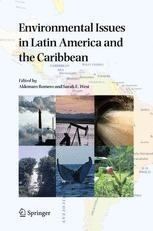
Environmental Issues in Latin America and the Caribbean
This book is a non-technical interdisciplinary collection of 12 essays, each of which uses natural or social science methods. The essays analyze a representative set of environmental issues in Latin America and the Caribbean. They consider problems at international, regional, national, and local levels and examine current and historical environmental policy. The essays are organized according to theme and approach into five parts: -conservation challenges; -national policies, local communities, and rural development; -market mechanisms for protecting public goods; -public participation and environmental justice; -the effects of development policies on the environment. Contributors are researchers from Canada, Europe, Latin America, and the United States

Environmental impact assessment of recycled wastes on surface and ground waters ; Vol.3 : Engineering modeling and sustainability
The state of the art of the impact assessment of recycled hazardous waste materials on surface and ground waters is presented. The topics include chemodynamics, toxicology, modeling and information systems. The book serves as a practical conceptual guide for those who have professional responsibility for the monitoring, design, management, or conduct of environmental impact assessment. It is believed that the book will prove useful to the reader who, regardless of disciplinary background, wants to examine in greater detail the kinds of interdisciplinary contributions to contemporary decision-making processes that characterize modern impact assessment project development.

Environmental Impact Assessment of Recycled Wastes on Surface and Ground Waters ; Vol.2 : Risk analysis
The state of the art of the impact assessment of recycled hazardous waste materials on surface and ground waters is presented. The topics include chemodynamics, toxicology, modeling and information systems. The book serves as a practical conceptual guide for those who have professional responsibility for the monitoring, design, management, or conduct of environmental impact assessment. It is believed that the book will prove useful to the reader who, regardless of disciplinary background, wants to examine in greater detail the kinds of interdisciplinary contributions to contemporary decision-making processes that characterize modern impact assessment project development.

Environmental Impact Assessment of Recycled Wastes on Surface and Ground Waters ; Vol.1 : Concepts, methodology and cemical analysis
The state of the art of the impact assessment of recycled hazardous waste materials on surface and ground waters is presented. The topics include chemodynamics, toxicology, modeling and information systems. Due to the wealth of information on this topic, the texts of T. Kassim (ed.): Environmental Impact Assessment are published in three separate volumes: vol. 1: Concepts, Methodology and Chemical Analysis; vol. 2: Risk Analysis and vol. 3: Engineering Modeling and Sustainability. The book serves as a practical conceptual guide for those who have professional responsibility for the monitoring, design, management, or conduct of environmental impact assessment. It is believed that the book will prove useful to the reader who, regardless of disciplinary background, wants to examine in greater detail the kinds of interdisciplinary contributions to contemporary decision-making processes that characterize modern impact assessment project development.

Environmental History of the Rhine-Meuse Delta : An ecological story on evolving human–environmental relations coping with climate change and sea-level rise
This book presents the environmental history of the Delta of the lowland rivers Rhine and Meuse, an ecological story on evolving human–environmental relations coping with climate change and sea-level rise. It offers a combination of in-depth ecology and environmental history, dealing with exploitation of land and water, the use of everything nature provided, the development of fisheries and agriculture, changes in biodiversity of higher plants, fish, birds, mammals and invasive exotics. It is the first comprehensive book written in English on the integrated environmental history of the Delta, from prehistoric times up to the present day. It covers the l- acy of human intervention, the inescapable fate of reclaimed, nevertheless subs- ing and sinking polders, ‘bathtubs’ attacked by numerous floods, reclaimed in the Middle Ages and unwittingly exposed to the rising sea level and the increasing amplitude between high and low water in the rivers. The river channels, constricted and regulated between embankments, lost their flood plains, silted up, degraded and incised. Cultivation of raised bog deposits led to oxidation and compacting of peat and clay, resulting in progressive subsidence and flooding; arable land had to be changed into grassland and wetland. For millennia muscular strength and wind and water powers moulded the country into its basic form. From 1800 onwards, acceleration and scaling up by steam power and electricity, and exponential popu- tion growth, resulted in the erection of human structures ‘fixed forever’, and severe pressure on the environment.

Environmental Health in Central and Eastern Europe
Complex chemical mixtures impact our health every day. In the United States, and also in Central and Eastern Europe, there are a number of locations where complex chemical mixtures have been released to environmental media. Although exposure to mixtures is common, minimal information exists to quantify these exposures, or to determine their impact on human or ecological receptors. These proceedings present some of the most current research conducted to quantify complex mixtures in the environment and investigate their potential impact on human health. Many of the manuscripts reported in these proceedings represent the most up-to-date measurements of population exposures in Central and Eastern Europe. These studies are of value to health and environmental professionals around the world as they develop strategies for assessing exposures, remediating contaminated environments, and improving public health.

Environmental health impacts of transport and mobility
Transport and mobility are essential parts of the current organization of society. Complex activities are interwoven in such a way that problems occurring from the actual process of constant movement cannot be separated, as they are so tightly interconnected. This book examines the health effects of transport and mobility by addressing the major issues related to the subject and analyzing their consequences. Thus not only are air pollution, noise, and sedentarism and its related endocrine problems discussed, but topics such as jet-lag, accidents and violent displacement are also addressed. The strength of this book over others in the field lies in its multidisciplinary approach to the issues by a number of experts in different scientific fields who are documenting the health effects of transport and mobility. Moreover, it enhances the understanding of the issues by integrating information from different geographical regions.

Environmental Governance of the Baltic Sea
This edited volume presents a comprehensive and coherent interdisciplinary analysis of challenges and possibilities for sustainable governance of the Baltic Sea ecosystem by combining knowledge and approaches from natural and social sciences. Focusing on the Ecosystem Approach to Management (EAM) and associated multi-level, multi-sector and multi-actor challenges, the book provides up-to-date descriptions and analyses of environmental governance structures and processes at the macro-regional Baltic Sea level.

Environmental Geology : Handbook of Field Methods and Case Studies
As earth’s population continues to grow and the detrimental aftereffects of industrialization and environmental negligence become more apparent, society has become more aware of, and concerned about, stewardship of the natural environment – water, soil, and air. Sustainable development has become more widely received and promoted in many parts of the world. The need is now critical for earth and environmental scientists and engineers to work together to implement technologies that can preserve our environment. The Earth’s population was 6.6 billion as of April 2007 according to the U.S. Census Bureau. This number is expected to rise to 9.4 billion by 2050. The population is increasing the demand for natural resources and energy, and increasing stress on the environment. Thus, protection of the environment and remediation of damage to the environment must be a priority. It is also important to develop procedures that will help to avert further damage to the environment and to recognize as early as possible the risks associated with changes in the environment. Many methodologies and technologies have become more advanced in the past few decades, and new technologies and approaches have been developed, all to address the growing need for environmental assessment, monitoring, and remediation. As these technologies have grown, the need for interdisciplinary cooperation has also become more apparent.

Environmental Effects of Marine Finfish Aquaculture
Environmental risks associated with large-scale marine finfish cage aquaculture have led to claims that the long-term sustainability of the industry is in doubt. Methods and models currently used to measure near and far-field environmental effects of finfish mariculture and to assess their implications for management are presented in 20 chapters arranged in four sections (Eutrophication, Sedimentation and Benthic Impacts, Changes in Trophic Structure and Function, and Managing Environmental Risks). Case studies show how models may be used to predict environmental changes and provide management tools to minimize potentially adverse environmental risks. The volume is of interest to those working towards sustainable development of mariculture, including environmental managers and decision-makers with regulatory responsibilities.

Environmental Crises
This book studies the art and science of analyzing, assessing and anticipating environmental change. Among the issues considered are the observational evidence, statistical analysis and dynamic modeling as well as visioning of not-implausible changes in the environment, the changing public perception of the environment, functions of the environment and its use. Coverage also reviews a series of four prominent cases, namely climate change, the emissions of gasoline lead into the atmosphere and water bodies, fisheries policies and the management of marine oil pollution.

Environmental Chemistry : Green Chemistry and Pollutants in Ecosystems
Environmental chemistry is a new, fast developing science aimed at deciphering fundamental mechanisms ruling the behaviour of pollutants in ecosystems. Applying this knowledge to current environmental issues leads to the remediation of environmental media, and to new, low energy, low emission, sustainable processes. This book describes the state-of-the-art advances regarding the pollution of water, soils, atmosphere, food and living organisms by toxic metals, fossil fuels, pesticides and other organic pollutants. Furthermore, the eco-toxicology section presents novel bio-assays to assess the toxicity of various pollutants such as dioxins and endocrine disrupters within complex media. The green chemistry section highlights novel chemical reactions based upon environmentally friendly conditions. The analytical chemistry section describes very sensitive methods which trace the fate of pollutants in complex ecosystems.

Environmental change and human security : Recognizing and acting on hazard impacts
This book focuses on the linkage between human and environmental security and takes both a conceptual and a pragmatic approach to complex environmental issues (such as soil erosion, desertification, water degradation, demographic shifts, food security and agricultural prospects, urbanization trends, hazard-induced migrations) that affect human security. The book is the direct outcome of a NATO Advanced Research Workshop (ARW), sponsored by the Science for Peace and Security Programme (SPS), Salve Regina University, United Nations Environment Programme (UNEP) and the United States Environmental Protection Agency (EPA). The book summarizes the collective work of both natural and social science disciplines in regard to how best address, mitigate, adapt, or achieve resilience

Environmental Bioremediation Technologies
Environmental contamination from both natural and anthropogenic sources is, today, a major environmental concern due to pervasiveness and persistence of many toxicants. It is considered as an inevitable evil of our progress and modernization. To decontaminate the soils, sediments and waters, polluted by anthropogenic activities, the scientists and technologists have evolved different technologies over the years. Although we have to pay high cost for physical and chemical environmental technologies, but they are not eco-friendly and safe. Hence, it was deeply realized to develop viable technologies employing microbes and plants to remediate not only metallic residues and radionuclides, but also the xenobiotic compounds like PCBs, PAHs, PCPs, petroleum sludge and the military wastes. No doubt, the scientists have also got some success in this endeavour and as the result, many companies are in place today to promote the sale of plant or microbe-based technologies to deal with specific environmental contamination challenges. Besides, these technologies are se- driven and do not disturb the sites in cleaning process.

Environmental and Health Risk Assessment and Management : Principles and Practices
The book covers the essential aspects of environmental and health law, environmental economics, applied statistical and probabilistic methods, fundamental notions of applied epidemiology and toxicology, as well as decision analysis, to provide an integrated overview of how risk assessment and management combine to produce sound societal outcomes. Risk-based methods play a pivotal role in identifying and ranking alternative, sustainable choices, while accounting for uncertainty and variability. Specifically, most reductions in risks require a balancing of the costs and benefits associated with the action to reduce exposure to a hazard and thus risk. This balancing necessarily involves linking exposure and response through causation. Fundamentally, in risk assessment and management, science and law intersect through legal and scientific causation to the point that the failure to provide a sound causal argument can make an otherwise beneficial law or regulation invalid.
