



الصفحة 12
الصفحة 12
Apoptosis, Senescence, and Cancer
Apoptosis, Senescence and Cancer provides insight into established practices and research into apoptosis and senescence by thoroughly examining novel and emerging techniques and research in the fields of cell death pathways, senescence growth arrest, drugs and resistance, DNA damage response, and other topics which still hold mysteries for researchers.this volume provides basic scientists and clinicians with a deeper and more complete understanding of the cellular responses of malignancies which may determine the effectiveness of treatment.

Antibody-drug conjugates and cellular metabolic dynamics
Summarizes the related research achievements in Antibody-drug conjugates (ADCs) and their cell metabolism kinetics. The book has three main parts. The first part describes the basic theory of ADCs, including the basic concept and structure of ADCs, and the relationship between the targets of ADCs and their specific functions. The second part mainly introduces the endocytosis and intracellular metabolism of ADCs, including the relationship between endocytosis and ADC activity, the endocytosis and intracellular transport of ADCs, the distribution and metabolism of ADC in vivo. Then it discusses the new formats and research technology of ADCs, including the application of miniaturized antibodies in ADC synthesis, novel carriers for ADC design, the technology and application of site-specific conjugation, and approaches for analyzing the drug: antibody ratio (DAR), the study of pharmacokinetics of ADCs.

Anti Cancer medicines derived from plants
Cancer is a broad term. It describes the disease that results when cellular changes cause the uncontrolled growth and division of cells. Some types of cancer cause rapid cell growth, while others cause cells to grow and divide ata slower rate. Certain forms of cancer result in visible growths called tumors, while others, such as leukemia, do not. Most of the body’s cells have specific functions and fixed lifespans. While it may sound like a bad thing, cell death is part of a natural and beneficial phenomenon called apoptosis.
Angiogenesis in Inflammation : Mechanisms and Clinical Correlates
This volume relates the lessons learned from tumour biology applied to inflammation. This issue of Angiogenesis in Inflammation: Mechanisms and Clinical Correlates develops current knowledge on the mechanisms at the molecular and cellular levels as they relate to inflammation, including acute and chronic inflammation, neurogenic initiation, and the role of the multiple cellular components that comprise inflammation: granulocytes, macrophages, fibroblasts, dendritic cells and lymphocytes. This is related to inflammatory disease: not only the familiar angiogenesis dependent diseases of rheumatoid arthritis and psoriasis, but also loci such as the lung, gastric ulcers, the eye with uveitis, wound healing and periodontal disease and their therapy, how this knowledge may be used in the discovery of novel therapeutics. The volume brings together experts in each of these fields to link the molecular and cellular processes in angiogenesis to those of inflammation and disease, culminating in a discourse on areas for future therapies.

Analyzing T cell responses : How to analyze cellular immune responses against tumor associated antigens
Active specific immunotherapy is a promising but investigational modality in the management of cancer patients. Currently, several different cancer vaccine formulations such as peptides, proteins, antigen-pulsed dendritic cells, whole tumor cells, etc. in combination with various adjuvants and carriers are being evaluated in clinical trials (1-3). To determine the optimal cancer
An Introduction to Optical Wireless Mobile Communications
Discusses existing conventional radio frequency (RF)-based wireless access technology and presents the challenges that can impact the requirements of the future wave of new wireless services in the context of artificial intelligence (AI) driven autonomous systems and machine-type communications. The relationship between visible light communications (VLC) and light fidelity (LiFi), is explored, and the major advantages of VLC and LiFi such as security and data density, and discuss existing research challenges are also introduced. Channel modeling techniques are provided for mobile multiuser scenarios, and will introduce key building blocks to achieve LiFi cellular networks achieving orders of magnitude improvements of area spectral efficiency compared to state-of-the-art. Challenges that arise from moving from a static point-to-point visible light link to a LiFi network that is capable of serving hundreds of mobile and fixed nodes are discussed. An overview of recent standardization activities and the commercialization challenges of this disruptive technology is also provided.

Alzheimers disease : Cellular and molecular aspects of Amyloid beta
This book contains a survey of present-day research into the biomedical fundamentals of Alzheimer’s disease (AD). It contains 20 chapters dealing with widely ranging topics, all of which have a bearing upon the understanding and treatment of AD. Starting with a broad survey of the contribution that the various microscopical techniques (light microscopy, electron microscopy, atomic force microscopy)
Alzheimers Disease : Advances in genetics, molecular and cellular biology
Alzheimer’s Disease: Advances in Genetics, Cellular and Molecular Biology provides exciting, comprehensive and up-to-date summaries of the most important recent advances in the genetic, molecular, biochemical, and cell biological studies of AD. The studies and advances described in this volume will help to accelerate the process of rational drug discovery and soon serve to extend and enhance the mental health and lifespan of our burgeoning elderly population.

Alicyclobacillus : Thermophilic Acidophilic Bacilli
Soft drinks with pHs lower than 4. 0 are subjected to minimum pasteuri- tion at 65 °C for 10 min as required by the Japanese Food Sanitation Law. Not only pathogenic bacteria but most spore-forming bacteria are unable to grow at this low pH condition, and thus reports of microbial spoilage in pasteurized acidic soft drinks are rare. Since 1982, when the spoilage of aseptically packed apple juice was - tributed to a new type of acidophilic spore-forming bacteria in Germany, a succession of similar complaints regarding other fruit juice concentrates and their products has been received. In the beginning, the bacteria were classified in the genus Bacillus, but later, in 1992, the new genus Ali- clobacillus was proposed owing to their characteristic cellular membranes containing omega-alicyclic fatty acids. A group of Alicyclobacillus strains, responsible for the tainting of fruit juices, was then described as A. a- doterrestris in 1999. They are acidophilic and grow preferably at around pH 4. 0. They are thermophilic and grow better at temperatures above 40 °C. This indicates that we might have been missing them by our or- nary methods of bacterial detection at pH 7. 0 and 35 °C.

Algebraic Combinatorics : Lectures at a Summer School in Nordfjordeid, Norway, June 2003
This book is based on two series of lectures given at a summer school on algebraic combinatorics at the Sophus Lie Centre in Nordfjordeid, Norway, in June 2003, one by Peter Orlik on hyperplane arrangements, and the other one by Volkmar Welker on free resolutions.
Advances in Mass Data Analysis of Images and Signals in Medicine, Biotechnology, Chemistry and Food Industry ; 3rd International Conference, MDA 2008 Leipzig, Germany, July 14, 2008 Proceedings
Presents the broad and growing scientific evidence linking mass data analysis with challenging problems in medicine, biotechnology and chemistry.

Advances in Artificial Life ; 9th European Conference, ECAL 2007, Lisbon, Portugal, September 10-14, 2007, Proceedings
This book is organized in topical sections on conceptual articles, morphogenesis and development, robotics and autonomous agents, evolutionary computation and theory, cellular automata, models of biological systems and their applications, ant colony and swarm systems, evolution of communication, simulation of social interactions, self-replication, artificial chemistry, and posters.
Advances in artificial life ; 8th European Conference, ECAL 2005 , Canterbury, UK, September 5-9, 2005, Proceedings
The Artificial Life term appeared more than 20 years ago . Since then the area has developed dramatically, many researchersjoining enthusiastically and research groups sprouting everywhere.a conceptual track, where papers were judged on criteria like importance and/or novelty of the concepts proposed rather than the experimental / theoretical results, has been introduced this year. A conference on a theme as broad as Artificial Life is bound to be very di-verse, but a few tendencies emerged. First, fields like ‘Robotics and Autonomous Agents’ or ‘Evolutionary Computation’are still extremely active and keep onbringing a wealth of results to the A-Life community. Even there, however, new tendencies appear, like collective robotics, and more specifically self-assembling robotics, which represent now a large subsection. Second, new areas appear.‘Morphogenesis and Development’ which used to be the subject of only a fewpapers, is now one of the largest subsections, and seems to be on the brinkof becoming a field of its own. Finally, most classical themes of A-Life re-search like ‘Artificial Chemistry’, ‘Ant-Inspired Systems’, ‘Cellular Automata’,‘Self-Replication’, ‘Social Simulations’ or ‘Bio-realist Simulations’ are still goingstrong and are well represented within this volume.
Advanced chemical biology : chemical dissection and reprogramming of biological systems
Organized around the central dogma of life, progressing from genes to proteins and higher-order cellular structures, including core application areas such as imaging, chemical genetics, activity-based protein profiling, and natural product discovery and biosynthesis. Advanced topics and applications in, e. g., microbiology, developmental biology, and neurobiology, are covered in separate sections.
Adipose-derived stem cells : Methods and protocols
Discusses of the latest technology and advancements in the field of human-derived ASC and SVF. The chapters in this book are organized into four parts. Part One focuses on human ASC’s isolation, characterization, and differentiation. Part Two describes the isolation and characterization of ASC and SVF from canine, feline, and murine tissues. Part Three looks at hydrogels, scaffolds, and microphysiological systems, and Part Four talks about the new assays and applications using ASC. Written in the highly successful Methods in Molecular Biology series format, chapters include introductions to their respective topics, lists of the necessary materials and reagents, step-by-step, readily reproducible laboratory protocols, and tips on troubleshooting and avoiding known pitfalls.
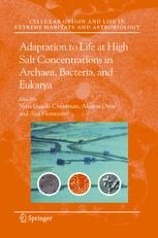
Adaptation to Life at High Salt Concentrations in Archaea, Bacteria, and Eukarya
This book complements “Halophilic Microorganisms”, edited by A. Ventosa and published by Springer-Verlag (2004), “Halophilic Microorganism and their Environments” by A. Oren (2002), published by Kluwer Academic Publishers as volume 5 of “Cellular Origins, Life in Extreme Habitats and Astrobiology” (COLE), and “Microbiology and Biogeochemistry of Hypersaline Environments” edited by A. Oren, and published by CRC Press, Boca Raton (1999).

Actin-Binding Proteins and Disease
This volume, written by experts in the field, is the first to deal with the relationship between human disease and the actin cytoskeleton. It provides overviews of actin and selected actin-binding proteins, and then focuses on diseases that involve these proteins. Specific chapters deal with actin, cofilin, profilin, gelsolin and thymosin ¾4. Other chapters discuss the roles of multiple actin-binding proteins in cancer and metastasis, leukocyte disorders, and heart failure, and there is a chapter that describes how intracellular pathogens use the host actin cytoskeleton. This seminal volume is intended for researchers, clinicians, physicians, and graduate students in the fields of biochemistry, cell biology, microbiology, immunology, and genetics.
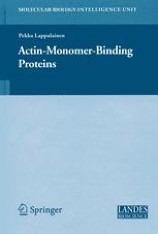
Actin Monomer Binding Proteins
The actin cytoskeleton plays a central role in many cellular processes including cell motility, cytokinesis, endocytosis and phagocytosis. The structure and dynamics of the actin cytoskeleton is regulated by a large number of proteins that interact with monomeric and/or filamentous actin. Actin monomer binding proteins provides a comprehensive view on actin monomer-binding proteins and the mechanisms by which they contribute to actin dynamics and various actin-dependent cellular processes. This new title contains chapters that describe the basic mechanisms of actin dynamics as well as the structural principles by which various actin-binding proteins interact with actin.

Abl Family Kinases in Development and Disease
Abl Family Kinases in Development and Disease provides an overview of the functions of Abl family kinases in Development and Disease. This new title discusses the biochemical, genetic, and cell biological data that elucidate the cellular roles for these kinases in these processes.
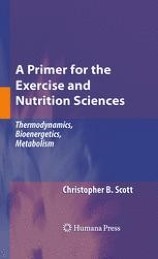
A Primer for the Exercise and Nutrition Sciences : Thermodynamics, Bioenergetics, Metabolism
Provides a fresh approach to the study of energy expenditure by introducing the latest concepts in open system thermodynamics and cellular to whole-body energy exchange. A journey is undertaken by the reader, beginning with what energy is and where the energy in glucose is found, and ending with the concept of high versus low intensity exercise in augmenting weight loss.
