


تحسين النتائح
ترتيب حسب
من
الى

Contains the edited lectures of the fourth Mittelwihr school on "Magnetism and Synchrotron Radiation". This series of events introduces graduate students and nonspecialists from related disciplines to the field of magnetism and magnetic materials with emphasis on synchrotron radiation as an experimental tool of investigation. These lecture notes present in particular the state of the art regarding the analysis of magnetic properties of new materials.

Macrocyclic Chemistry: Current Trends and Future Perspectives illustrates essential concepts in this expanding research field covering both basic and applied studies. Written by well-known experts from around the world, the topics of the chapters range from new macrocyclic architectures with different functions and self-assembly processes through to the modeling and dynamics of such systems. The content also reflects on application possibilities in analytical chemistry, separation processes, material preparation and medicine. Thus this book serves as a creative source of research strategies and methodic tools.
Machining is one of the most important manufacturing processes. Parts manufactured by others processes often require further operations before the product is ready for application. Machining is the broad term used to describe the removal of material from a work-piece. Machining processes can be applied to work metallic and non-metallic materials such as polymers, wood, ceramics and composites.
"Tools alone aren't enough to reduce dynamic and leakage power in complex chip designs - a well-planned methodology is needed. Following in the footsteps of the successful Reuse Methodology Manual (RMM), authors from ARM and Synopsys have written this Low Power Methodology Manual (LPMM) to describe [such] [a] low-power methodology with a practical, step-by-step approach." "Excellent compendium of low-power techniques and guidelines with balanced content spanning theory and practical implementation. The LPMM is a very welcome addition to the field of low power SoC implementation that has for many years operated in a largely ad-hoc fashion."
Signifies the arrival of a new renaissance in logic, a new revival not only of logic, but of the vision of logic as a unifying tool for science as a whole, including mathematics, physics, cosmology, computer science and AI. The book and the vision behind it give logic, conceived as a scientific study of rationality, new unifying power, new perspectives, and new horizons.Universal Logic is not a new logic, but a general theory of logics, considered as mathematical structures. The name was introduced about ten years ago, but the subject is as old as the beginning of modern logic: Alfred Tarski and other Polish logicians such as Adolf Lindenbaum developed a general theory of logics at the end of the 1920s based on consequence operations and logical matrices. The subject was revived after the flowering of thousands of new logics during the last thirty years: there was a need for a systematic theory of logics to put some order in this chaotic multiplicity.

A fuzzy system is, in a very broad sense, any fuzzy logic-based system where fuzzy logic can be used either asthebasisfor the representation of different forms of system knowledge or the model for the interactions and relationships among the system variables. Fuzzy systems have proven to be an important tool for modeling complex systems for which, due to complexity or imprecision, classical tools are unsuccessful. There have been diverse fields of applications of fuzzy technology from medicine to management, from engineering to behavioral science, from vehicle control to computational linguistics, and so on. Fuzzy modeling is a conjunction to understand the s- tem’s behavior and build useful mathematical models. Different types of fuzzy models have been proposed in the literature, among which the Takagi-Sugeno (T-S) fuzzy model is a rule-based one suitable for the accurate approximation and identi?cation of a wide class of nonlinear systems.

This open access book focuses on the linear selection index (LSI) theory and its statistical properties. It addresses the single-stage LSI theory by assuming that economic weights are fixed and known - or fixed, but unknown - to predict the net genetic merit in the phenotypic, marker and genomic context. Further, it shows how to combine the LSI theory with the independent culling method to develop the multistage selection index theory. The final two chapters present simulation results and SAS and R codes, respectively, to estimate the parameters and make selections using some of the LSIs described. It is essential reading for plant quantitative geneticists, but is also a valuable resource for animal breeders.
Gives an up-to-date account of the theory and applications of linear models. The book can be used as a text for courses in statistics at the graduate level and as an accompanying text for courses in other areas. Some of the highlights in this book are as follows. A relatively extensive chapter on matrix theory (Appendix A) provides the necessary tools for proving theorems discussed in the text and offers a selection of classical and modern algebraic results that are useful in research work in econometrics, engineering, and optimization theory. The matrix theory of the last ten years has produced a series of fundamental results aboutthe de?niteness ofmatrices,especially forthe di?erences ofmatrices, which enable superiority comparisons of two biased estimates to be made for the ?rst time. We have attempted to provide a uni?ed theory of inference from linear models with minimal assumptions
Lifetime spectroscopy is one of the most sensitive diagnostic tools for the identification and analysis of impurities in semiconductors. Since it is based on the recombination process, it provides insight into precisely those defects that are relevant to semiconductor devices such as solar cells. This book introduces a transparent modeling procedure that allows a detailed theoretical evaluation of the spectroscopic potential of the different lifetime spectroscopic techniques. The various theoretical predictions are verified experimentally with the context of a comprehensive study on different metal impurities. The quality and consistency of the spectroscopic results, as explained here, confirms the excellent performance of lifetime spectroscopy.

Laser Fabrication and Machining of Materials introduces readers to the fundamental properties and physical phenomena of laser machining and its applications on the macro, micro, and nano scales. Examples of existing, emerging, and potential techniques are discussed, giving students and practicing engineers alike the opportunity to expand their use of lasers in such disciplines as mechanical processes, electronics, materials, and manufacturing.

This book investigates the newly emerging scope of interests and project agendas to investigate and preserve cultural landscapes. It presents the historic, archaeological, ethnographic, and environmental traditions of cultural landscape study and the attempts to reconstruct and analyze the complex processes of cultural changes through prehistoric and historic times.The "guiding light" of the book is that the fullest understanding of a cultural landscape will materialize through interdisciplinary cooperation, which should involve an ecological approach with historical ecology as the guiding tool, applied archaeology, and environmental planning.
From the Preface: K-theory was introduced by A. Grothendieck in his formulation of the Riemann- Roch theorem. For each projective algebraic variety, Grothendieck constructed a group from the category of coherent algebraic sheaves, and showed that it had many nice properties. Atiyah and Hirzebruch considered a topological analog defined for any compact space X, a group K{X) constructed from the category of vector bundles on X. It is this ''topological K-theory" that this book will study. Topological K-theory has become an important tool in topology. Using K- theory, Adams and Atiyah were able to give a simple proof that the only spheres which can be provided with H-space structures are S1, S3 and S7. Moreover, it is possible to derive a substantial part of stable homotopy theory from K-theory.
This is the first one-volume work to provide a thorough and comprehensive description of the physical background, rigorous theory and applications of Kramers-Kronig relations in the fields of linear and nonlinear optical spectroscopy. Currently, Kramers-Kronig relations have become basic tools in the investigation of the optical properties of materials. A brief presentation of the related data-retrieval technique, the maximum entropy method, is also given. The contents and style potentially make this a standard text for physicists, chemists and engineers interested in optical-materials research and development.
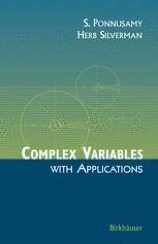
Complex numbers can be viewed in several ways: as an element in a field, as a point in the plane, and as a two-dimensional vector. Examined properly, each perspective provides crucial insight into the interrelations between the complex number system and its parent, the real number system. It explore these relationships by adopting both generalization and specialization methods to move from real variables to complex variables, and vice versa, while simultaneously examining their analytic and geometric characteristics, using geometry to illustrate analytic concepts and employing analysis to unravel geometric notions. The engaging exposition is replete with discussions, remarks, questions, and exercises, motivating not only understanding on the part of the reader, but also developing the tools needed to think critically about mathematical problems. This focus involves a careful examination of the methods and assumptions underlying various alternative routes that lead to the same destination.
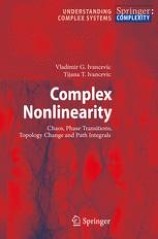
The book starts with a textbook-like expose on nonlinear dynamics, attractors and chaos, both temporal and spatio-temporal, including modern techniques of chaos–control. Chapter 2 turns to the edge of chaos, in the form of phase transitions (equilibrium and non-equilibrium, oscillatory, fractal and noise-induced), as well as the related field of synergetics. While the natural stage for linear dynamics comprises of flat, Euclidean geometry (with the corresponding calculation tools from linear algebra and analysis), the natural stage for nonlinear dynamics is curved, Riemannian geometry (with the corresponding tools from nonlinear, tensor algebra and analysis). The extreme nonlinearity – chaos – corresponds to the topology change of this curved geometrical stage, usually called configuration manifold. Chapter 3 elaborates on geometry and topology change in relation with complex nonlinearity and chaos. Chapter 4 develops general nonlinear dynamics, continuous and discrete, deterministic and stochastic, in the unique form of path integrals and their action-amplitude formalism.
Decision making in environmental projects is typically a complex and confusing process characterized by trade-offs between socio-political, environmental, and economic impacts. Comparative Risk Assessment (CRA) is a methodology applied to facilitate decision making when various activities compete for limited resources. CRA has become an increasingly accepted research tool and has helped to characterize environmental profiles and priorities on the regional and national level. CRA may be considered as part of the more general but as yet quite academic field of multi-criteria decision analysis (MCDA). Considerable research in the area of MCDA has made available methods for applying scientific decision theoretical approaches to multi-criteria problems, but its applications, especially in environmental areas, are still limited. The papers show that the use of comparative risk assessment can provide the scientific basis for environmentally sound and cost-efficient policies, strategies, and solutions to our environmental challenges.

This book is devoted to the spectral theory of commutative C*-algebras of Toeplitz operators on the Bergman space and its applications. For each such commutative algebra there is a unitary operator which reduces Toeplitz operators from this algebra to certain multiplication operators, thus providing their spectral type representations. This yields a powerful research tool giving direct access to the majority of the important properties of the Toeplitz operators studied herein, such as boundedness, compactness, spectral properties, invariant subspaces.

climate change focussing on technical solutions for the most important and climate relevant economic sectors is presented. It is intended for key decision makers, and administrators within industry, agricultural and energy sectors, as well as masters students and post graduates. The first of three sections covers the scientific basis of climate change and the instruments to prevent or reduce negative climate effects. It includes a survey covering current practices at different levels.It discusses evaluation methods for climate impacts from industrial processes. Climate relevant processes and measures to reduce their impact such as sequestration are defined in the final section, with the main focus being on renewable resources. Details are given on climate impacts of waste prevention, recycling and waste management as well as are proposals for every day solutions.
This book brings together a collection of classic research papers on the Dempster-Shafer theory of belief functions. By bridging fuzzy logic and probabilistic reasoning, the theory of belief functions has become a primary tool for knowledge representation and uncertainty reasoning in expert systems.
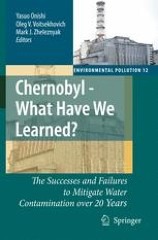
Twenty million people have been exposed to Chernobyl radionuclides through the Dnieper River aquatic pathways. This book presents a 20-year historical overview and comprehensive study results of the aquatic environment affected by the 1986 Chernobyl nuclear accident. During this time, many water quality management practices and countermeasures were enacted. The book presents in-depth analyses of these water remediation actions, using current science and mathematical modeling, and discusses why some were successful, but many others failed. The chapter entitled Where Do We Go From Here? incorporates a comprehensive discussion of the planned New Safe Confinement (NSC) structure to cover the Chernobyl plant. The book closes with a summary and conclusions drawn from these analyses, making it a valuable reference tool for the future. This book will be of interest to engineers, scientists, decision-makers, and those involved in radiation protection and radioecology, environmental protection and risk assessment, water remediation and mitigation measures, and radioactive waste disposal. In addition, the detailed, almost day-to-day, emergency responses to the Chernobyl accident described in this book will also be useful to people developing emergency and long-term responses to accidental or intentional (by terrorists) releases of radionuclides, toxic chemicals and biological agents.

سوريا - اتستراد درعا - غباغب
+963-15 2050 - 15 860 380 /1/2/3 - 11 662 3900