


تحسين النتائح
ترتيب حسب
من
الى


This book teaches the principles of natural language processing, first covering linguistics issues such as encoding, entropy, and annotation schemes; defining words, tokens and parts of speech; and morphology. It then details the language-processing functions involved, including part-of-speech tagging using rules and stochastic techniques; using Prolog to write phase-structure grammars; parsing techniques and syntactic formalisms; semantics, predicate logic and lexical semantics; and analysis of discourse, and applications in dialog systems. The key feature of the book is the author's hands-on approach throughout, with extensive exercises, sample code in Prolog and Perl, and a detailed introduction to Prolog. The reader is supported with a companion website that contains teaching slides, programs, and additional material.
Knowledge Engineering refers to the development of systems that use knowledge, rather than data, to solve many novel computing problems. This is achieved by the application of computing techniques, closely associated with human cognitive processes, for transforming data into knowledge. An Introduction to Knowledge Engineering presents a simple but detailed exploration of current and established work in the field.

Many difficult scientific discovery tasks can only be solved in interactive ways, by combining intelligent computing techniques with intuitive and adaptive user interfaces. It is inevitable to use human intelligence in scientific discovery systems: human eyes can capture complex patterns and relationships, along with detecting the exceptional cases in a data set; the human brain can easily manipulate perceptions to make decisions. Ambient intelligence is about this kind of ubiquitous and autonomous human interaction with information. Scientific discovery is a process of creative perception and communication, dealing with questions like: how do we significantly reduce information while maintaining meaning, or how do we extract patterns from massive data and growing data resources. Originating from the SIGCHI Workshop on Ambient Intelligence for Scientific Discovery, this state-of-the-art survey is organized in three parts: new paradigms in scientific discovery, ambient cognition, and ambient intelligence systems. Many chapters share common features such as interaction, vision, language, and biomedicine.

Ambient Intelligence (AmI) is an integrating technology for supporting a pervasive and transparent infrastructure for implementing smart environments. Such technology is used to enable environments for detecting events and behaviors of people and for responding in a contextually relevant fashion. AmI proposes a multi-disciplinary approach for enhancing human machine interaction. The authors start with a description of the iDorm as an example of a smart environment conforming to the AmI paradigm, and introduces computer vision as an important component of the system. Other computer vision examples describe visual monitoring for the elderly, classic and novel surveillance techniques using clusters of cameras installed in indoor and outdoor application domains, and the monitoring of public spaces. Face and speech recognition systems are also covered as well as enhanced LEGO blocks for novel educational purposes. The book closes with a provocative chapter on how a cybernetic system can be designed as the backbone of a human machine interaction.

Medical imaging has been transformed over the past 30 years by the advent of computerized tomography (CT), magnetic resonance imaging (MRI), and various advances in x-ray and ultrasonic techniques. An enabling force behind this progress has been the (so far) exponentially increasing power of computers, which has made it practical to explore fundamentally new approaches. In particular, what our group terms "model-based" modalities-which produce tissue property images from data using nonlinear, iterative numerical modeling techniques-have become increasingly feasible. Alternative Breast Imaging: Four Model-Based Approaches explores our research on four such modalities, particularly with regard to imaging of the breast: (1) MR elastography (MRE), (2) electrical impedance spectroscopy (EIS), (3) microwave imaging spectroscopy (MIS), and (4) near infrared spectroscopic imaging (NIS).
Introduces graph algorithms on an intuitive basis followed by a detailed exposition using structured pseudocode, with correctness proofs as well as worst-case analyses. Centered around the fundamental issue of graph isomorphism, the content goes beyond classical graph problems of shortest paths, spanning trees, flows in networks, and matchings in bipartite graphs. Advanced algorithmic results and techniques of practical relevance are presented in a coherent and consolidated way. Numerous illustrations, examples, problems, exercises, and a comprehensive bibliography support students and professionals in using the book as a text and source of reference. Furthermore, Python code for all algorithms presented is given in an appendix. Topics and features: Algorithms are first presented on an intuitive basis, followed by a detailed exposition using structured pseudocode / Correctness proofs are given, together with a worst-case analysis of the algorithms / Full implementation of all the algorithms in Python / An extensive chapter is devoted to the algorithmic techniques used in the book / Solutions to all the problems
This book constitutes the refereed proceedings of the 8th International Workshop on Algorithms in Bioinformatics, WABI 2008, held in Karlsruhe, Germany, in September 2008 as part of the ALGO 2008 meeting.
This book containing classical and well-known problems supplemented by clear and in-depth explanations. The material covered includes such topics as combinatorics, sorting, searching, queues, grammar and parsing, selected well-known algorithms and much more.
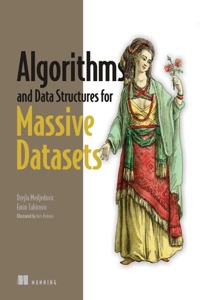
Learn: Probabilistic sketching data structures for practical problems Choosing the right database engine for your application Evaluating and designing efficient on-disk data structures and algorithms Understanding the algorithmic trade-offs involved in massive-scale systems Deriving basic statistics from streaming data Correctly sampling streaming data Computing percentiles with limited space resources Algorithms and Data Structures for Massive Datasets reveals a toolbox of new methods that are perfect for handling modern big data applications. You'll explore the novel data structures and algorithms that underpin Google, Facebook, and other enterprise applications that work with truly massive amounts of data. These effective techniques can be applied to any discipline, from finance to text analysis. Graphics, illustrations, and hands-on industry examples make complex ideas practical to implement in your projects--and there's no mathematical proofs to puzzle over. Work through this one-of-a-kind guide, and you'll find the sweet spot of saving space without sacrificing your data's accuracy. About the Technology Standard algorithms and data structures may become slow--or fail altogether--when applied to large distributed datasets. Choosing algorithms designed for big data saves time, increases accuracy, and reduces processing cost.
This book is a concise introduction addressed to students and professionals familiar with programming and basic mathematical language.
This book constitutes the refereed proceedings of the 12th International Conference on Algebraic Methodology and Software Technology, AMAST 2008, held in Urbana, IL, USA, in July 2008.

The Belgian block cipher Rijndael was chosen in 2000 by the U.S. government’s National Institute of Standards and Technology (NIST) to be the successor to the Data Encryption Standard. Rijndael was subsequently standardized as the Advanced Encryption Standard (AES), which is potentially the world’s most important block cipher. In 2002, some new analytical techniques were suggested that may have a dramatic effect on the security of the AES. Existing analytical techniques for block ciphers depend heavily on a statistical approach, whereas these new techniques are algebraic in nature.
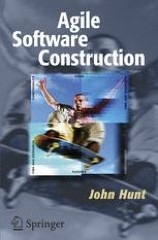
Agile software is a means of putting the software first while at the same time reacting to these user requirements in a flexible and agile way.Agile Software Construction covers the emerging methods and approaches (including extreme programming, feature-driven development and adaptive software development), that are loosely described as "Agile" and shows how to apply them effectively to software development projects. It shows how to plan, organise and develop systems using agile techniques, and highlights some of the problems that may be encountered.
Describes how to apply ICONIX Process (a minimal, use case-driven modeling process) in an agile software project. It's full of practical advice for avoiding common agile pitfalls. Further, the book defines a core agile subset so those of you who want to get agile need not spend years learning to do it. Instead, you can simply read this book and apply the core subset of techniques. The book follows a real-life .NET/C# project from inception and UML modeling, to working code through several iterations. You can then go on-line to compare the finished product with the initial set of use cases. The book also introduces several extensions to the core ICONIX Process, including combining test-driven development (TDD) with up-front design to maximize both approaches (with examples using Java and JUnit). And the book incorporates persona analysis to drive the projects goals and reduce requirements churn.

The field of agent & multi-agent systems is experiencing tremendous growth. At the same time the field of formal methods is blossoming and has proven its importance in industrial and government applications. The FAABS (Formal Approaches to Agent-Based Systems) workshops, merging the concerns of the two fields, provided a timely and compelling platform on which the growing concerns and requirement of agent-based systems users that systems should be accompanied by behavioral assurances, could be discussed. This book has arisen from the overwhelming response to FAABS ’00, ’02 & ’04 and all chapters are updated or represent new research, and are designed to provide a more in-depth treatment of the topic. Examples of how others have applied formal methods to agent-based systems are included, plus formal method tools & techniques that readers can apply to their own systems.
Agent-based modeling and social simulation have emerged as both developments of and challenges to the social sciences. The developments include agent-based computational economics and investigations of theoretical sociological concepts using formal simulation techniques. Among the challenges are the development of qualitative modeling techniques, implementation of agent-based models to investigate phenomena for which conventional economic, social, and organizational models have no face validity, and the application of physical modeling techniques to social processes. Bringing together diverse approaches to social simulation and research agendas.

Security systems have become an integral part of the building and large complex setups, and intervention of the computational intelligence (CI) paradigm plays an important role in security system architecture. This book covers both theoretical contributions and practical applications in security system design by applying the Internet of Things (IoT) and CI. It further explains the application of IoT in the design of modern security systems and how IoT blended with computational intel- ligence can make any security system improved and realizable. Focuses on the computational intelligence techniques of security system design / Covers applications and algorithms of discussed computational intelligence techniques / Includes convergence-based and enterprise integrated security systems with their applications / Explains emerging laws, policies, and tools affecting the landscape of cyber security / Discusses application of sensors toward the design of security systems

Explores the latest techniques and advancements in unmanned aerial vehicle (UAV) detection, classification, and tracking. As UAV technology continues to evolve and become more accessible, there is a growing need for effective methods to detect, identify, and track these devices in various scenarios. This reprint provides a thorough overview of the state-of-the-art approaches for UAV detection, classification, and tracking, covering both theoretical and practical aspects.The reprint begins by introducing the basics of UAVs and their various applications, followed by a detailed overview of the challenges associated with UAV detection, classification, and tracking. The authors then present the latest techniques and algorithms used in the field, including machine-learning-based approaches, computer vision techniques, and sensor fusion techniques. The reprint also covers the challenges of real-world applications, such as dealing with occlusions, sensor noise, and environmental factors.
In the era of the internet of things, images have played important roles in human–computer interactions, and with the arrival of big data technology, people have higher requirements regarding image quality, especially for images collected in dark light. This can be addressed through the development of camera hardware quality, i.e., the resolution and exposure time of cameras, which may require high computational costs. As an alternative, image enhancement techniques can exact salient features to improve the quality of captured images according to the differences in diverse features, although they suffer from some challenges, i.e., a low contrast, artifacts, and overexposure, thus making it decidedly necessary to determine how to use advanced image enhancement techniques.
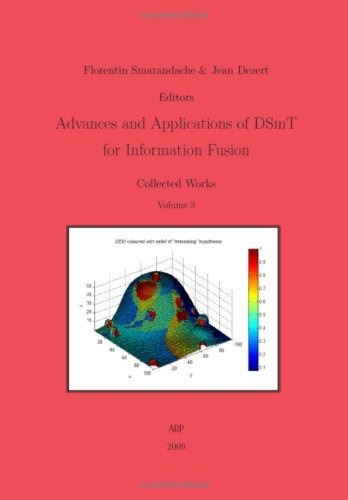
One of the most comprehensive and flexible fusion theory based on belief functions. It can work in all fusion spaces: power set, hyper-power set, and super-power set, and has various fusion and conditioning rules that can be applied depending on each application. Some new generalized rules are introduced in this volume with codes for implementing some of them. For the qualitative fusion, the DSm Field and Linear Algebra of Refined Labels (FLARL) is proposed which can convert any numerical fusion rule to a qualitative fusion rule. When one needs to work on a refined frame of discernment, the refinement is done using Smarandache s algebraic codification. New interpretations and implementations of the fusion rules based on sampling techniques and referee functions are proposed, including the probabilistic proportional conflict redistribution rule.

سوريا - اتستراد درعا - غباغب
+963-15 2050 - 15 860 380 /1/2/3 - 11 662 3900