



الصفحة 11
الصفحة 11

Globalization and Regional Economic Modeling
Globalization is affecting regional economies in a broad spectrum of aspects, from labor market conditions and development policies to climate change. To understand better how this works, we need both conceptual and methodological contributions. We need new schemes to organize our thinking, direct our attention, and frame thought experiments on the basis of which guidance may be offered. And we need methodological innovations that enable us to carry out studies and thought experiments at levels of spatial and temporal resolution and formal complexity adequate to capture and account for the phenomena that characterize globalization. The chapters of this volume, written by an international cast of eminent regional scientists, represent contributions of both types, in many cases introducing and demonstrating the use of new tools for analyzing and understanding enormous changes underway in regional economies around the world.

Globalisation, Poverty and Conflict : A Critical 'Development' Reader
Is ‘development’ passé? Is it merely a by-product or a ‘trickle down’ effect of economic growth, spurred by globalisation? Will poverty simply diminish with increased global markets? This state-of-the-art critical ‘development’ reader deals with these and related questions. Globalisation, Poverty and Conflict examines the inter-relationships between globalisation, poverty and conflict. It complements current debates in the field of development studies and, in an era in which development fatigue seems to have become more profound than ever before, it brings the importance of development once again to the forefront. Achieving the Millennium Development Goals by 2015 is a concrete target which many governments have agreed to work towards.Whether these goals can be realised is another issue. Nonetheless, the Millennium Development Goals have brought more focused attention to development in the past few years and renewed debate about the relationships between the process of globalisation and widespread poverty and the emergence of violent conflicts. The authors in this edited volume discuss these inter-related and highly controversial topical elements of development in a number of chapters organised around three sets of issues: (1) globalisation, inequality and poverty; (2) governance, civil society and poverty; and (3) resource degradation, institutions and conflict. The contributions represent current thinking on (and practice of) development policy, poverty reduction, the need for multi-level democratic institutions, and the containing and prevention of conflicts. The authors confront the predominant mainstream ideas on ‘development’ and propose alternatives.

Global Fintech : Financial Innovation in the Connected World
How the global financial services sector has been transformed by artificial intelligence, data science, and blockchain. Artificial intelligence, big data, blockchain, and other new technologies have upended the global financial services sector, creating opportunities for entrepreneurs and corporate innovators. Venture capitalists have helped to fund this disruption, pouring nearly $500 billion into fintech over the last five years. This book offers global perspectives on technology-fueled transformations in financial services, with contributions from a wide-ranging group of academics, industry professionals, former government officials, and current government advisors. They examine not only the struggles of rich countries to bring the old analog world into the new digital one but also the opportunities for developing countries to “leapfrog” directly into digital.
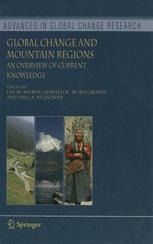
Global Change and Mountain Regions : An Overview of Current Knowledge
Mountain regions occupy about a quarter of the global terrestrial land surface and provide goods and services to more than half the humanity. Global environmental change threatens the integrity of these systems and their ability to provide the goods and services upon which humanity has come to depend. This book gives an overview of the state of research in fields pertaining to the detection, understanding and prediction of global change impacts in mountain regions. More than 60 contributions from paleoclimatology, cryospheric research, hydrology, ecology, and development studies are compiled in this volume, each with an outlook on future research directions.
Geotechnical Engineering for Disaster Mitigation and Rehabilitation ; Proceedings of the 2nd International Conference GEDMAR08, Nanjing, China 30 May – 2 June, 2008
"Geotechnical Engineering for Disaster Mitigation and Rehabilitation" presents the latest developments and case studies in the field. All contributions to this proceedings were rigorously reviewed to cover the newest developments in disasters related to earthquakes, landslides and slopes, soil dynamics, risk assessment and management, disaster mitigation and rehabilitation, and others.
Geostatistics for environmental applications ; Proceedings of the Fifth European Conference on geostatistics for environmental applications
Once applied only to problems of mining-reserves assessment or petroleum-reservoir characterization, geostatistics is now being used in an increasingly large number of disciplines in environmental sciences. On the one hand, it enables the analysis and handling, in a rigorous probabilistic framework of the issues of spatial and temporal interpolation of continuous or categorical environmental variables. On the other hand, the methodology is also used to design and optimize sampling campaigns. "Geostatistics for Environmental Applications" contains forty selected contributions covering the latest progress in a broad spectrum of fields including air quality, climatology, ecology, groundwater hydrology, surface hydrology, oceanography, soil contamination, epidemiology and health, natural hazards, and remote sensing.

Geospatial Vision : New Dimensions in Cartography
This book reflects the diverse nature of interests of contributors in the field. The GeoCart conferences are held every two years and attract attendees from Australasia and globally. They offer a forum for reflecting on past practices, exploring future possibilities and reporting on the findings of - search undertakings. They make valuable contributions to the theory and praxis of Geoinformation and Cartography.

Geospace Electromagnetic Waves and Radiation
The contributions gathered in this volume provide introductions to current problems in geospace electromagnetic radiation, guides to the associated literature and tutorial reviews of the relevant space physics. Students and scientists working on various aspects of the terrestrial aurora or magnetospheric and near-Earth heliospheric high-frequency waves will find this volume an indispensable companion for their studies.

Geometric Properties for Incomplete Data
Computer vision and image analysis require interdisciplinary collaboration between mathematics and engineering. This book addresses the area of high-accuracy measurements of length, curvature, motion parameters and other geometrical quantities from acquired image data. It is a common problem that these measurements are incomplete or noisy, such that considerable efforts are necessary to regularise the data, to fill in missing information, and to judge the accuracy and reliability of these results. This monograph brings together contributions from researchers in computer vision, engineering and mathematics who are working in this area.

Geometric Group Theory ; Geneva and Barcelona Conferences
This volume assembles research papers in geometric and combinatorial group theory. This wide area may be defined as the study of those groups that are defined by their action on a combinatorial or geometric object, in the spirit of Klein’s programme.The contributions range over a wide spectrum: limit groups, groups associated with equations, with cellular automata, their structure as metric objects, their decomposition, etc. Their common denominator is the language of group theory, used to express and solve problems ranging from geometry to logic.
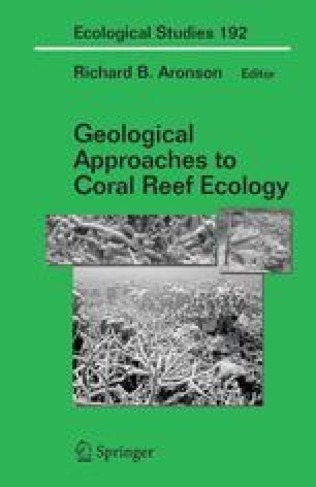
Geological Approaches to Coral Reef Ecology
By reconstructing the ecological history of coral reefs, the authors are able to evaluate whether or not recent, dramatic changes to reef ecosystems are novel events or part of a long-term trend or cycle. The contributions examine the interacting causes of change, which include hurricane damage, regional outbreaks of coral-consuming predators, disease epidemics, sea-level rise, nutrient loading, global warming and acidification of the oceans. Crucial predictions about the future of coral reefs lead to practical strategies for the successful restoration and management of reef ecosystems.

geoENV VI - Geostatistics for Environmental Applications : Proceedings of the Sixth European Conference on Geostatistics for Environmental Applications
This volume contains how geostatistics is applied within the environmental sciences. A few selected theoretical contributions are also included.

Genetic Systems Programming : Theory and Experiences
This book is devoted to reporting innovative and significant progress about the contribution of genetic programming in systems programming. The contributions of this book clearly demonstrate that genetic programming is very effective in solving hard and yet-open problems in systems programming. Followed by an introductory chapter, in the remaining contributed chapters, the reader can easily learn about systems where genetic programming can be applied successfully. These include but are not limited to, information security systems, compilers, data mining systems, stock market prediction systems, robots and automatic programming.

Genetic rogramming ; Vol. 3447 : 8th European conference, EuroGP 2005, Lausanne, Switzerland, March 30-April 1, 2005, Proceedings
In this volume we present the contributions for the 18th European Conference on Genetic Programming (EuroGP 2005). The conference took place from 30 March to 1 April in Lausanne, Switzerland. EuroGP is a well-established conf- ence and the only one exclusively devoted to genetic programming. All previous proceedings were published by Springer in the LNCS series. From the outset, EuroGP has been co-located with the EvoWorkshops focusing on applications of evolutionary computation. Since 2004, EvoCOP, the conference on evolutionary combinatorial optimization, has also been co-located with EuroGP, making this year’s combined events one of the largest dedicated to evolutionary computation in Europe. Genetic programming (GP) is evolutionary computation that solves complex problems or tasks by evolving and adapting a population of computer programs, using Darwinian evolution and Mendelian genetics as its sources of inspiration. Some of the 34 papers included in these proceedings address foundational and theoretical issues and there is also a wide variety of papers dealing with di?erent application areas, such as computer science, engineering, language processing, biology and computational design, demonstrating that GP is a powerful and practical problem-solving paradigm.

Genetic Programming Theory and Practice V
Genetic Programming Theory and Practice V was developed from the fifth workshop at the University of Michigan’s Center for the Study of Complex Systems to facilitate the exchange of ideas and information related to the rapidly advancing field of Genetic Programming (GP). Contributions from the foremost international researchers and practitioners in the GP arena examine the similarities and differences between theoretical and empirical results on real-world problems. The text explores the synergy between theory and practice, producing a comprehensive view of the state of the art in GP application.
Genetic Programming Theory and Practice IV
Genetic Programming Theory and Practice IV was developed from the fourth workshop at the University of Michigan’s Center for the Study of Complex Systems to facilitate the exchange of ideas and information related to the rapidly advancing field of Genetic Programming (GP). Contributions from the foremost international researchers and practitioners in the GP arena examine the similarities and differences between theoretical and empirical results on real-world problems.

Genetic programming : Theory and practice II
This volume explores the emerging interaction between theory and practice in the cutting-edge, machine learning method of Genetic Programming (GP). The contributions developed from a second workshop at the University of Michigan's Center for the Study of Complex Systems where leading international genetic programming theorists from major universities and active practitioners from leading industries and businesses met to examine how GP theory informs practice and how GP practice impacts GP theory. Chapters include such topics as financial trading rules, industrial statistical model building, population sizing, the roles of structure in problem solving by computer, stock picking, automated design of industrial-strength analog circuits, topological synthesis of robust systems, algorithmic chemistry, supply chain reordering policies, post docking filtering, an evolved antenna for a NASA mission and incident detection on highways.

Genetic Basis for Respiratory Control Disorders
The objective of the book is to supply state-of-the-art contributions about all aspects of respiratory control genetics, from the molecular to the system level. The book aims to review the full spectrum of available knowledge, which starts with early physiological studies in health and disease in humans and studies in rodents that suggested a hereditary component to respiratory control. The spectrum extends to recent work elucidating crucial molecular aspects of respiratory control development, from early embryonic specifications in the neural tube to the function of respiratory rhythm generators.

Genetic algorithms: theory, design and programming
We present a series of scientific contributions that delve into the intricate theoretical foundations and practical nuances of genetic algorithms (GAs). Beyond the academic realm, GAs have demonstrated profound applications in societal decision-making and engineering optimization, showcased through real-world examples and case studies. A dedicated section on programming principles offers a thorough guide for implementing GAs across diverse languages. This edition, tailored for researchers and academics, serves as a testament to the scientific advancements within the field, inviting readers to explore the nuanced journey from theoretical constructs to pragmatic applications in the dynamic landscape of GAs.

Generative and transformational techniques in software engineering II : International Summer School, GTTSE 2007, Braga, Portugal, July 2-7, 2007. Revised Papers
This tutorial book presents an augmented selection of the material presented at the International Summer School on Generative and Transformational Techniques in Software Engineering, GTTSE 2007, held in Braga, Portugal, in July 2007.The 7 tutorial lectures presented together with 5 short tutorials and 4 contributions to the participants workshop were carefully selected during multiple rounds of reviewing and improvement. The tutorials given by renowned representatives of complementary approaches and problem domains combine foundations, methods, examples, and tool support.
