


تحسين النتائح
ترتيب حسب
من
الى

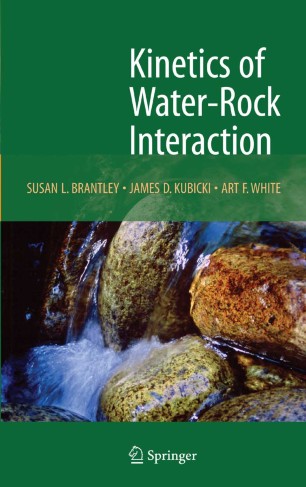
Systems at the surface of the Earth are continually responding to energy inputs derived from solar radiation or from the radiogenic heat in the interior. These energy inputs drive plate movements and erosion, exposing metastable mineral phases at the Earth’s surface. In addition, these energy fluxes are harvested and transformed by living organisms. As long as these processes persist, chemical disequilibrium at the Earth’s surface will be perpetuated. Chemical disequilibrium is also driven by human activities related to production of food, extraction of water and energy resources, and burial of wastes. To understand how the surface of the Earth will change over time, we must understand the rates at which reactions occur and the chemical feedbacks that relate these reactions across extreme temporal and spatial scales. This book addresses fundamental and applied questions concerning the rates of water-rock interactions driven by tectonic, climatic, and anthropogenic forcings.
Leading experts in turbulence were brought together at this Symposium to exchange ideas and discuss, in the light of the recent progress in computational methods, new perspectives in our understanding of turbulence. The Symposium also fostered a vigorous interaction between those who pursue computations, and those concerned with developments in experiment and theory.
This monograph presents state of the art applications and new developments of isotopes in hydrology, environmental disciplines and climate change studies. Coverage ranges from the assessment of groundwater resources in terms of recharge and flow regime to studies of the past and present global environmental and climate changes.
The book starts with a textbook-like expose on nonlinear dynamics, attractors and chaos, both temporal and spatio-temporal, including modern techniques of chaos–control. Chapter 2 turns to the edge of chaos, in the form of phase transitions (equilibrium and non-equilibrium, oscillatory, fractal and noise-induced), as well as the related field of synergetics. While the natural stage for linear dynamics comprises of flat, Euclidean geometry (with the corresponding calculation tools from linear algebra and analysis), the natural stage for nonlinear dynamics is curved, Riemannian geometry (with the corresponding tools from nonlinear, tensor algebra and analysis). The extreme nonlinearity – chaos – corresponds to the topology change of this curved geometrical stage, usually called configuration manifold. Chapter 3 elaborates on geometry and topology change in relation with complex nonlinearity and chaos. Chapter 4 develops general nonlinear dynamics, continuous and discrete, deterministic and stochastic, in the unique form of path integrals and their action-amplitude formalism.
Completeness is one of the most important notions in logic and the foundations of mathematics. Many variants of the notion have been de?ned in literature. We shallconcentrateonthesevariants,andaspects,of completenesswhicharede?ned in propositional logic. Completeness means the possibility of getting all correct and reliable sc- mata of inference by use of logical methods. The word ‘all’, seemingly neutral, is here a crucial point of distinction. Assuming the de?nition as given by E. Post we get, say, a global notion of completeness in which the reliability refers only to syntactic means of logic and outside the correct schemata of inference there are only inconsistent ones. It is impossible, however, to leave aside local aspects of the notion when we want to make it relative to some given or invented notion of truth. Completeness understood in this sense is the adequacy of logic in relation to some semantics, and the change of the logic is accompanied by the change of its semantics.
This book portrays men’s experiences of home alone leave and how it affects their lives and family gender roles in different policy contexts and explores how this unique parental leave design is implemented in these contrasting policy regimes. The book brings together three major theoretical strands: social policy, in particular the literature on comparative leave policy developments; family and gender studies, in particular the analysis of gendered divisions of work and care and recent shifts in parenting and work-family balance; critical studies of men and masculinities, with a specific focus on fathers and fathering in contemporary western societies and life-courses. Drawing on empirical data from in-depth interviews with fathers across eleven countries, the book shows that the experiences and social processes associated with fathers’ home alone leave involve a diversity of trends, revealing both innovations and absence of change, including pluralization as well as the constraining influence of policy, gender, and social context.
This book is second in a series covering best practices in community quality-of-life (QOL) indicators. The first volume in this series is a compilation of cases of best work in community indicators research. This second volume continues to build on the goal of the series and includes eleven cases (chapters). The cases in both volumes describe communities that have launched their own community indicators programs.
This open access volume is about how to research the influence of our changing media environment. Today, there is not one single medium that is the driving force of change. With the spreading of various technical communication media such as mobile phone and internet platforms, we are confronted with a media manifold of deep mediatization. But how can we investigate its transformative capability? This book answers this question by taking a non-media-centric perspective, researching the various figurations of collectivities and organizations humans are involved in. The first part of the book outlines a fundamental understanding of the changing media environment of deep mediatization and its transformative capacity. The second part focuses on collectivities and movements: communities in the city, critical social movements, maker, online gaming groups and networked groups of young people. The third part moves institutions and organizations into the foreground, discussing the transformation of journalism, religion, politics, and education, whilst the fourth and final part is dedicated to methodologies and perspectives.
This book presents histories of the WCCES and its member societies. It shows ways in which the field has changed over the decades, and the forces which have shaped it in different parts of the world. The book demonstrates that while comparative education can be seen as a single global field, it has different characteristics in different countries and cultures. In this sense, the book presents a comparison of comparisons.
The subject is described and discussed in three main chapters and different case studies.All topics in this book are complimentary and contribute to a comprehensive understanding of the interactions between global climate change, world water cycle and water resources. A valuable and meaningful interdisciplinary mixture of topics is combined in this book.
This book focuses upon climate processes, variability and change and applies the general principles related to these issues, particularly in Switzerland. Although a small country, Switzerland is characterized by complex topography where climatic processes are often enhanced due to the presence of the Alps. In addition, there is a remarkable density of observational data in both the natural and social sciences that enable a comprehensive assessment of climate processes, their long-term trends and their impacts. This book is intended for students from the undergraduate level onwards and researchers interested in climate issues specific to the alpine region.
This book asks just how climate-smart our food really is. It follows an average day's worth of food and drink to see where it comes from, how far it travels, and the carbon price we all pay for it. From our breakfast tea and toast, through breaktime chocolate bar, to take-away supper, Dave Reay explores the weather extremes the world’s farmers are already dealing with, and what new threats climate change will bring. Readers will encounter heat waves and hurricanes, wildfires and deadly toxins, as well as some truly climate-smart solutions. In every case there are responses that could cut emissions while boosting resilience and livelihoods. Ultimately we are all in this together, our decisions on what food we buy and how we consume it send life-changing ripples right through the global web that is our food supply.
This book provides an integrated assessment of issues related to climate variability and change, predictability and risks. It details both the technical aspects of variability and abrupt climate change and the agricultural and economical impacts and consequences.
This volume provides an up to date overview of climate variability during the 20th century in the context of natural and anthropogenic variability. It compiles a number of contributions to a workshop held in Gwatt, Switzerland, in July 2006 dealing with different aspects of climate change, variability, and extremes during the past 100 years.
This book highlights the complexities around making adaptation decisions and building resilience in the face of climate risk. It is based on experiences in sub-Saharan Africa through the Future Climate For Africa (FCFA) applied research programme. It begins by dealing with underlying principles and structures designed to facilitate effective engagement about climate risk, including the robustness of information and the construction of knowledge through co-production
Improved adaptation of food production, particularly in areas where climate variability is large, holds the key to improving food security for human populations. Increasing climate knowledge and improved prediction capabilities facilitate the development of relevant climate information and prediction products for applications in agriculture to reduce the negative impacts due to climate variations and to enhance planning activities based on the developing capacity of climate science. This book, based on an International Workshop held in Geneva in 2005, reviews the advances made so far in seasonal climate predictions and their applications for management and decision-making in agriculture and identifies the challenges to be addressed in the next 5 to 10 years to further enhance operational applications of climate predictions in agriculture, especially in the developing countries.
This book presents a multidisciplinary perspective to increase our understanding of climate policies that are rooted in the natural moral inclinations of people, families and firms. Which policies prevent a widening gap between higher and lower educated people? Which policy instruments are there, and how could they be used? What is the role of free entrepreneurship?
In this volume, an improved Integrated Assessment methodology is used to analyse climate change impacts on agriculture, water resources, unmanaged ecosystems, irrigation, and land use in the United States and the economic implications of these impacts. This book contains a series of papers documenting the methods, models, analysis and results of this integrated assessment for a wide ranging set of scenarios describing future climate change. Innovations described include the integration of water resource and agricultural modeling and the refinement of an agriculture and land-use economics model to incorporate results from process-level ecosystem models of agriculture, water and natural ecosystem resources. Scenarios selected for this study address a range of uncertainties associated with choice of climate model, presence or absence of a ‘CO2-fertilization effect’, impacts on international trade in agricultural commodities and their consequences for producers and consumers.
climate change focussing on technical solutions for the most important and climate relevant economic sectors is presented. It is intended for key decision makers, and administrators within industry, agricultural and energy sectors, as well as masters students and post graduates. The first of three sections covers the scientific basis of climate change and the instruments to prevent or reduce negative climate effects. It includes a survey covering current practices at different levels.It discusses evaluation methods for climate impacts from industrial processes. Climate relevant processes and measures to reduce their impact such as sequestration are defined in the final section, with the main focus being on renewable resources. Details are given on climate impacts of waste prevention, recycling and waste management as well as are proposals for every day solutions.
This the workshop proceedings present an overview of the implications of climate change for the eastern Mediterranean and the impact of climate change response on regional economic activity, particularly in the hydrocarbon industry.

سوريا - اتستراد درعا - غباغب
+963-15 2050 - 15 860 380 /1/2/3 - 11 662 3900