



الصفحة 11
الصفحة 11

Formal Approaches to Agent-Based Systems ; 3rd International Workshop, FAABS 2004, Greenbelt, MD, April 26-27, 2004, Revised Selected Papers
The 3rd Workshop on Formal Approaches to Agent-Based Systems (FAABS-III) was held at the Greenbelt Marriott Hotel (near NASA Goddard Space Flight Center) in April 2004 in conjunction with the IEEE Computer Society. The first FAABS workshop was help in April 2000 and the second in October 2002. Interest in agent-based systems continues to grow and this is seen in the wide range of conferences and journals that are addressing the research in this area as well as the prototype and developmental systems that are coming into use. Our third workshop, FAABS-III, was held in April, 2004. This volume contains the revised papers and posters presented at that workshop. The Organizing Committee was fortunate in having significant support in the planning and organization of these events, and were privileged to have wor- renowned keynote speakers Prof. J Moore (FAABS-I), Prof. Sir Roger Penrose (FAABS-II), and Prof. John McCarthy (FAABS-III), who spoke on the topic of se- aware computing systems, auguring perhaps a greater interest in autonomic computing as part of future FAABS events. We are grateful to all who attended the workshop, presented papers or posters, and participated in panel sessions and both formal and informal discussions to make the workshop a great success. Our thanks go to the NASA Goddard Space Flight Center, Codes 588 and 581 (Software Engineering Laboratory) for their financial support and to the IEEE Computer Society (Technical Committee on Complexity in Computing) for their sponsorship and organizational assistance.

Forensic pathology of trauma
The practice of forensic pathology includes the collection and analysis of evidence in relation to a corpse in order to establish the cause of death. Knowledge of the cause of death contributes to the determination of the manner of death by medical examiners and coroners, who are occasionally assisted by law enforcement officers. In the process of establishing the cause and manner of death, representatives of various investigative bodies have several responsibilities, including explaining the death to family members, attempting to reduce the risk of similar deaths in the future, and, if applicable, apprehending the individuals who are responsible for the death. The most well-known and popular role of a forensic pathologist is in the inves- gation of cases of suspicious death; however, most medicolegal autopsies involve unexpected deaths that are above suspicion, many of which are caused by trauma (trauma being defined as any physical force or agent that causes bodily harm). The purpose of Forensic Pathology of Trauma: Common Problems for the Pathologist is to provide practical advice and information about the conduct of the forensic autopsy in cases of trauma, and to offer guidance about the analysis of the autopsy findings in these cases.

Foodborne Microbial Pathogens : Mechanisms and Pathogenesis
The author presents up-to-date information on molecular and cellular mechanism of several major foodborne microbial pathogens, including select agents for bioterrorism, virulence genes and their regulation in the host or the food environment, pathogenicity testing models, clinical symptoms, and prevention and control strategies. In order to understand the disease process, one must have certain understanding about the role of the immune system. Thus this book also covers the host parasite interaction to a level where the readers will have a better appreciation for the disease mechanism.

Foodborne bacterial pathogens : Methods and protocols
This updated volume presents a compilation of various representative techniques and approaches currently used to study bacterial foodborne pathogens. Chapters guide the reader through bacterial pathogen detection and quantification in food, molecular, phenotypic, metabolic characterization of food pathogens, and ecology of foodborne bacterial pathogens. Written in the highly successful Methods in Molecular Biology series format, chapters include introductions to their respective topics, lists of the necessary materials and reagents, step-by-step, readily reproducible laboratory protocols, and key tips on troubleshooting and avoiding known pitfalls.

Focus on bacterial biofilms
Bacterial biofilms are colonies of bacterial cells embedded in their self-produced matrix composed of polysaccharides, DNA, and proteins. They protect bacterial cells against antibiotics, antibacterial agents, soaps and detergents, and shear stress. Some of the most common biofilm-associated infections in humans include urinary tract infections, infection of wounds and surgical sites, diabetic foot ulcers, dental caries (tooth decay) and gingivitis (gum inflammation), ventilator-associated infections, sinusitis, microbial keratitis, secondary infection related to Covid-19 and other viral infections, and so on. Bacterial resistance to common antibiotics (e.g., penicillin, gentamycin, erythromycin, ciprofloxacin, etc.) is driving us to a catastrophic failure of our health systems. Strategies to develop novel antibacterial agents and technology must be prioritized to combat and eradicate biofilms and their associated challenges. This book provides a comprehensive overview of biofilms with chapters on bacterial virulence factors, quorum sensing in bacteria, antimicrobial resistance in bacteria, strategies to develop new antibacterial agents, and much more.

Focal liver lesions : Detection, characterization, ablation
Few fields of medicine have witnessed such impressive progress as the diagnosis and treatment of liver tumors. Advances in imaging technology, the development of novel contrast agents, and the introduction of optimized scanning protocols have greatly facilitated the non-invasive detection and characterization of focal liver lesions. Furthermore, image-guided techniques for percutaneous tumor ablation have become an accepted alternative treatment for patients with inoperable liver cancer. This book provides a comprehensive and up-to-date overview of the role of diagnostic and interventional radiology in respect of liver tumors. The volume moves from background sections on methodology and segmental liver anatomy to the main sections on the diagnosis of benign and malignant liver lesions. An integrated approach, focused on the correlation of ultrasound, CT, and MR imaging findings, is presented. Finally, a full section describes the principles, methods, and results of percutaneous tumor ablation techniques.
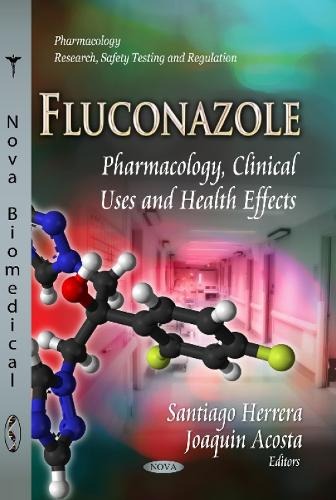
Fluconazole : Pharmacology, clinical uses and health effects
Fluconazole is a triazole antifungal drug used in the treatment and prevention of superficial and systemic fungal infections. In this book, the authors present current research in the study of the pharmacology, clinical uses and health effects of fluconazole. Topics discussed include the utilization of fluconazole in adult intensive care units; the use of fluconazole in veterinary species and a description of variances from the human experience as well as findings in veterinary species which may have applicability in human medicine; common clinical uses and in vitro activity features on fluconazole; and the discovery and development of medically-important antifungal agents, particularly the azole derivatives and the development of fluconazole and its clinical applications.
Flavonoids as nutraceuticals
Flavonoids are well-known plant metabolites that have extraordinary properties that can be used for treating health issues. The pharmaceutical importance of flavonoids is due to their anti-depressant, anti-viral, anti-inflammatory, and antioxidant capacities. They are also of great importance when it comes to neuroprotection, cardiovascular disorders, and many types of cancer. Flavonoids are also easily available and produce less harmful side effects than some conventional therapeutics. This new volume examines the growing use of flavonoids for prevention and treatment of diseases and discusses their beneficial mechanisms. Chapters in the volume address diverse uses as anti-aging tools, as anti-inflammatory agents, for treating pregnancy-induced disorders, as a promising tool to combat infection of Covid-19, etc. The book explores their specific therapeutic antiviral potentials, the gene expression by flavonoids, and the role of flavonoids in agriculture.

Finite Mixture and Markov Switching Models
The prominence of finite mixture modelling is greater than ever. Many important statistical topics like clustering data, outlier treatment, or dealing with unobserved heterogeneity involve finite mixture models in some way or other. The area of potential applications goes beyond simple data analysis and extends to regression analysis and to non-linear time series analysis using Markov switching models.It is the first time that the Bayesian perspective of finite mixture modelling is systematically presented in book form. It is argued that the Bayesian approach provides much insight in this context and is easily implemented in practice. Although the main focus is on Bayesian inference, the author reviews several frequentist techniques, especially selecting the number of components of a finite mixture model, and discusses some of their shortcomings compared to the Bayesian approach. The aim of this book is to impart the finite mixture and Markov switching approach to statistical modelling to a wide-ranging community. This includes not only statisticians, but also biologists, economists, engineers, financial agents, market researcher, medical researchers or any other frequent user of statistical models. This book should help newcomers to the field to understand how finite mixture and Markov switching models are formulated, what structures they imply on the data, what they could be used for, and how they are estimated.

Financial risk management with bayesian estimation of GARCH models : Theory and applications
This book presents methodologies for the Bayesian estimation of GARCH models and their application to financial risk management. The study of these models from a Bayesian viewpoint is relatively recent and can be considered very promising due to the advantages of the Bayesian approach, in particular the possibility of obtaining small-sample results and integrating these results in a formal decision model. The first two chapters introduce the work and give an overview of the Bayesian paradigm for inference. The next three chapters describe the estimation of the GARCH model with Normal innovations and the linear regression models with conditionally Normal and Student-t-GJR errors. The sixth chapter shows how agents facing different risk perspectives can select their optimal Value at Risk Bayesian point estimate and documents that the differences between individuals can be substantial in terms of regulatory capital.

Filoviruses : A Compendium of 40 Years of Epidemiological, Clinical, and Laboratory Studies
This book summarizes in detail the contemporary knowledge of filoviruses and diseases they cause. Almost the entirety of the open literature on filoviruses, covering all major scientific and clinical fields, is referenced and summarized in this text, including most of the conference abstracts, book chapters, dissertations, government reports, patents, theses, and journal publications in many languages.

Filgrastim in clinical oncology : Guarding against neutropenia
Granulocyte colony-stimulating factor (G-CSF) has driven the attention of researchers as a therapeutic agent for curing patients suffering from neutropenia. Despite the successful use of G-CSF, it currently requires daily injections, which are inconvenient, expensive, and distressing for children. Therefore, an alternative strategy for using G-CSF for treatment is needed. Understanding the G-CSF structure, expression, mechanism of action, and how it induces neutrophils mobilization is crucial to producing promising cancer therapy. The ability of G-CSF to mobilize hematopoietic stem cells from the bone marrow into the blood circulation was consequently exploited and altered the practice of hematopoietic stem cell transplantation.
Field-Based Coordination for Pervasive Multiagent Systems
Software systems involve autonomous and distributed software components that have to execute and interact in open and dynamic environments, such as in pervasive, autonomous, and mobile applications. The requirements with respect to dynamics, openness, scalability, and decentralization call for new approaches to software design and development, capable of supporting spontaneous configuration, tolerating partial failures, or arranging adaptive reorganization of the whole system.

Ferroptosis : Methods and protocols
A comprehensive collection of experimental protocols for investigating ferroptosis in different systems, including cultured cells, animal models, and human tissues. The techniques covered in this book look at various aspects of ferroptosis ranging from the detection of lipid peroxidation to the measurement of glutathione peroxidase activity and the evaluation of mitochondrial morphology. Chapters also discuss basic molecular biology methods such as quantitative PCR and immunoblotting, and advanced imaging techniques such as transmission electron microscopy and confocal fluorescence microscopy. Written in the highly successful Methods in Molecular Biology series format, chapters include introductions to their respective topics, lists of the necessary materials and reagents, step-by-step, readily reproducible laboratory protocols, and tips on troubleshooting and avoiding known pitfalls.

Exploring the Vertebrate Central Cholinergic Nervous System
The volume’s eleven chapters cover a wide variety of topics including the complexity of synthesis of acetylcholine, cholinesterases, cholinergic teratology, anticholinesterase agents, clinical use of cholinergic drugs, central cholinergic pathways and behaviors with cholinergic correlates. The figures and diagrams help illustrate various subjects and its photographs of "cholinergikes" of the past and present bring a personal note to the book. The book illustrates the peaks that have been reached in the course of the history of cholinergic research and challenges the perennial frontier of human science: the understanding of ourselves.

Experimental Glycoscience : Glycobiology
The aim of this book is to provide experimental protocols covering many aspects of glycobiology, glycotechnology, and chemistry: biochemistry, molecular and cellular biology, genetics, physiology, and medicine. The protocols are all self-contained descriptions of the equipment and reagents needed, followed by details of the experimental procedure.

Experimental Glycoscience : Glycobiology
The aim of this book is to provide experimental protocols covering many aspects of glycobiology, glycotechnology, and chemistry: biochemistry, molecular and cellular biology, genetics, physiology, and medicine. The protocols are all self-contained descriptions of the equipment and reagents needed, followed by details of the experimental procedure.

Evolving methods for macromolecular crystallography : The structural path to the understanding of the mechanism of action of CBRN agents
This volume comprises papers presented at the 2005 edition of the “Crystallography of Molecular Biology” courses that have been held since 1976 at the Ettore Majorana Centre for Scientific Culture in Erice, Italy. The papers span the breadth of material presented in the course, which emphasized the practical aspects of modern macromolecular crystallography and its applications.

Evolutionary Microeconomics
Classical microeconomics is intended to explain how a price system is able to coordinate the economic agents. But even if it can be extended to incomplete information and externalities, it remains grounded on very heroic assumptions. Agents are endowed with a very strong rationality, equilibrium is stated without a concrete process to achieve it, market is the unique institution considered. Evolutionary microeconomics is aimed at bypassing these limitations by considering a dynamic approach, however not biologically oriented.
Evolutionary Computation in Data Mining
This carefully edited book reflects and advances the state of the art in the area of Data Mining and Knowledge Discovery with Evolutionary Algorithms. It emphasizes the utility of different evolutionary computing tools to various facets of knowledge discovery from databases, ranging from theoretical analysis to real-life applications. "Evolutionary Computation in Data Mining" provides a balanced mixture of theory, algorithms and applications in a cohesive manner, and demonstrates how the different tools of evolutionary computation can be used for solving real-life problems in data mining and bioinformatics.
