


تحسين النتائح
ترتيب حسب
من
الى


This volume contains the 75 contributed papers and the abstracts of the threeinvited lectures presented at the 13th Annual European Symposium on Algo-rithms (ESA 2005), held in Spain, 2005. respectively.Papers were solicited in all areas of algorithmic research, including but notlimited to algorithmic aspects of networks, approximation and on-line algo-rithms, computational biology, computational geometry, computational financeand algorithmic game theory, data structures, database and information re-trieval, external memory algorithms, graph algorithms, graph drawing, machinelearning, mobile computing, pattern matching and data compression, quantumcomputing, and randomized algorithms. The algorithms could be sequential,distributed, or parallel. Submissions were especially encouraged in the area ofmathematical programming and operations research, including combinatorialoptimization, integer programming, polyhedral combinatorics, and semidefiniteprogramming.Each extended abstract was submitted to one of the two tracks.
Advances in bioinformatics and systems biology require improved computational methods for analyzing data, while progress in molecular biology is in turn influencing the development of computer science methods. This book introduces some key problems in bioinformatics, discusses the models used to formally describe these problems, and analyzes the algorithmic approaches used to solve them. After introducing the basics of molecular biology and algorithmics, Part I explains string algorithms and alignments; Part II details the field of physical mapping and DNA sequencing; and Part III examines the application of algorithmics to the analysis of biological data. Exciting application examples include predicting the spatial structure of proteins, and computing haplotypes from genotype data. This book describes topics in detail and presents formal models in a mathematically precise, yet intuitive manner, with many figures and chapter summaries, detailed derivations, and examples. It is well suited as an introduction into the field of bioinformatics, and will benefit students and lecturers in bioinformatics and algorithmics, while also offering practitioners an update on current research topics.

The Belgian block cipher Rijndael was chosen in 2000 by the U.S. government’s National Institute of Standards and Technology (NIST) to be the successor to the Data Encryption Standard. Rijndael was subsequently standardized as the Advanced Encryption Standard (AES), which is potentially the world’s most important block cipher. In 2002, some new analytical techniques were suggested that may have a dramatic effect on the security of the AES. Existing analytical techniques for block ciphers depend heavily on a statistical approach, whereas these new techniques are algebraic in nature.
Constitutes the refereed proceedings of the First international workshop on ai in Drug Discovery, AIDD 2024, held as a part of the 33rd International Conference on Artificial Neural Networks, ICANN 2024, in Lugano, Switzerland, on September 19, 2024. These papers focus on various aspects of the rapidly evolving field of Artificial Intelligence (AI)-driven drug discovery in chemistry, including Big Data and advanced Machine Learning, eXplainable AI (XAI), Chemoinformatics, Use of deep learning to predict molecular properties, Modeling and prediction of chemical reaction data and Generative models.
Provides a valuable combination of relevant research works on developing smart city ecosystem from the artificial intelligence (AI) and Internet of things (IoT) perspective. The technical research works presented here are focused on a number of aspects of smart cities: smart mobility, smart living, smart environment, smart citizens, smart government, and smart waste management systems as well as related technologies and concepts. This edited book offers critical insight to the key underlying research themes within smart cities, highlighting the limitations of current developments and potential future directions.
The present book provides an account of the latest work on a variety of aspects related to affect and emotion in human-technology interaction. It covers theoretical issues, user experience and design aspects as well as sensing issues, and reports on a number of affective applications that have been developed in recent years.

Explores the latest techniques and advancements in unmanned aerial vehicle (UAV) detection, classification, and tracking. As UAV technology continues to evolve and become more accessible, there is a growing need for effective methods to detect, identify, and track these devices in various scenarios. This reprint provides a thorough overview of the state-of-the-art approaches for UAV detection, classification, and tracking, covering both theoretical and practical aspects.The reprint begins by introducing the basics of UAVs and their various applications, followed by a detailed overview of the challenges associated with UAV detection, classification, and tracking. The authors then present the latest techniques and algorithms used in the field, including machine-learning-based approaches, computer vision techniques, and sensor fusion techniques. The reprint also covers the challenges of real-world applications, such as dealing with occlusions, sensor noise, and environmental factors.

Given the increasing importance of a globally interconnected world, driven by modern digital services and the need for fast and reliable access to digital resources, communication networks are one of the key infrastructures in today’s society. In this scenario, fiber optics and optical devices play a leading role, as they allow for unprecedented growth in our capacity to cope with the ever-increasing traffic demand. Optical transmission solutions range from high-speed networks based on coherent detection and advanced modulation formats for long-haul-level communications, to networks still relying on traditional intensity modulation and direct detection receivers for short-reach communications, down to intra-data center scenarios.
The automotive industry has made steady progress in technological innovations under the names of Connected Autonomous-Shared-Electric (CASE) and Mobility as a Service (MaaS). Needless to say, mathematics and informatics are important to support such innovations. As the concept of cars and movement itself is diversifying, they are indispensable for grasping the essence of the future mobility society and building the foundation for the next generation. This book contains three main contents. 1. Mathematical models of flow 2. Mathematical methodsfor huge data and network analysis 3. Algorithm for mobility society The first one discusses mathematical models of pedestrian and traffic flow, as they are important for preventing accidents and achieving efficient transportation.
Divided into three parts. The first part discusses the architectural and design aspects of Flex 3 application development. It explains the internals of a Flex 3 application and advocates a few best practices to fine-tune your application to ensure maximum performance. It includes tutorials on creating custom components, data binding, and creating AIR-powered desktop applications. The second part concentrates on effectively integrating Flex 3 with server- and client-side technologies. Techniques for integration with Java and PHP are covered in detail, and content covering interaction with client-side technologies is also included. After reading the chapter on JavaScript integration, you will be ready to create applications that can use Ajax and Flex 3 together. The third and final part of the book is a unique and eclectic mix of some advanced topics like mash-ups, collaborative applications, 3D rendering, highly interactive visualization, and audio and video streaming.
Adaptive agents and multi-agent systems is an emerging and exciting interdisciplinary area of research and development involving artificial intelligence, software engineering, and developmental biology, as well as cognitive and social science. This book presents 17 revised and carefully reviewed papers taken from two workshops on the topic as well as 2 invited papers by leading researchers in the area. The papers deal with various aspects of machine learning, adaptation, and evolution in the context of agent systems and autonomous agents.
Presents cybersecurity aspects of ubiquitous and growing IoT and Cyber Physical Systems. It also introduces a range of conceptual, theoretical, and foundational access control solutions. This was developed by the authors to provide an overall broader perspective and grounded approach to solve access control problems in IoT and CPS.
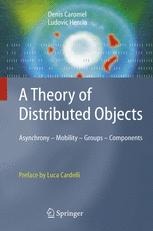
Distributed and communicating objects are becoming ubiquitous. In global, Grid and Peer-to-Peer computing environments, extensive use is made of objects interacting through method calls. So far, no general formalism has been proposed for the foundation of such systems. Caromel and Henrio are the first to define a calculus for distributed objects interacting using asynchronous method calls with generalized futures, i.e., wait-by-necessity -- a must in large-scale systems, providing both high structuring and low coupling, and thus scalability. The authors provide very generic results on expressiveness and determinism, and the potential of their approach is further demonstrated by its capacity to cope with advanced issues such as mobility, groups, and components.

Presents a ""practical theory"" of reactive systems, with formal foundations in Temporal Logic of Actions. This book emphasises theoretical understanding of reactive behaviors and using ""horizontal"" modularity to manage their complexity. It illustrates the incremental specification by a number of examples of varying size and complexity
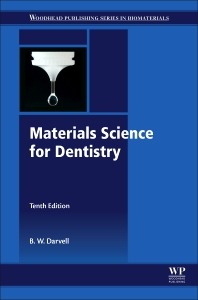
A standard resource for undergraduate and postgraduate courses in dentistry. It provides fundamental coverage of the materials on which dentistry depends, covering the structure and chemistry that govern the behavior and performance of materials. Particular classes of materials include gypsum, polymers, acrylic, cements, waxes, ceramics and metals. Other chapters review surfaces, corrosion, mixing, casting, cutting and bonding, and mechanical testing. This updated edition, which includes substantial chapters on chemistry, has been extensively revised with new material on temporary restoration resins, hydraulic silicate cements and the practical aspects of wetting surfaces. Mindfully written to provide explanations for behavior, formulation, clinical and laboratory instructions and procedures, there is no comparable resource for researchers, students, teachers and practitioners in the field of dentistry.
Combines up-to-date clinical and research information that will help clinicians to advance their theoretical and clinical knowledge on mandibular implant overdentures. Furthermore, it describes treatment considerations for geriatric populations, covering all relevant aspects from physiology to treatment planning and patient management in the surgical and prosthetic phases.
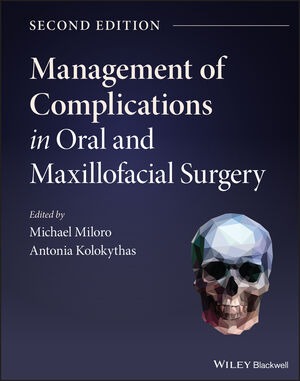
Presents clear and consistent guidance on all aspects of both common and less common, minor and major complications encountered in oral and maxillofacial surgery (OMS) practice. In-depth chapters provide thorough descriptions of each complication and recommend treatment strategies for associated complications of anesthesia, implant surgery, maxillofacial trauma, and more, using easy to read algorithms.
This book reviews all aspects of the use of machine learning in contemporary dentistry, clearly explaining its significance for dental imaging, oral diagnosis and treatment, dental designs, and dental research. In this book, readers will find up-to-date information on different machine learning tools and their applicability in various dental specialties.
A comprehensive guide to the use of local anaesthesia in dentistry that will meet the needs of both students and dental practitioners. It provides the reader with ample background information on the origin of pain and the pharmacology of anaesthetics, and describes the anatomy of the trigeminal nerve in detail. Subsequent chapters cover key are as such as general practical aspects, local anesthaesia in the upper and the lower jaw, the use of local anaesthetics in children, local and systematic complications, and the prevention of side effects. Patients at particular risk of adverse effects are identified and attention drawn to significant legal aspects.
This book offers up-to-date information on all aspects of the use of lasers in endodontics, focusing especially on the various laser applications, including primary and permanent root canal therapies, retreatments, apical surgery and pulp therapy.

سوريا - اتستراد درعا - غباغب
+963-15 2050 - 15 860 380 /1/2/3 - 11 662 3900