



الصفحة 105
الصفحة 105
Applied Statistics Using SPSS, STATISTICA, MATLAB and R
The book provides a comprehensive coverage of the main statistical analysis topics important for practical applications such as data description, statistical inference, classification and regression, factor analysis, survival data and directional statistics.
Applied Spatial Data Analysis with R
Applied Spatial Data Analysis with R is divided into two basic parts, the first presenting R packages, functions, classes and methods for handling spatial data, The second part showcases more specialised kinds of spatial data analysis, including spatial point pattern analysis, interpolation and geostatistics, areal data analysis and disease mapping.
Applied Research in Uncertainty Modeling and Analysis
For a long time uncertainty has been considered synonymous with random, stochastic, statistic, or probabilistic. Since the early sixties views on uncertainty have become more heterogeneous. In the past forty years numerous tools that model uncertainty, above and beyond statistics, have been proposed by several engineers and scientists. The tool/method to model uncertainty in a specific context should really be chosen by considering the features of the phenomenon under consideration, not independent of what is known about the system and what causes uncertainty. In this fascinating overview of the field, the authors provide broad coverage of uncertainty analysis/modeling and its application. Applied Research in Uncertainty Modeling and Analysis presents the perspectives of various researchers and practitioners on uncertainty analysis and modeling outside their own fields and domain expertise. Rather than focusing explicitly on theory, the authors use real-world examples to demonstrate the strength of the chosen methodology. Applied Research in Uncertainty Modeling and Analysis concentrates on general aspects of uncertainty, modeling, and methods, and focuses on various applications, included Biomedical Engineering, Chemical Engineering, Structural Engineering, and Transportation Engineering.
Applied Proof Theory : Proof Interpretations and Their Use in Mathematics
Ulrich Kohlenbach presents an applied form of proof theory that has led in recent years to new results in number theory, approximation theory, nonlinear analysis, geodesic geometry and ergodic theory (among others). This applied approach is based on logical transformations (so-called proof interpretations) and concerns the extraction of effective data (such as bounds) from prima facie ineffective proofs as well as new qualitative results such as independence of solutions from certain parameters, generalizations of proofs by elimination of premises. The book first develops the necessary logical machinery emphasizing novel forms of Gödel's famous functional ('Dialectica') interpretation. It then establishes general logical metatheorems that connect these techniques with concrete mathematics. Finally, two extended case studies (one in approximation theory and one in fixed point theory) show in detail how this machinery can be applied to concrete proofs in different areas of mathematics.
Applied Partial Differential Equations : A Visual Approach
This book presents selected topics in science and engineering from an applied-mathematics point of view. The described natural, socioeconomic, and engineering phenomena are modeled by partial differential equations that relate state variables.
Applied Multivariate Statistical Analysis
This book presents the tools and concepts of multivariate data analysis in a way that is understandable for non-mathematicians and practitioners who face statistical data analysis.
Applied mathematics and machine learning
The simultaneous availability of large datasets and high-performance computing capability in recent years has enabled the rapid development of powerful machine learning algorithms. On the one hand, state-of-the-art machine learning techniques have transformed many areas of science and engineering; on the other hand, theoretical discoveries in mathematical algorithms, differential equations, and statistical inferences, to name a few, have provided the foundation for the exploration of new multidisciplinary models for solving practical problems. This Special Issue endeavors to continue the journey that started in our previous Special Issue (Applied Mathematics and Computational Physics) by providing a platform for researchers from both academia and industry, as well as government, to present their new computational methods that have engineering and physics applications.
Applied Linear Algebra and Matrix Analysis
This new book offers a fresh approach to matrix and linear algebra by providing a balanced blend of applications, theory, and computation, while highlighting their interdependence.

Applied Informatics; Third International Conference, ICAI 2020, Ota, Nigeria, October 29–31, 2020, Proceedings
This book constitutes the thoroughly refereed papers of the Second International Conference on Applied Informatics, ICAI 2020, held in Ota, Nigeria, in October 2020. The 35 full papers were carefully reviewed and selected from 101 submissions. The papers are organized in topical sections on artificial intelligence; business process management; cloud computing; data analysis; decision systems; health care information systems; human-computer interaction; image processing; learning management systems; software design engineering.
Applied Econometrics with R
This is the first book on applied econometrics using the R system for statistical computing and graphics. It presents hands-on examples for a wide range of econometric models, from classical linear regression models for cross-section, time series or panel data and the common non-linear models of microeconometrics such as logit, probit and tobit models, to recent semiparametric extensions. In addition, it provides a chapter on programming, including simulations, optimization, and an introduction to R tools enabling reproducible econometric research.

Applied Demography in the 21st Century : Selected Papers from the Biennial Conference on Applied Demography, San Antonio, Texas, January 7–9, 2007
The work contains chapters on several major topical areas that are central to applied demography including works on data Use and measurement, including detailed analysis of the American Community Survey and Master Address File, population estimation and projection, applied demography and health, and surveys examples of applied demographic analysis in such diverse areas as urban planning, educational planning, church selection, and private-sector marketing. The work also contains a section on the process of educating applied demographers delineating the types of skills needed by the applied demographer and providing examples of a program designed to meet such needs.
Applied Deep Learning with TensorFlow 2 : Learn to Implement Advanced Deep Learning Techniques with Python
Focuses on the fundamental concepts and at the same time on practical aspects of implementing neural networks and deep learning for your research projects. This book is designed so that you can focus on the parts you are interested in. You will explore topics as regularization, optimizers, optimization, metric analysis, and hyper-parameter tuning. In addition, you will learn the fundamentals ideas behind autoencoders and generative adversarial networks. All the code presented in the book will be available in the form of Jupyter notebooks which would allow you to try out all examples and extend them in interesting ways. A companion online book is available with the complete code for all examples discussed in the book and additional material more related to TensorFlow and Keras. All the code will be available in Jupyter notebook format and can be opened directly in Google Colab (no need to install anything locally) or downloaded on your own machine and tested locally. You will: Understand the fundamental concepts of how neural networks work / Learn the fundamental ideas behind autoencoders and generative adversarial networks / Be able to try all the examples with complete code examples that you can expand for your own projects / Have available a complete online companion book with examples and tutorials.

Applied cryptography and network security ; Vol. 3989 : 4th International Conference, ACNS 2006, Singapore, June 6-9, 2006, Proceedings
The 4th International Conference on Applied Cryptography and Network Security(ACNS 2006)washeldin Singapore,during June6-9,2006.ACNS 2006 brought together individuals from academia and industry involved in multiple research disciplines of cryptography and security to foster exchange of ideas. This volume (LNCS 3989) contains papers presented in the academic track. ACNS was set a high standard when it was initiated in 2003. There has been a steady improvement in the quality of its program in the past 4 years: ACNS 2003 (Kunming, China), ACNS 2004 (Yellow Mountain, China), ACNS 2005 (New York, USA), ACNS 2006 (Singapore). The average acc- tance rate is kept at around 16%. We wish to receive the continued support from the community of cryptographyand security worldwide to further improve its quality and make ACNS one of the leading conferences.
Applied cryptography and network security ; 6th International Conference, ACNS 2008, New York, NY, USA, June 3-6, 2008. Proceedings
This book constitutes the refereed proceedings of the 6th International Conference on Applied Cryptography and Network Security, ACNS 2008, held in New York, NY, USA, in June 2008.

Applied cryptography and network security ; 5th International Conference, ACNS 2007, Zhuhai, China, June 5-8, 2007, Proceedings
The book is organized in topical sections on signature schemes, computer and network security, cryptanalysis, group-oriented security, cryptographic protocols, anonymous authentication, identity-based cryptography, security in wireless, ad-hoc, and peer-to-peer networks, as well as efficient implementation.

Applied cryptography and network security ; 19th International Conference, ACNS 2021, Kamakura, Japan, June 21–24, 2021, Proceedings, Part I
The two-volume set LNCS 12726 + 12727 constitutes the proceedings of the 19th International Conference on Applied Cryptography and Network Security, ACNS 2021, which took place virtually during June 21-24, 2021. The 37 full papers presented in the proceedings were carefully reviewed and selected from a total of 186 submissions. They were organized in topical sections as follows: Part I: Cryptographic protocols; secure and fair protocols; cryptocurrency and smart contracts; digital signatures; embedded system security; lattice cryptography; Part II: Analysis of applied systems; secure computations; cryptanalysis; system security; and cryptography and its applications.
Applied Civil Engineering Risk Analysis
Povides readers with the tools needed to determine the probability of failure, and when multiplied by the consequences of failure, illustrates how to assess the risk of civil engineering problems. Presenting methods for quantifying uncertainty that exists in engineering analysis and design, with an emphasis on fostering more accurate analysis and design.
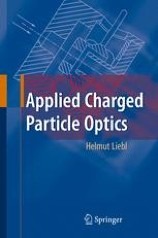
Applied Charged Particle Optics
Authored by a pioneer of the field, this overview of charged particle optics provides a solid introduction to the field for all physicists wishing to design their own apparatus or better understand the instruments with which they work. Applied Charged Particle Optics begins by introducing electrostatic lenses and fields used for acceleration, focussing and deflection of ions or electrons. Subsequent chapters give detailed descriptions of electrostatic deflection elements, uniform and non-uniform magnetic sector fields, image aberrations, and, finally, fringe field confinement. A chapter on applications is added.
Applied and computational mathematics for digital environments
Contains the 11 papers that were accepted and published in the Special Issue “Applied and Computational Mathematics for Digital Environments” of the MDPI Mathematics journal. The topics of interest include, among others, scientific research, applied tasks, and problems in the following areas: The construction of mathematical and information models of intelligent computer systems for monitoring and controlling the parameters of digital environments; The development of intelligent optimization algorithms that search for optimal parameter values of mathematical and information models in digital environments; Software and mathematical technologies in the implementation of intelligent monitoring and computer control of the parameters of digital environments; The development and application of mathematical and information models, machine learning methods, and artificial intelligence for the analysis and processing of big data in digital environments.

Applied algebra, algebraic algorithms and error-correcting codes ; 17th International Symposium, AAECC-17, Bangalore, India, December 16-20, 2007, Proceedings
Among the subjects addressed are block codes, including list-decoding algorithms; algebra and codes: rings, fields, algebraic geometry codes; algebra: rings and fields, polynomials, permutations, lattices; cryptography: cryptanalysis and complexity; computational algebra: algebraic algorithms and transforms; sequences and boolean functions.
