



الصفحة 10
الصفحة 10
Chalcogenocarboxylic acid derivatives
Chalcogenocarboxylic acid derivatives are a large class of compounds including more than one chalcogenocarboxyl group in which one or two oxygen atoms of the carboxyl group are replaced with sulfur, selenium or tellurium atoms. The chemistry of metal chalcogenocarboxylates has not been explored extensively as that of carboxylates and dithiocarbamates. This volume presents a comprehensive overview of the syntheses and their limitations, structures and reactions of chalcogenocarboxylic acid derivatives, by emphasizing the developments in organic and inorganic chalcogen chemistry over the last 5 to 20 years.
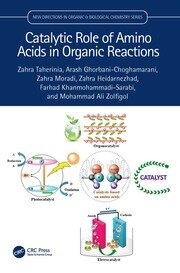
Catalytic role of amino acids in organic reactions
Asymmetric organometallic and organocatalytic processes have attracted great interest. Asymmetric synthesis using both natural and unnatural amino acids has been tremendously important from synthetic as well as industrial viewpoints, and numerous new methodologies have been developed in the last decades. Herein we provide an overview of old and very recent (since 1900 till now) advances and applications in the area of heterogeneous catalysis, homogeneous catalysis, electrocatalysis, photocatalysis, organocatalysis, thermal catalysis using amino acids [proline, glycine, alanine, valine, serine, threonine, cysteine, methionine, asparagine, glutamine, lysine, arginine, histidine, aspartate, glutamate, phenylalanine, and tryptophan], (supported or unsupported), an amino acid containing materials or amino acids derivatives as an essential component of catalysts, this book highlights the most important and recent developments to immobilize or support amino acids on various support materials. This book is suitable as supplementary reading for courses targeting the design, synthesis, and application of chiral catalysts, asymmetric catalysis, and sustainable production.
Catalytic Carbonylation Reactions
Carbonylation reactions are of major importance in both organic and industrial chemistry. Due to the availability, price and reactivity pattern, carbon monoxide is becoming a more and more important building block for fine and bulk chemicals. The major reaction types of carbon monoxide are comprehensively discussed by leading experts from academia and industry. The authors highlight important carbonylation reactions such as hydroformylation, alkoxy-carbonylations, co/olefin-copolymerization, Pauson-Khand reactions and others. They illustrate applications in organic synthesis and give industrial examples.
Casting : An Analytical Approach
For a long time, the die cast industry has used trial and error as a leading development method, resulting in tremendous growth in the utilisation of available CFD (computational fluid dynamics) software. This software allows the development of better products that maximise the advantages the die cast process has to offer. Casting: An Analytical Approach will refresh knowledge of the governing laws of the fluid dynamics that have an effect on die cast die and die cast process design. MATLAB® (MathWorks, Inc.) and Visual Basic® (Microsoft) code are listed in Casting: An Analytical Approach for every stage of product, die and die cast process design; providing better understanding of die and process design and simplifying calculations of the die cast die as well as the die cast process. Gas ventilation system calculations and fundamentals of compressible gas flow are also included.

Carbon Nanotubes : From Basic Research to Nanotechnology
A nanotube can bend easily but still is very robust. The nanotubes can be manipulated and contacted to external electrodes. Their diameter is in the nanometer range, whereas their length may exceed several micrometers, if not several millimeters. In diameter, the nanotubes behave like molecules with quantized energy levels, while in length, they behave like a crystal with a continuous distribution of momenta. Depending on its exact atomic structure, a single-wall nanotube –that is to say a nanotube composed of just one rolled-up graphene sheet– may be either a metal or a semiconductor. The nanotubes can carry a large electric current, they are also good thermal conductors.
Bulk Metallic Glasses : An Overview
Bulk Metallic Glasses explores an emerging field of materials known as bulk metallic glasses. It summarizes the rapid development of these materials over the last decade and includes documentation on diverse applications of bulk metallic glasses; from structural applications to microcomponents. Some of the applications covered are pressure sensors, microgears for motors, magnetic cores for power supplies, and nano-dies for replacing next generation DVDs. The chapters cover current theories and recent research including an atomistic theory of local topological fluctuations, atomistic simulations, and unique microstructures of these amorphous materials. Other topics include glass formation, glass forming ability, and the underlying mechanisms and physical insights of these criteria. The mechanical deformation of bulk metallic glasses, fatigue, fracture, and corrosion behaviors of these materials are also reviewed.

Blast Cleaning Technology
Blast cleaning is one of the most frequently utilised surface treatment-method in modern industry. The book is the first comprehensive monograph in this subject. It provides a practical and comprehensive review of the technology. This book systematically and critically reviews the theory behind the technology, the state of current blast cleaning, surface quality aspects and the effects of blast cleaning on the performance of applied coatings.
Bioorganometallic Chemistry
Bioorganometallic Chemistry has become a mature area of science and is comprehensively covered by leading experts in this book. Naturally occuring bioorganometallic complexes, such as vitamin B12 and recently discovered iron and nickel hydrogenases, including a possible role of the latter in the geochemical theory of the origin of life, are considered.
Biomining
Biomining is the biotechnology that uses microorganisms to recover metals, in particular copper and gold, from ores and concentrates. Having developed from a very simple operational (in terms of both engineering and biology) process, biomining has developed into a multifaceted technology, to the extent that many of the largest industrial stirred tanks and heaps throughout the world are employed for bioprocessing minerals. This book has a strong applied approach and describes emerging and established industrial processes, as well as the underlying theory of the process, and the biology of the microorganisms involved. Chapters have been written by personnel from leading biomining companies, consultants and internationally recognized researchers and academics
Biomedical EPR ; Part A : Free Radicals, Metals, Medicine and Physiology
Biomedical EPR – Part A focuses on applications of EPR spectroscopy in the areas of free radicals, metals, medicine, and physiology. The book celebrates the 70th birthday of Prof. James S. Hyde, Medical College of Wisconsin, and his contributions to this field. Chapters are written to provide introductory material for new-comers to the field which lead into up-to-date reviews that provide perspective on the wide range of questions that can be addressed by EPR.
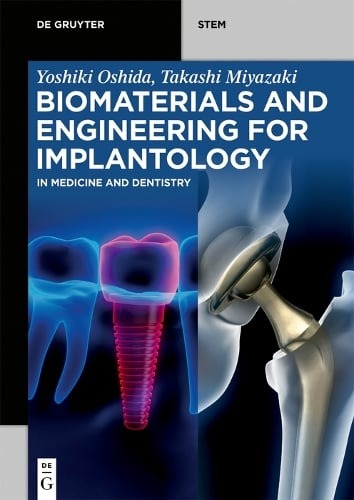
Biomaterials and engineering for implantology: in medicine and dentistry
Biomaterials are composed of metallic materials, ceramics, polymers, composites and hybrid materials. Biomaterials used in human beings require safety regulations, toxicity, allergic reaction, etc. When used as implantable materials their biological compatibility, biomechanical compatibility, and morphological compatibility must be acessed. This book explores the design and requirements of biomaterials for the use in implantology.
Bioinorganic electrochemistry
Interfacial electrochemistry of redox metalloproteins and DNA-based molecules is presently moving towards new levels of structural and functional resolution. This is the result of powerful interdisciplinary efforts. Underlying fundamentals of biological electron and proton transfer is increasingly well understood although with outstanding unresolved issues. Comprehensive bioelectrochemical studies have mapped the working environments for bioelectrochemical electron transfer, supported by the availability of mutant proteins and other powerful biotechnology. Introduction of surface spectroscopy, the scanning probe microscopies, and other solid state and surface physics methodology has finally offered exciting new fundamental and technological openings in interfacial bioelectrochemistry of both redox proteins and DNA-based molecules.

Biogeochemistry of Trace Elements in Arid Environments
Global warming has worsened the water resource crisis in many arid zones worldwide, from Africa to Asia, affecting millions of people and putting them at risk of hunger. Effective management of arid zone resources, including understanding the risks of toxic trace and heavy elements to humans, coupled with the need to produce more food to feed the world’s growing population, has thus become increasingly important. This very timely book, the only one of its kind on the market, fills the gap of our knowledge of trace elements in these regions. This book begins by introducing the nature and properties of arid zone soil, followed by an updated overview and comprehensive coverage of the major aspects of the trace elements and heavy metals of most concern in the world’s arid and semi-arid soils. These aspects include: - content and distribution - solution chemistry - solid-phase chemistry - selective sequential dissolution techniques - transfer fluxes - bioavailability - pollution and remediation In order to illustrate the themes, a comprehensive and focused case study on transfer fluxes of trace elements in Israeli arid soils is presented. Finally it closes with the global perspectives on anthropogenic interferences in the natural trace elements’ distribution.
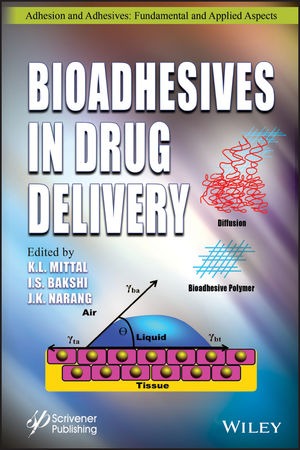
Bioadhesives in Drug Delivery
The topics covered include: Theories and mechanisms of bioadhesion; bioadhesive polymers for drug delivery applications; methods for characterization of bioadhesiveness of drug delivery systems; bioadhesive films and drug delivery applications; bioadhesive nanoparticles; and bioadhesive hydrogels and applications ocular biodhesive drug delivery systems; buccal bioadhesive drug delivery systems; gastrointestinal bioadhesive drug delivery systems ; nasal bioadhesive drug delivery systems; vaginal drug delivery systems; pulmonary bioadhesive drug delivery systems.

Best diagnostic tools and supportive medication for cancer patients
Cancer is still a lethal disease despite the development of new effective therapies; therefore the purpose of our study was to improve the patient's outcome by looking for the best diagnostic tools, secondly to improve radiotherapy resistance since about 50% of all cancer patients are treated with it. The fir st par t of our study will be per formed in Alkhatib center and the selection of that hospital was upon its highly sensitive diagnostic tools, in which PET/ CT scan was playing a major role to improve survival as shown in few repor ts in our study, and it’s the only safe diagnostic tool for a per son who has a metal fragments after injury in the war which increased the number of such patients in our country dur ing the last decade. This diagnostic tool is based on FDGin which we can define the tumor by using sugar more than normal tissue.

Austenitic TRIP/TWIP steels and steel-zirconia composites : Design of tough, transformation-strengthened composites and structures
This book presents a collection of the most up-to-date research results in the field of steel development with a focus on pioneering alloy concepts that result in previously unattainable materials properties.
Asymmetric organo-metal catalysis : Concepts, principles, and applications
In Asymmetric Organo-Metal Catalysis: Concepts, Principles, and Applications, accomplished chemist Liu-Zhu Gong delivers a comprehensive discussion of how to design efficient organo/metal combined catalyst systems, new cooperatively catalyzed asymmetric reactions, relay catalytic cascades, and multicomponent reactions. The distinguished author covers critical topics, like the combined catalysis of chiral phase transfer catalysts, enamine, iminium, nucleophilic Lewis base, or Bronsted acids with metal complexes, while also covering the cooperative catalysis of photocatalysts and organocatalysts.
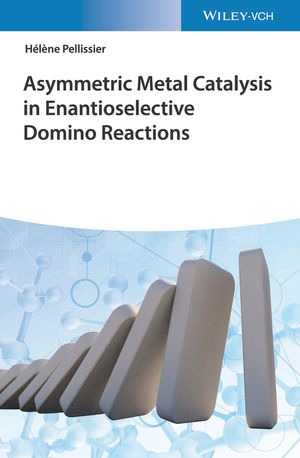
Asymmetric metal catalysis in Enantioselective Domino reactions
Collects the major progress in the field of enantioselective one-, two-, and multicomponent domino reactions promoted by chiral metal catalysts. It clearly illustrates how enantioselective metal-catalyzed processes constitute outstanding tools for the development of a wide variety of fascinating one-pot asymmetric domino reactions, thereby allowing many complex products to be easily generated from simple materials in one step. The book also strictly follows the definition of domino reactions by Tietze as single-, two-, as well as multicomponent transformations.

Arts of Allusion : Object, Ornament, and Architecture in Medieval Islam
The art of the object reached unparalleled heights in the medieval Islamic world, yet the deep intellectual dimensions of ceramics, metalwares, and other plastic arts in this milieu have not always been acknowledged. Arts of Allusion reveals the object as a crucial site where premodern craftsmen of the eastern Mediterranean and Persianate realms engaged their creations in fertile dialogue with poetry, literature, painting, and, perhaps most strikingly, architecture. Through close studies of objects from the ninth to the thirteenth centuries, this book reveals that allusions to architecture abound across media in the portable arts of the medieval Islamic world.
Analysis of seawater : A guide for the analytical and environmental chemist
It is only in the past few years that methods of adequate sensitivity have become available for true ultra-trace metal determinations in water. In the case of organics in seawater it has now become possible to resolve the complex mixtures of organics in seawater and achieve the required very low detection limits. Fortunately, the interest in micro-constituents in the seawater both from the environmental and the nutrient balance points of view has coincided with the availability of advanced instrumentation capable of meeting the analytical needs. This complete and up-to-date compilation of the currently employed proven methods for the chemical analysis of seawaters includes 45 tables and 48 figures.
