



الصفحة 10
الصفحة 10

Micro Cogeneration : Towards Decentralized Energy Systems
The need for replacement is an extremely important driving force for the current transformation, forcing conventional and new technologies to compete for a role in the future energy supply. The overall transformation of electricity systems is neither driven nor shaped by technical or societal modifications alone, but rather by a rich diversity of processes in the realms of technology, politics, society and economy.

Metric Driven Design Verification : An Engineer's and Executive's Guide to First Pass Success
A metric based flow is described that focuses on the four steps of: 1. Planning: Defining what needs to be done and the automatically trackable metrics that will be used to measure progress. 2. Execution: Implementing verification environments and then extensively exercising the device under verification utilizing comprehensive, massively parallel regression strategies. 3. Measurement: Automatically capturing the metrics defined in planning to provide objective data with which to manage the verification project. Custom tailoring those metrics through an automated reporting framework to provide all stakeholders a real-time meaningful view of project status. 4. Response: Utilizing the returned metrics to effectively adapt to changing project conditions. Making use of automated response mechanisms to automate engineering processed and management response to streamline project management processes

Methods to study litter decomposition : A practical guide
Decomposition of organic matter is a major ecosystem process involving an array of different organisms, including bacteria, fungi and invertebrates. The main objective of this book is to provide students and laboratory instructors at universities and professional ecologists with a broad range of established methods to study plant litter decomposition. Detailed protocols for direct use in the field or laboratory are presented in an easy to follow step-by-step format. A short introduction to each protocol reviews the ecological significance and principles of the technique and points to key references. Although most methods are described for freshwater ecosystems, many will work equally well in the presented or slightly modified form for studies in marine and terrestrial environments.

Methods in Gut microbial ecology for ruminants
As a result of various human activities, such as increase in human population,decrease in arable land due to soil degradation, urbanization, industrialization and associated increase in the demand for livestock products, dramatic changes are occurring in the global ruminant livestock sector. These changes includeshift inthesize of regional livestock populations and in the types of management and feeding systems under which ruminant livestock are held, and increased demand of a wider range of quality attributes from animal agriculture, not just of the products themselves but also of the methods used in their production. The livestock sector will need to respond to new challenges of increasing live stock productivity while protecting environment and human health and conservingbiodiversity and natural resources. The micro-organisms in the digestive tracts of ruminant livestock have a profound in?uence on the conversion offeedinto end products, which can impact on the- imal and theenvironment. As the livestock sector grows particularly in developing countries, there will be an increasing need to understand these processes for b- ter management and use ofbothfeed and other natural resources that underpinthe development of sustainable feeding systems.
Methods for measuring greenhouse Gas balances and evaluating mitigation options in smallholder agriculture
This book provides standards and guidelines for quantifying greenhouse gas emissions and removals in smallholder agricultural systems and comparing options for climate change mitigation based on emission reductions and livelihood trade-offs. Globally, agriculture is directly responsible for about 11% of annual greenhouse gas (GHG) emissions and induces an additional 17% through land use change, mostly in developing countries. Farms in the developing countries of sub-Saharan Africa and Asia are predominately managed by smallholders, with 80% of land holdings smaller than ten hectares. However, little to no information exists on greenhouse gas emissions and mitigation potentials in smallholder agriculture.

Methods and Tools for Drought Analysis and Management
Implementation of effective drought management policies requires both advanced technologies and appropriate methods. Monitoring and forecasting systems, practical tools for risk assessment, as well as simple and objective criteria to select and implement appropriate drought mitigation measures are key elements for a successful drought management strategy.These key issues have been tackled by universities and public agencies involved in the EU projects Sedemed and Sedemed II (Programme Interreg IIIB MEDOCC), aimed at the definition of an integrated network for real time monitoring of drought, the development of common methodologies for drought analysis and forecasting, as well as the definition of proper mitigation strategies for the Mediterranean countries.The book presents the main outcomes of such projects with a special focus on: drought monitoring and forecasting echniques at different spatial scales; new or modified agrometeorological indices and remote sensing technique for drought identification and characterization; tools to improve surface water resources management under drought conditions; methods and tools for groundwater resources monitoring and management, based on hydrogeological and hydrodynamics characteristics of aquifers; general criteria to select and implement mitigation strategies to prevent or minimize drought impacts.

Methods and Techniques for Cleaning-up Contaminated Sites
This publication is meant to foster links between groups facing challenges cleaning up contaminated sites through presentations that explore the problems currently being addressed and solutions that are emerging in the field.

Metals in Society and in the Environment : A Critical Review of Current Knowledge on Fluxes, Speciation, Bioavailability and Risk for Adverse Effects of Copper, Chromium, Nickel and Zinc
In 2002, the Swedish Metal Information Task Force (MITF) engaged the Environmental Research Group (MFG) to update previous monographs on copper, zinc and major alloying metals (such as chromium, nickel and molybdenum) in society and in the environment. This book presents new results on metal fluxes from society to the environment, on metal speciation in water, soil and sediment, and its interpretation in terms of mobility, biological uptake and toxicity. The scientific fundamentals of new approaches, like the Acid Volatile Sulphide (AVS) concept to predict metal bioavailability in sediments, and the Biotic Ligand Model (BLM) to calculate the toxicity of metals to aquatic organisms, are critically evaluated, with a focus on copper, nickel, zinc, and, in part, chromium.

Metalliferous Sediments of the World Ocean : Fundamental Theory of Deep-Sea Hydrothermal Sedimentation
Dramatic advances in understanding global tectonics have been made in the last half century and the information and specific data acquired on the floor of the World Ocean by the scientific community probably has exc- ded that available in all previous time. With the benefit of new technology and advanced concepts in the earth sciences extensive exploration of the deep seabed became possible, and has been carried out in many parts of the world. Many features have been recognized and data recorded that are vital for understanding the fundamental processes that shape the earth=s surface and control the habitable environment. The data collected to date on the o- an floor and its physical environment greatly exceeds our understanding and appreciation of their fundamental importance in the earth sciences, and our ability to apply this knowledge effectively in improving our way of life.

Metaheuristics for Scheduling in Distributed Computing Environments
This volume presents meta-heuristics approaches for Grid scheduling problems. Due to the complex nature of the problem, meta-heuristics are primary techniques for the design and implementation of efficient Grid schedulers. The volume brings new ideas, analysis, implementations and evaluation of meta-heuristic techniques for Grid scheduling, which make this volume novel in several aspects. The 13 chapters of this volume have identified several important formulations of the problem, which we believe will serve as a reference for the researchers in the Grid computing community.

Messung von Ressourceneffizienz mit der ESSENZ-Methode : Integrierte Methode zur ganzheitlichen Bewertung = Measuring resource efficiency with the ESSENCE method : Integrated method for holistic evaluation
Develops a reliable method for evaluating the use of resources. This is necessary because the strong economic growth of the last decades has led to an intensive use of natural resources. With their increasing use, there are also additional burdens on the environment and restrictions on the availability of resources. For these reasons, efficient use of resources is required as an important contribution to sustainable development.
Mesoscale Analysis of Hydraulics
Presents a series of complicated hydraulic phenomena and related mechanism of high-speed flows in head-head dam. According to the basic hydraulic theory, detailed experiments and numerical simulations, microscopic scale analysis on cavitation bubbles, air bubbles, turbulent eddy vortices and sand grains are examined systemically. These investigations on microscopic fluid mechanics, including cavitation erosion, aeration protection, air–water flow, energy dissipation and river-bed scouring, allow a deep understanding of hydraulics in high-head dams. This book provides reference for designers and researchers in hydraulic engineering, environment engineering and fluid mechanics.

Mercury Pollution in Minamata
It overviews the poisoning which occurred in the 1950s and 1960s among the residents in Minamata who ate seafood contaminated with methylmercury discharged from the chemical factory, Chisso Corporation. It describes the history, symptoms pathogenesis and research on the causal agent, and discusses the responses of Chisso and the national and local governments to the outbreak, the victims, the compensation and environmental restructuring as well as the court ruling on claims. Based on lecture notes from a university course, it includes students’ suggestions for avoiding a repeat of the tragedy. The issue has not been settled yet, and this analysis of the incident provides useful insights into solutions to the current global mercury pollution problem.

Men’s care center
"سين" مركزٌ للعافية والاسترخاء، مصمم بمزيج فريد من العناصر الطبيعية والهندسة المعمارية الحديثة ليمنح الزوار تجربة حسية متكاملة. يدمج المشروع المساحات الخضراء الداخلية والإضاءة الهادئة وخطوط التصميم المعاصرة لخلق بيئة فاخرة وهادئة. تشمل المساحات الرئيسية الحديقة الداخلية، والحمام التركي التقليدي، وغرف كبار الشخصيات، ومنطقة الاستقبال - جميعها مُرتبة بعناية لتعزيز الهدوء والتوازن. يركز التصميم على التفاصيل المعمارية والوظيفية، موفرًا للضيوف ملاذًا من ضغوط الحياة اليومية. خضعت التصاميم الداخلية والخارجية لدراسة دقيقة لضمان تجربة راقية وشاملة. “Sén” is a wellness and re laxation center designed with a unique blend of natural elements and modern architecture to provide visitors with a complete sensor experience. The project integrates indoor greenery, calming lighting, and con temporary design lines to create a luxurious and peaceful environment. Key spaces include the indoor garden, traditional hammam, VI P rooms, and reception area — all carefully arranged to promote tranquility and balance. The design focuses on architectural and functional details, offering guests a retreat from the stresses of everyday life. Both interior and exterior designs were carefully studied to ensure a refined and holistic experience.
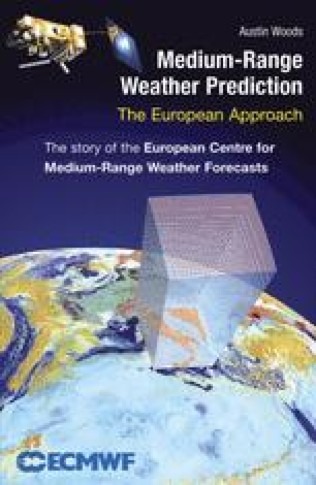
Medium-Range Weather Prediction : The European Approach
The European Centre for Medium-Range Weather Forecasts is widely acknowledged to be a world leader in the field of numerical weather prediction." "This authoritative and readable book tells the interesting story of how the Centre was conceived in the confusing and difficult political period of the 1960s in Europe. It summarises the political, scientific, technical and financial discussions that led to its establishment, and how it came to be built 60 km west of London, England.

Mediterranean Land-surface Processes Assessed from Space
1. 1 Space View and Ground Observations 1 1. 2 Mediterranean Climatic Environment 2 1. 3 Processes at Surfaces 10 1. 3. 1 Deforestation and Land-use Changes 10 1. 3. 2 Water Related Problems 16 1. 3. 3 Fire, Grazing, and Land Degradation 19 1. 3. 4 Drought, Floods, Frost, and Desertification 21 1. 3. 5 Coupling Between Surface and Atmosphere: The Role of the Atmospheric Boundary Layer 25 1. 4 Role and Capabilities of Measurements Made From Space 30 1. 4. 1 Research Programmes 30 1. 4. 2 Expected Information 32 1. 4. 3 Research Strategy 33 1. 4. 4 Observation of Changes in Heterogeneous Landscapes: Spatial and Temporal Scales 35 1. 4. 5 Land-surface Change Indicators Observable from Space 36 Spectral Characteristics of Vegetation and Soils (36); Responses of Remote Sensing Signals to Changes of Land-surface Properties (40) 1. 5 About this Book 48 Chapter 2 Processing and Archiving of Satellite and Ancillary Data 51 2. 1 Introduction 51 2. 2 The Remote Sensing Data Base 55 2. 2. 1 Satellite Instruments 55 The NOAA Observing System (55); Meteosat (57); Nimbus-7 (59); Landsat (59); SPOT (61); DMSP (62); ERS-1 and ERS-2 (62); TRMM (63); Terra (64); Envisat (65); Aqua (66) 2. 2. 2 Aircraft Instruments 66 The Use of Aircraft for Land-surface Process Studies (66); AVIRIS (67); TMS (68); AIRSAR (68); DIAL (69) 2. 3 Reception, Acquisition and Availability of Satellite Data 70 2. 3.
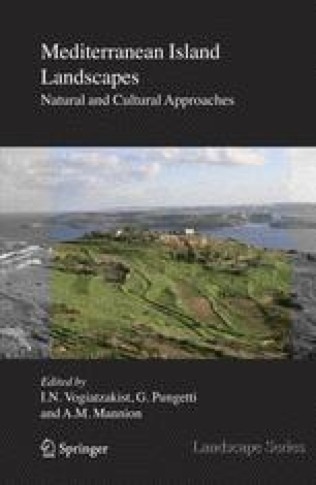
Mediterranean Island Landscapes : Natural and Cultural Approaches
Mediterranean islands exhibit many similarities in their biotic ecological, physical and environmental characteristics. There are also many differences in terms of their human colonization and current anthropogenic pressures. This book addresses in three sections these characteristics and examines the major environmental changes that the islands experienced during the Quaternary period. The first section provides details on natural and cultural factors which have shaped island landscapes. It describes the environmental and cultural changes of the Holocene and their effects on biota, as well as on the current human pressures that are now threats to the sustainability of the island communities. The second section focuses on the landscapes of the largest islands namely Sicily, Sardinia, Corsica, Cyprus, Crete, Malta and the Balearics. Each island chapter includes a special topic reflecting a particular characteristic of the island. Part three presents strategies for action towards sustainability in Mediterranean islands and concludes with a comparison between the largest islands.

Medication problems and consequences due to the misuse of chronic drugs
All medicines can cause harm as well as benefit. Without systematic scientific evidence of benefit, no harmful effect, however rare, is worth the risk. This message is hardly revolutionary; it is one of the key principles of drug regulation Across all care environments, pharmacists play an essential role in the care of people who use and misuse of drug Medication history errors potentially clinically important, Improved physician training, accessible community pharmacy databases and closer teamwork between patients, physicians and pharmacists could reduce the frequency of these errors.

Measuring Precipitation from Space : EURAINSAT and the Future
More than 20 years after the last book on the subject the worldwide precipitation community has produced a comprehensive overview of its activities, achievements, ongoing research and future plans. Measuring Precipitation from Space presents state-of-the-art rainfall estimation algorithms, validation strategies, precipitation modelling, and assimilation in numerical weather prediction models. Clouds and precipitation observations and modelling are addressed for the improvement of the rainfall product quality. Special attention is given to the applications to monitoring and forecasting weather events and to climate monitoring in a frame of growing public interest.

Measuring Methane Production from Ruminants
The world’s livestock sector is amidst a major transformation, fuelled by high demand for meat and milk, which is likely to double over the next two decades in developing countries. The challenge is to enhance animal productivity without adversely affecting the environment. A key to this is reducing methane emissions from ruminants. The major limitation to ruminant production in many tropical regions of Africa, Asia and Latin America, where a large proportion of the global ruminant population is located, is poor nutrition. The productivity of animals is restricted by the low nitrogen and high fibre content of the native grasses and crop residues, which form the basis of the diets in these regions. Animals on these types of diets emit more methane than animals fed better quality temperate forages. These methane emissions represent a loss of digestible energy to the animal (up to 15%) as well as a threat to the environment.The challenge is to devise nutritional strategies and identify dietary components, particularly from locally available plant resources, that reduce methane emissions.
