



الصفحة 10
الصفحة 10

Fragility fracture nursing : Holistic care and management of the orthogeriatric patient
Aims to provide a comprehensive but practical overview of the knowledge required for the assessment and management of the older adult with or at risk of fragility fracture. It considers this from the perspectives of all of the settings in which this group of patients receive nursing care.

Fractures du genou = Knee fractures
Provides a comprehensive yet practical overview of the management of knee fractures and their complications. The editorial team comprises specialists from France, Switzerland, Belgium, the United States, and Ireland, many of whom are members of the AO group. Imaging strategies, assessment, classification, and anatomical variations are reviewed for each anatomical location. All therapeutic approaches are discussed without exception: conventional implants, intramedullary nailing, minimally invasive techniques, including the role of external fixation, and newer technologies such as the LISS. These approaches are subjected to critical analysis to identify the best options based on the indications and individual circumstances. The patellar apparatus is addressed in its functional unity. Postoperative management, influenced by functional prognosis, is also covered, as is the management of malunion, stiffness, and other complications. Finally, very specific problems are discussed, such as pediatric injuries, patellectomies, periprosthetic fractures, often complex projectile injuries, the role of immediate arthroplasty and massive grafts, but also associated injuries which sometimes have a heavy impact on the final prognosis.

Fostering transformative change for sustainability in the context of socio-ecological production landscapes and seascapes (SEPLS)
This book is a compilation of case studies that provide useful knowledge and lessons that derive from on-the-ground activities and contribute to policy recommendations, focusing on the relevance of social-ecological production landscapes and seascapes (SEPLS) to “transformative change.” The concept of “transformative change” has been gaining more attention to deal with today’s environmental and development problems, whereas both policy and scientific communities have been increasingly calling for transformative change toward sustainable society. The Intergovernmental Science-Policy Platform on Biodiversity and Ecosystem Services (IPBES) has planned to start the so-called “assessment on transformative change” if approved by the IPBES plenary to be held in 2021

Formulas, ingredients and production of cosmetics technology of skin- and hair-care products in Japan
Provides the comprehensive knowledge and instruction necessary for researchers to design and create cosmetics products. The book’s chapters cover a comprehensive list of topics, which include, among others, the basics of cosmetics, such as the raw materials of cosmetics and their application; practical techniques and technologies for designing and manufacturing cosmetics, as well as theoretical knowledge; emulsification; sensory evaluations of cosmetic ingredients; and how to create products such as soap-based cleansers, shampoos, conditioners, creams, and others. The potential for innovation is great in Japan’s cosmetics industry. This book expresses the hope that the high level of dedicated research continues and proliferates, especially among those who are innovators at heart.

Formal aspects in security and trust ; Vol. 3866 ; 3rd International Workshop, FAST 2005, Newcastle upon Tyne, UK, July 18-19, 2005, Revised Selected Papers
This book constitutes the thoroughly refereed post-proceedings of the Third International Workshop on Formal Aspects in Security and Trust, FAST 2005, held in Newcastle upon Tyne, UK in July 2005. The papers focus on formal aspects in security and trust policy models, security protocol design and analysis, formal models of trust and reputation, logics for security and trust, distributed trust management systems, trust-based reasoning, digital assets protection, data protection, privacy and ID issues, information flow analysis, language-based security, security and trust aspects in ubiquitous computing, validation/analysis tools, web service security/trust/privacy, GRID security, security risk assessment, and case studies.

Forensic and Legal Dentistry
Explains in detail diverse aspects of the law as it relates to dentistry and examines key issues in forensic odontostomatology. A central aim is to enable the dentist to achieve a realistic assessment of the legal situation and to reduce uncertainties and liability risk.

Food-Borne Parasitic Zoonoses : Fish and Plant-Borne Parasites
The focus of this book is on those zoonoses that are transmitted by fish, plant and invertebrate foods. While people, especially those living in developed countries, are commonly aware of meat-borne zoonoses such as trichinellosis and cysticercosis, fewer are acquainted with parasitic diseases caused by liver, lung and intestinal flukes, fish-borne tapeworms, and tissue roundworms. This book reviews not only the prevalence and distribution of these zoonoses, including available health and economic impact data, but also highlights gaps in our knowledge base that must be filled in order to gain insights on approaches to prevention. The topics on epidemiology, diagnosis, and clinical aspects emphasize knowledge gaps that limit a full understanding of these zoonoses, and target where greater research investments on these parasitic diseases should be focused.

Foodborne Parasites
Microbiologists are being challenged as foodborne outbreaks are increasingly being observed worldwide. Most of these outbreaks are associated with viral and bacterial pathogens such as Campylobacter, Salmonella, and lately Escherichia coli O157:H7.Foodborne Parasites examines the two major parasite groups that are transmitted via water or foods: the protozoa, which are single celled organisms, and the helminths. The helminths are classified in three sub groups: cestodes (tapeworms), nematodes (round worms), and trematodes (flukes). To better understand their significance, each chapter covers the biology, mechanisms of pathogenesis, epidemiology, treatment, and inactivation of these parasites.

Foodborne Diseases
In Foodborne Diseases, leading authorities present a broad overview of the microbial pathogens and toxins associated with foodborne illness while discussing pathogenicity, clinical epidemiology, diagnosis, and treatment. The chapters of this volume cover a wide variety of bacterial pathogens, viruses, protozoans, and parasites, as well as microbial toxins, and also address alternatives to antibiotics, risk assessment, irradiation and other sanitation procedures, and molecular techniques for detecting foodborne pathogens. Additionally, the acclaimed authors discuss pathogen control strategies and look toward future innovations in food safety technology. Covering essential foodborne pathogens, assessment and treatment, Foodborne Diseases is an essential reference for infectious disease specialists, microbiologists, and industrial and research-based scientists in food safety.

Food physics : Physical properties : Measurement and applications
Food Physics deals with the physical properties of food, food ingredients and their measurement. Physical properties of food play a key role in all fields where modern technological processes are applied for the generation of food raw materials and the production of food. The determination of physical properties of food and related products are a pre-requisite for planning, production engineering and automation processes in today’s food, pharmaceutical and cosmetics industries as well as in all related quality control activities.This book describes the principles of food physics starting with the very basics and focuses on the needs of practitioners without omitting important basic principles.

Fluid volume monitoring with glucose dilution
Decision making regarding fluid volume loading, fluid restriction, or administration of vasoactive drugs may vary among physicians, depending solely upon their clinical experience in the absence of evidence-based measurement. The initial distribution volume of glucose (IDVG) is believed to be clinically relevant as a marker of cardiovascular and fluid management in critically ill patients without a significant modification of glucose metabolism. This book covers all aspects of IDVG measurement, including the basic concept, its relationship with other fluid volumes, and the clinical application of this technique in the intensive care unit based on both the authors’ studies and their clinical experience with more than 4000 IDVG determinations. When the concept of IDVG is properly understood and its measurement is then performed routinely, daily fluid and cardiovascular management in critically ill patients can be improved based on evidence-based measurement.

Flavours and Fragrances : Chemistry, Bioprocessing and Sustainability
This book is an introduction to the fascinating world of aroma chemicals, essential oils, fragrances and flavour compositions for the food, cosmetics and pharmaceutical industry. The present state-of-the-art technology, the future use of resources and biotechnological approaches for the production of the respective chemical compounds are described. A large section is devoted to the description of the renewable resources of flavours: spice plants, fruits from moderate to tropical climates, vegetables, fermented and heated plants. Analytical methods, such as gas chromatography coupled to human or electronic noses or to a mass spectrometer, are outlined and consumer trends, legal and safety aspects are described. Novel renewable resources come from biotechnology.

Fire safety design for tall buildings
Provides structural engineers, architects, and students with a systematic introduction to fire safety design for tall buildings based on current analysis methods, design guidelines, and codes. It covers almost all aspects of fire safety design that an engineer or an architect might encounter—such as performance-based design and the basic principles of fire development and heat transfer.
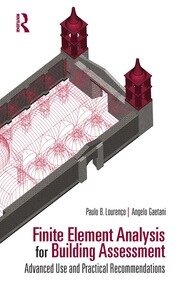
Finite element analysis for building assessment : Advanced use and practical recommendations
Existing structures represent a heterogeneous category in the global built environment as often characterized by the presence of archaic materials, damage and disconnections, uncommon construction techniques and subsequent interventions throughout the building history. In this scenario, the common linear elastic analysis approach adopted for new buildings is incapable of an accurate estimation of structural capacity, leading to overconservative results, invasive structural strengthening, added intervention costs, excessive interference to building users and possible losses in terms of aesthetics or heritage values. For a rational and sustainable use of the resources, this book deals with advanced numerical simulations, adopting a practical approach to introduce the fundamentals of Finite Element Method, nonlinear solution procedures and constitutive material models.

Financial management for technology start-ups : How to power growth, track performance and drive innovation
Develops the financial intelligence you need to communicate effectively with investors, implement business strategies and pinpoint emerging pathways for profit / Outlines how to analyze your performance and undertake risk-return assessments to tactically grow your start-up / Offers proven methods for tracking your start-up's progress to ensure that growth is maintained and continuous / Analysis of financial statements directly from start-ups, new case studies on companies that have scaled up, focus on new digital technologies and market opportunities for start-ups, information on new players and potential future tech start-ups

Financial Analysis of Mergers and Acquisitions : Understanding Financial Statements and accounting Rules with Case Studies
Helps its readers better analyze M&A transactions using information provided in financial statements. Covering accounting and reporting of consolidations, goodwill, non-controlling interests, step acquisitions, spin-offs, equity carve-outs, joint ventures, leveraged buyouts, disposal of subsidiaries, special purpose entities, and taxes, it focuses on the link between underlying economic events and the information in financial statements and how this link affects the assessment of corporate performance. The first part of the book provides description of the accounting rules governing M&A transactions, while the second part includes cases of M&A transactions. Each case focuses on a different element of an M&A transaction, and it is followed by a detailed solution with a complete analysis. Unlike other books in this field, this textbook focuses exclusively on accounting and financial analysis for graduate and upper undergraduate level courses in financial analysis, corporate finance, and financial accounting.

Finance for Engineers : Evaluation and Funding of Capital Projects
Finance for Engineers: Evaluation and Funding of Capital Projects provides a framework for engineers and scientists to undertake financial evaluations and assessments of engineering or production projects. The material covered enables the reader to understand how the economics of a technical project affects the finances of the company. The integration of the technical and financial decision-making is demonstrated through case studies and examples relevant to the practising engineer.

Fecal Incontinence : Diagnosis and Treatment
Fecal incontinence is a frequent, distressing condition that has a devastating impact on patients’ lives. However, patients are typically embarrassed and reluctant to acknowledge this disability, so they relinquish the possibility of being cured and remain socially isolated. Since fecal incontinence may result from various pathophysiological situations, an accurate diagnostic work-up of each patient is fundamental. Today, a wide range of therapeutic options is available, but making the correct choice is pivotal to the successful management of this condition. This book is aimed at all physicians involved in the assessment and treatment of fecal incontinence. Its main purpose is to review the latest advances in the epidemiologic, socio-economic, psychologic, diagnostic, and therapeutic aspects of fecal incontinence, in order to establish guidelines for effective treatment.

Fatigue Science for Human Health
Fatigue is quite a familiar sensation, one that everyone is likely to have experienced. Its molecular and neural mechanisms have not yet been elucidated, however, probably because of the complicated nature of its causes. To provide a broad forum for discussion, the International Conference on Fatigue Science was organized, the first being held in 2002 in Sandhamn, Sweden, and the second in 2005 in Karuizawa, Japan. Subsequently it was decided that the papers presented at the two conferences should be collected and incorporated in this pioneering work, Fatigue Science for Human Health. The book summarizes fatigue researchers' achievements, explains the status of the research on fatigue, and presents perspectives on remedies for chronic fatigue and chronic fatigue syndrome. The result is an authoritative guide to recent progress in the molecular and neural mechanisms of fatigue and in the development of the ways to prevent and overcome fatigue and chronic fatigue.
Family-Oriented Primary Care
I was a Medical Student in 1966 when the Millis Report on the training of the generalist physician was published,de?ning the concept of primary care. According to the Report, the primary provider has four major responsib- ities or roles. The ?rst role is that of initial contact care of the undiffer- tiated patient. The second is to provide comprehensive care based on the belief that the primary provider should be able to manage the overwhe- ing majority of problems with which patients present. Equally important is the third role—continuity and coordination of care within the health care system. Finally,the primary provider is responsible for demonstrating le- ership in the community. This Report’s description of a primary provider seems as relevant today as it was when it was written. In 1994,the Institute of Medicine’s assessment of primary care added the responsibility of family and community integration of care to the Millis Report description. Without question there are many challenges to a contemporary imp- mentation of this comprehensive description of primary care, beginning with the level of individual patients who so often suffer from complex pr- lems, such as mental disorders and obesity. Treating these conditions in a brief primary care visit is dif?cult. At the level of the larger system, re- bursement is often inadequate and can represent policies that are uns- portive of primary care, such as those that compromise payment for preventive services that help patients to quit smoking or lose weight.
