



الصفحة 10
الصفحة 10

Complement and Kidney Disease
It is evident that a defective or deregulated complement system results in kidney diseases. An important role of complement effector and regulatory proteins in pathological settings of the kidney has been demonstrated. A large panel of distinct human kidney diseases is caused by defective complement control. Genetic analyses have identified mutations in complement regulators that are associated with these diseases. Mutations have been identified in the fluid phase alternative pathway regulator Factor H and the membrane regulator Membrane Cofactor Protein MCP (CD46). The functional characterization of the mutant proteins allows to define the pathophysiological events on a molecular level. These new concepts and data on disease mechanisms allowed establishing new diagnostic and promising therapeutic approaches for several human kidney diseases. Molecular biology, clinics and therapy are discussed in this volume.

Chemical Reactor Modeling : Multiphase Reactive Flows
Chemical Reactor Modeling closes the gap between Chemical Reaction Engineering and Fluid Mechanics. It presents the fundamentals of the single-fluid and multi-fluid models for the analysis of single- and multiphase reactive flows in chemical reactors with a chemical reactor engineering rather than mathematical bias.

Chemical process engineering ; Vol.1 : Design, analysis, simulation, integration, and problem solving with microsoft Excel-UniSim software for chemical engineers computation, physical Property, fluid flow, equipment and instrument sizing
The book provides a detailed description and hands-on experience on process design in chemical engineering, and it is an integrated text that focuses on practical design with new tools, such as Excel spreadsheets and UniSim simulation software.

Characteristics Finite Element Methods in Computational Fluid Dynamics
This book details a systematic characteristics-based finite element procedure to investigate incompressible, free-surface and compressible flows. The fluid dynamics equations are derived from basic thermo-mechanical principles and the multi-dimensional and infinite-directional upstream procedure is developed by combining a finite element discretization of a characteristics-bias system with an implicit Runge-Kutta time integration. For the computational solution of the Euler and Navier Stokes equations, the procedure relies on the mathematics and physics of multi-dimensional characteristics. As a result, the procedure crisply captures contact discontinuities, normal as well as oblique shocks, and generates essentially non-oscillatory solutions for incompressible, subsonic, transonic, supersonic, and hypersonic inviscid and viscous flows.

Centrifugal Pumps
This book gives an unparalleled, up-to-date, in-depth treatment of all kinds of flow phenomena encountered in centrifugal pumps including the complex interactions of fluid flow with vibrations and wear of materials.
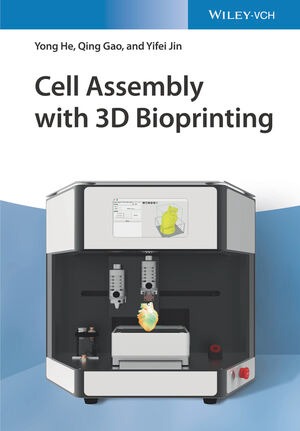
Cell assembly with 3D bioprinting
Detailed, highly illustrated chapters cover different bioprinting approaches and their applications, including coaxial bioprinting, digital light projection, direct ink writing, liquid support bath-assisted 3D printing, and microgel-, microfiber-, and microfluidics-based biofabrication. The book includes practical examples of 3D bioprinting, a protocol for typical 3D bioprinting, and relevant experimental data drawn from recent research.

Catalyst separation, recovery and recycling : Chemistry and process design
This book looks at new ways of tackling the problem of separating reaction products from homogeneous catalytic solutions. The new processes involve low leaching supported catalysts, soluble supports such as polymers and dendrimers and unusual solvents such as water, fluorinated organics, ionic liquids and supercritical fluids. The advantages of the different possibilities are discussed alongside suggestions for further research that will be required for commercialisation.
Casting : An Analytical Approach
For a long time, the die cast industry has used trial and error as a leading development method, resulting in tremendous growth in the utilisation of available CFD (computational fluid dynamics) software. This software allows the development of better products that maximise the advantages the die cast process has to offer. Casting: An Analytical Approach will refresh knowledge of the governing laws of the fluid dynamics that have an effect on die cast die and die cast process design. MATLAB® (MathWorks, Inc.) and Visual Basic® (Microsoft) code are listed in Casting: An Analytical Approach for every stage of product, die and die cast process design; providing better understanding of die and process design and simplifying calculations of the die cast die as well as the die cast process. Gas ventilation system calculations and fundamentals of compressible gas flow are also included.

Carbonate Reservoir Characterization : An Integrated Approach
One principal need in petroleum recovery from carbonate reservoirs is the description of the three-dimensional distribution of petrophysical properties in order to improve performance predictions by means of fluid-flow computer simulations. The book focuses on a rock based approach for the integration of geological, petrophysical, and geostatistical methods to construct a reservoir model suitable to input into flow simulation programs. This second edition includes a new chapter on model construction and new examples of limestone, dolostone, and touching-vug reservoir models as well as improved chapters on basic petrophysical properties, rock-fabric/petrophysical relationships, calibration of wireline logs, and sequence stratigraphy.

Cancer drug resistance : methods and protocols
Discusses the latest techniques used to identify cancer drug resistance determinants at the molecular, cellular, and functional levels. Chapters in this book cover up-to-date topics including tumor-microenvironment cell co-culture methods and microfluidics systems; workflows for functional assessment of drug resistance in vitro and in vivo; quantitative techniques for identifying quiescent blood-flow circulating cells; and single-cell characterization methods, such as mass cytometry.

C++ for Engineers and Scientists
Introduce the power and practicality of C++ programming to entry-level engineers with Bronson's C++ FOR ENGINEERS AND SCIENTISTS, 4E. This proven, pragmatic text is designed specifically for today's first- and second-year engineering and science students with a wealth of new applications and examples taken from real situations involving electrical and structural engineering, fluid mechanics, mathematics, power generation, and heat transfer challenges.

Boundary Integral Equations
This book is devoted to the basic mathematical properties of solutions to boundary integral equations and presents a systematic approach to the variational methods for the boundary integral equations arising in elasticity, fluid mechanics, and acoustic scattering theory. It may also serve as the mathematical foundation of the boundary element methods. The latter have recently become extremely popular and efficient computational tools in applications. The authors are well known for their fundamental work on boundary integral equations and related topics. This book is a major scholarly contribution to the modern theory of boundary integral equations and should be accessible and useful to a large community of mathematical analysts, applied mathematicians, engineers and scientists.

Biosensing : International Research and Development
The goal of this book is to disseminate information on the worldwide status and trends in biosensing R&D to government decisionmakers and the research community. The contributors critically analyze and compare biosensing research in the United States with that being pursued in Japan, Europe and other major industrialized countries.
BioNanoFluidic MEMS
BioNanoFluidic MEMS explains nanofabrication and nanomaterials synthesis suitable for the development of biosensors. The fundamentals initiate an awareness for engineers and scientists who would like to develop and implement novel biosensors for various applications. In addition, the material covered includes: BioNanoFluidic MEMS connection between the interdisciplinary nature of BioNanoFluidics and MEMS BioNanoFluidics and sensor technology including Micro-Mechanical Sensors and Chemical Sensor Technologies ands-on steps for implementation of biosensor fabrication including a discussion of the clean room lithography process and etching, microsensor systems lamination, PDMS moulding, parylene deposition, and others Interconnection between the interdisciplinary nature of BioNanoFluidics and MEMS BioNanoFluidics and sensor technology including Micro-Mechanical Sensors and Chemical Sensor Technologies
BioMEMS and biomedical nanotechnology ; Vol. IV : Biomolecular Sensing, Processing and Analysis
This volume contains 18 chapters focused on ‘Biomolecular Sensing, Processing and Analysis’, written by experts in the field of BioMEMS and biomedical nanotechnology. The chapters are groups into three broad categories of Sensors and Materials, Processing and Integrated Systems, and Microfluidics.Prof. Taun Vo-Dinh from Oakridge National Labs begins the Sensors and Materials section by providing a review of biosensors and biochips. This review is followed by an example of mechanical cantilever sensor work described by Prof. Arun Majumdar’s group at UC Berkeley and Prof. Tom Thundat at Oakridge National Laboratory.
BioMEMS and biomedical nanotechnology ; Vol. II : Micro/Nano Technologies for Genomics and Proteomics
Numerous miniaturized DNA microarray, DNA chip, Lab on a Chip and biosensor devices have been developed and commercialized. Such devices are improving the way many impor-tant genomic and proteomic analyses are performed in both research and clinical diagnostic laboratories. The development of these technologies was enabled by a synergistic combina-tion of disciplines that include microfabrication, microfluidics, MEMS, organic chemistry and molecular biology. Some of these new devices and technologies utilize sophisticated mi-crofabrication processes developed by the semiconductor industry.
BioMEMS and Biomedical Nanotechnology : Vol. I: Biological and Biomedical Nanotechnology
Abe Lee has been working on micro/ and nanotechnology for biomedical and biotech applications since 1992. His recent research focuses on the development of integrated micro and nano fluidic chip processors for the following applications: point-of-care diagnostics, "smart" nanomedicine for early detection and treatment, stem cell biology and therapeutics, the synthesis of novel and pure materials, and biosensors to detect environmental and terrorism threats. Jim Lee's research interest includes BioMEMS/NEMS, and polymer micro/nanotechnology. In the last 4 years, he has over 20 refereed journal publications, 2 book chapters, and 5 patents in these areas. He is now leading an NSF Nanoscale Science and Engineering Center for Affordable Nanoengineering of Polymer Biomedical Devices at OSU.
BioMEMS
Here, a new discipline evolved which focuses on microsystems for living systems called "BIOMEMS". In this review at a glance the exciting field of bio-microsystems, from their beginnings to indicators of future successes are presented. It will also show that a broad penetration of micro and nano technologies into biology and medicine will be mandatory for future scientific and new product development progress in life science.

Biomedical Simulation; 4th International Symposium, ISBMS 2008, London, UK, July 7-8, 2008 Proceedings
This book constitutes the refereed proceedings of the 4th International Symposium on Biomedical Simulation, ISBMS 2008, held in London, UK, in July 2008.
Bio-mechanisms of swimming and flying ; Fluid dynamics, biomimetic robots, and sports science
This book follows "Bio-mechanisms of Animals in Swimming and Flying" published in 2004 including 11 chapters. This time, the book includes 31 chapters on the latest researches into natural autonomous systems and locomotion in both flying and swimming organisms. The area of sports science such as analysis and simulation of human swimming is newly added. The computational frameworks for the modeling, simulation and optimization of animals in swimming and flying demonstrate an important role in the progress of interdisciplinary work in the fields of biology and engineering. An innovative technology is exhibited for the flight of an insect size micro air vehicle. Neuronal science is not only unveiling the locomotion mechanisms of swimming in fish from the aspect of the neuronal activities, but also applied to underwater biomimetic robots. The interdisciplinary works are exhibited in the fields of biology and engineering, yielding real-world benefits in innovative technologies.
