



الصفحة 10
الصفحة 10

Computer Aided Verification ; 31st International Conference, CAV 2019, New York City, NY, USA, July 15-18, 2019, Proceedings, Part I
This volume presented automata and timed systems; security and hyperproperties; synthesis; model checking; cyber-physical systems and machine learning; probabilistic systems, runtime techniques; dynamical, hybrid, and reactive systems.

Computer aided verification ; 30th International Conference, CAV 2018, Held as Part of the Federated Logic Conference, FloC 2018, Oxford, UK, July 14-17, 2018, Proceedings, Part II
Constitutes the refereed proceedings of the 30th International Conference on Computer Aided Verification, CAV 2018, held in Oxford, UK, in July 2018.The 52 full and 13 tool papers presented together with 3 invited papers and 2 tutorials were carefully reviewed and selected from 215 submissions. The papers cover a wide range of topics and techniques, from algorithmic and logical foundations of verication to practical applications in distributed, networked, cyber-physical, and autonomous systems. They are organized in topical sections on model checking, program analysis using polyhedra, synthesis, learning, runtime verification, hybrid and timed systems, tools, probabilistic systems, static analysis, theory and security, SAT, SMT and decisions procedures, concurrency, and CPS, hardware, industrial applications.

Computer Aided Verification ; 30th International Conference, CAV 2018, Held as Part of the Federated Logic Conference, FloC 2018, Oxford, UK, July 14-17, 2018, Proceedings, Part I
This open access two-volume set LNCS 10980 and 10981 constitutes the refereed proceedings of the 30th International Conference on Computer Aided Verification, CAV 2018, held in Oxford, UK, in July 2018. The papers cover a wide range of topics and techniques, from algorithmic and logical foundations of verication to practical applications in distributed, networked, cyber-physical, and autonomous systems. They are organized in topical sections on model checking, program analysis using polyhedra, synthesis, learning, runtime verification, hybrid and timed systems, tools, probabilistic systems, static analysis, theory and security, SAT, SMT and decisions procedures, concurrency, and CPS, hardware, industrial applications.

Computer Aided Verification ; 20th International Conference, CAV 2008 Princeton, NJ, USA, July 7-14, 2008 Proceedings
This book constitutes the refereed proceedings of the 20th International Conference on Computer Aided Verification, CAV 2008, held in Princeton, NJ, USA, in July 2008.

Computer Aided Verification ; 19th International Conference, CAV 2007, Berlin, Germany, July 3-7, 2007, Proceedings
This volume contains advancement of the theory and practice of computer-assisted formal analysis methods for software and hardware systems. covers the spectrum from theoretical - sults to concrete applications, with an emphasis on practical verification tools and the algorithms and techniques that are needed for their implementation.

Computational Probability : Algorithms and Applications in the Mathematical Sciences
Computational probability encompasses data structures and algorithms that have emerged over the past decade that allow researchers and students to focus on a new class of stochastic problems. COMPUTATIONAL PROBABILITY is the first book that examines and presents these computational methods in a systematic manner. The techniques described here address problems that require exact probability calculations, many of which have been considered intractable in the past. The first chapter introduces computational probability analysis, followed by a chapter on the Maple computer algebra system. The third chapter begins the description of APPL, the probability modeling language created by the authors. The book ends with three applications-based chapters that emphasize applications in survival analysis and stochastic simulation.

Computational methods in systems biology ; 18th International Conference, CMSB 2020, Konstanz, Germany, September 23–25, 2020, Proceedings
This book constitutes the refereed proceedings of the 18th International Conference on Computational Methods in Systems Biology, CMSB 2020, held in Konstanz, Germany, in September 2020.* The 17 full papers and 5 tool papers were carefully reviewed and selected from 30 submissions. In addition 3 abstracts of invited talks and 2 tutorials have been included in this volume. Topics of interest include formalisms for modeling biological processes; models and their biological applications; frameworks for model verification, validation, analysis, and simulation of biological systems; high-performance computational systems biology and parallel implementations; model inference from experimental data; model integration from biological databases; multi-scale modeling and analysis methods; computational approaches for synthetic biology; and case studies in systems and synthetic biology.

Computational Logic in Multi-Agent Systems ; 7th International Workshop, CLIMA VII, Hakodate, Japan, May 8-9, 2006, Revised Selected and Invited Papers
This book constitutes the thoroughly refereed post-proceedings of the 7th International Workshop on Computational Logic for Multi-Agent Systems. It was an associated event of AAMAS 2006, the main international conference on autonomous agents and multi-agent systems.

Computational intelligence : Principles, techniques and applications
The book Computational Intelligence: Principles, Techniques and Applications presents both theories and applications of Computational Intelligence in a clear, precise and highly comprehensive style. The textbook addresses the fundamental aspects of Fuzzy Sets and Logic, Neural Networks, Evolutionary Computing and Belief Networks. The application areas include Fuzzy Databases, Fuzzy Control, Image Understanding, Expert Systems, Object Recognition, Criminal Investigation, Telecommunication Networks and Intelligent Robots. The book contains many numerical examples and homework problems with sufficient hints so that the students can solve them on their own. Emerging areas of Computational Intelligence such as artificial life, particle swarm optimization, artificial immune systems, fuzzy chaos theory, rough sets and granular computing have also been addressed with examples in this book. The book ends with a discussion on a number of open- ended research problems in Computational Intelligence. Graduate students interested to pursue their research in this subject will greatly be benefited with these problems.

Computational Commutative : Algebra 2
The main part of this book is a breathtaking passeggiata through the computational domains of graded rings and modules and their Hilbert functions. Besides Gröbner bases, we encounter Hilbert bases, border bases, SAGBI bases, and even SuperG bases. The tutorials traverse areas ranging from algebraic geometry and combinatorics to photogrammetry, magic squares, coding theory, statistics, and automatic theorem proving. Whereas in the first volume gardening and chess playing were not treated, in this volume they are. This is a book for learning, teaching, reading, and most of all, enjoying the topic at hand. The theories it describes can be applied to anything from children's toys to oil production. If you buy it, probably one spot on your desk will be lost forever!

Combinatorics, Algorithms, Probabilistic and Experimental Methodologies ; 1st International Symposium, ESCAPE 2007, Hangzhou, China, April 7-9, 2007, Revised Selected Papers
This book address practical large data processing problems with different, and eventually converging, methodologies from major important disciplines such as computer science, combinatorics, and statistics. The symposium provides an interdisciplinary forum for researchers across their discipline boundaries to exchange their approaches, to search for ideas, methodologies, and tool boxes, to find better, faster and more accurate solutions thus fostering innovative ideas as well as to develop research agenda of common interest.

Combinatorial Stochastic Processes : Ecole d'Eté de Probabilités de Saint-Flour XXXII - 2002
This volume contains the course “Combinatorial stochastic processes” of Professor Pitman. We cordially thank the author for his performance in Saint-Flour and for these notesThere is particular focus on the theory of random combinatorial structures such as partitions, permutations, trees, forests, and mappings, and connections between the asymptotic theory of enumeration of such structures and the theory of stochastic processes like Brownian motion and Poisson processes.

Combinatorial pattern matching ; Vol.4009) ; 17th Annual Symposium, CPM 2006, Barcelona, Spain, July 5-7, 2006, Proceedings
The book presents 33 revised full papers together with 3 invited talks, organized in topical sections on data structures, indexing data structures, probabilistic and algebraic techniques, applications in molecular biology, string matching, data compression, and dynamic programming

Combinatorial and Algorithmic Aspects of Networking ; 4th Workshop, CAAN 2007, Halifax, Canada, August 14, 2007, Revised Papers
It contiants developments on all aspects of networking could be presented. It covered were diverse, with talks on strategies for searching in networks, for cleaning networks of unwanted - truders, on difierent routing strategies, and on scheduling, load balancing, probability, a concept central to network modeling and managing.

Combinatorial Algebraic Topology
Combinatorial algebraic topology is a fascinating and dynamic field at the crossroads of algebraic topology and discrete mathematics. This volume is the first comprehensive treatment of the subject in book form. The first part of the book constitutes a swift walk through the main tools of algebraic topology, including Stiefel-Whitney characteristic classes, which are needed for the later parts. Readers - graduate students and working mathematicians alike - will probably find particularly useful the second part, which contains an in-depth discussion of the major research techniques of combinatorial algebraic topology. Our presentation of standard topics is quite different from that of existing texts. In addition, several new themes, such as spectral sequences, are included.

Coded Leadership : Developing Scalable Management in an AI-induced Quantum World
Introduces the necessary background to understand the challenges in today’s organizational leadership and how artificial intelligence enables learning to be viewed from a probabilistic framework. Introduction to Quantum Natural Language Processing. Overview of Leadership and AI. The Age of Quantum Superiority. Challenges to Today’s Leadership. AI-induced Strategic Implementation and Organizational Performance.
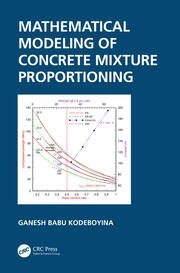
Mathematical Modeling of Concrete Mixture Proportioning
It puts together an understanding of the appropriate principles of ensuring performance and sustainability of concrete. Broadly subdivided into three parts, first part contains the fundamental aspects introducing the constituent materials, the concepts of concrete mixture designs and the mathematical formulations of the various parameters involved in these designs. The second part is dedicated to discussing approaches and recommendations of American, British and European bodies related to mathematical modelling. Lastly, it discusses perceptions and prescriptions towards both the performance assessment and insurance of the resulting concrete compositions.
Mathematical Modeling for the Life Sciences
Proposing a wide range of mathematical models that are currently used in life sciences may be regarded as a challenge, and that is precisely the challenge that this book takes up. Of course this panoramic study does not claim to offer a detailed and exhaustive view of the many interactions between mathematical models and life sciences. This textbook provides a general overview of realistic mathematical models in life sciences, considering both deterministic and stochastic models and covering dynamical systems, game theory, stochastic processes and statistical methods. Each mathematical model is explained and illustrated individually with an appropriate biological example. Finally three appendices on ordinary differential equations, evolution equations, and probability are added to make it possible to read this book independently of other literature.
Mathematical Methods in Robust Control of Linear Stochastic Systems
Linear stochastic systems are successfully used to provide mathematical models for real processes in fields such as aerospace engineering, communications, manufacturing, finance and economy. This monograph presents a useful methodology for the control of such stochastic systems with a focus on robust stabilization in the mean square, linear quadratic control, the disturbance attenuation problem, and robust stabilization with respect to dynamic and parametric uncertainty.
Mathematical Methods for Engineers and Geoscientists
This book introduces and explains classical and modern mathematical procedures as applied to the real problems confronting engineers and geoscientists. Written in a manner that is understandable for students across the breadth of their studies, it lays out the foundations for mastering difficult and sometimes confusing mathematical methods.
