



الصفحة 10
الصفحة 10

Landscapes of Mars : A Visual Tour
Landscapes of Mars is essentially a picture book that provides a visual tour of Mars. All the major regions and topographical features will be shown and supplemented with chapter introductions and extended captions. In a way, think of it as a visual tourist guide. Other topics covered are Martian uplands on the order of the elevation of Mt. Everest, Giant volcanoes and a rift system, the Grand Canyon of Mars, craters and the absence of craters over large regions (erosion), and wind shadows around craters, sand dunes, and dust devils.

Landscape Performance Modeling Using Rhino and Grasshopper
A guidebook for landscape architects to learn the fundamental practices and use of the computational software Rhino 3D and the plugin Grasshopper for parametric modeling, landscape inventory, and performative analysis. This process visually connects intangible and abstract information with physical and spatial relationships to signify the impact ecological, climate, and cultural factors have on landscape performance and decision making.

Knowledge Enterprise : Intelligent Strategies in Product Design, Manufacturing, and Management ; Proceedings of PROLAMAT 2006, IFIP TC5, International Conference, June 15-17 2006, Shanghai, China
Contains the edited version of the technical presentations of PROLMAT 2006, the IFIP TC5 international conference held on June 15-17, 2006 at the Shanghai University in China. The main theme of this conference is Knowledge Enterprise – Intelligent Strategies in Product Design, Manufacturing and Management. These proceedings focus on the issue of how to translate data and information into knowledge in manufacturing enterprises.

IUTAM symposium on relations of shell plate beam and 3D models ; Proceedings of the IUTAM Symposium on the relations of shell, plate, beam, and 3D models, Dedicated to the Centenary of Ilia Vekua’s Birth, held in Tbilisi, Georgia, April 23-27, 2007
Contains papers on the main topics reflecting the scientific programme of the symposium: hierarchical, refined mathematical and technical models of shells, plates, and beams; relation of 2D and 1D models to 3D linear, non-linear and physical models; junction problems. In particular, peculiarities of cusped shells, plates, and beams are emphasized and special attention is paid to junction, multibody and fluid-elastic shell (plate, beam) interaction problems and their applications.

IUTAM Symposium on Computational Methods in Contact Mechanics ; Proceedings of the IUTAM Symposium held in Hannover, Germany, November 5-8, 2006
This book contains the proceedings of the IUTAM Symposium held in Hanover, Germany, in November 2006. Coverage includes new mathematical techniques like multi-level approaches, new discretization techniques like the mortar-method, advanced applications of unilateral contact to masonry structures, decohesion analysis and tractive rolling of tires. It provides a good overview of modern techniques and state-of-the-art discretizations schemes applied in contact mechanics. Coverage will stimulate future collaboration in science related to computational contact mechanics and in the organization of minisymposia and workshops in the area contact mechanics.

IUTAM symposium on computational approaches to multiphase flow ; Proceedings of an IUTAM Symposium held at Argonne National Laboratory, October 4-7, 2004
The book provides a broad overview of the full spectrum of state-of-the-art computational activities in multiphase flow as presented by top practitioners in the field. It starts with well-established approaches and builds up to newer methods. These methods are illustrated with applications to a broad spectrum of problems involving particle dispersion and deposition, turbulence modulation, environmental flows, fluidized beds, bubbly flows, and many others.

Complex Motion ; 1st International Workshop, IWCM 2004, Günzburg, Germany, October 12-14, 2004, Revised Papers
The world we live in is a dynamic one: we explore it by moving through it, and many of the objects which we are interested in are also moving. Trafic, for instance, is an example of a domain where detecting and processing visual motion is of vital interest, both in a metaphoric as well as in a purely literal sense. Visual communication is another important example of an area of science which is dominated by the need to measure, understand, and represent visual motion in an eficient way. Visual motion is a subject of research which forces the investigator to deal with complexity; complexity in the sense of facing efiects of motion in a very large diversity of forms, starting from analyzing simple motion in a changing envir- ment (illumination, shadows, . . . ), under adverse observation conditions, such as bad signal-to-noiseratio (low illumination, small-scaleprocesses, low-dosex-ray, etc. ), covering also multiple motions of independent objects, occlusions, and - ing as far as dealing with objects which are complex in themselves (articulated objects such as bodies of living beings). The spectrum of problems includes, but does not end at, objects which are not ‘bodies’ at all, e. g. , when anal- ing fiuid motion, cloud motion, and so on. Analyzing the motion of a crowd in a shopping mall or in an airport is a further example that implies the need to struggle against the problems induced by complexity.

Cellular automata ; 7th International conference on cellular automata for research and industry, ACRI 2006, Perpignan, France, September 20-23, 2006, Proceedings
This book constitutes the refereed proceedings of the 7th International Conference on Cellular Automata for Research and Industry, ACRI 2006. The book presents 53 revised full papers and 19 revised poster papers together with 6 invited lectures. Topical sections include CA theory and implementation, computational theory, population dynamics, physical modeling, urban, environmental and social modeling, traffic and boolean networks, multi-agents and robotics, as well as crowds and cellular automata, and more.
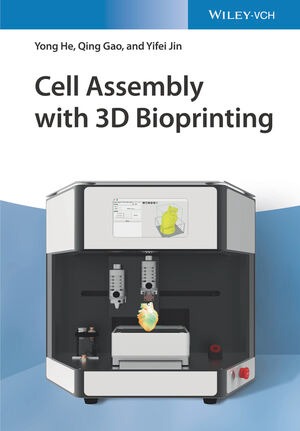
Cell assembly with 3D bioprinting
Detailed, highly illustrated chapters cover different bioprinting approaches and their applications, including coaxial bioprinting, digital light projection, direct ink writing, liquid support bath-assisted 3D printing, and microgel-, microfiber-, and microfluidics-based biofabrication. The book includes practical examples of 3D bioprinting, a protocol for typical 3D bioprinting, and relevant experimental data drawn from recent research.

CDT 2023 : Current Dental Terminology
includes 22 new codes, 14 revisions, and 2 deleted codes across 8 categories. This edition also includes seven new codes adopted in March 2022 related to COVID-19 vaccine administration. Other highlights in CDT 2023 include new and revised codes for: Intraoral tomosynthesis and 3D surface scans; HPV vaccine administration; Guided tissue regeneration; Intraoral radiograph images; Gingival flap procedures; Full mouth debridement; Gingival irrigation.
Catheter Ablation of Cardiac Arrhythmias : A Practical Approach
Catheter ablation of cardiac arrhythmias is an important field of interventional cardiology. This comprehensive overview is a practical guide for exact diagnosis of cardiac arrhythmias, mapping of cardiac arrhythmias with newest 3D technology and catheter ablation of various arrhythmias from WPW syndrome to atrial fibrillation.

Boundary Element Analysis : Mathematical Aspects and Applications
This volume contains eleven state of the art contributions on boundary integral equation and boundary element methods. Beside some historical and more analytical aspects in the formulation and analysis of boundary integral equations also modern fast boundary element methods are described and analyzed from a mathematical point of view. In addition, engineering and industrial applications of those methods are presented showing the ability of state of the art boundary element methods to solve challenging problems from different fields of applications. This book is addressed to researchers, graduate students and practitioners working on and using boundary element methods. All contributions also show the great achievements of interdisciplinary research between mathematicians and engineers, with direct applications in industry.

Biometrics and Identity Management ; 1st European Workshop, BIOID 2008, Roskilde, Denmark, May 7-9, 2008. Revised Selected Papers
This volume constitutes the post-conference proceedings of the First European Workshop on Biometrics and Identity Management, BIOID 2008, held in Roskilde, Denmark, during May 7-9, 2008.

Biomedical Visualisation ; Vol.9
This edited book explores the use of technology to enable us to visualise the life sciences in a more meaningful and engaging way. It will enable those interested in visualisation techniques to gain a better understanding of the applications that can be used in visualisation, imaging and analysis, education, engagement and training. The reader will also be able to learn about the use of visualisation techniques and technologies for the historical and forensic settings.In this volume, there are chapters which examine forensic and historical visualisation techniques and digital reconstruction, ultrasound, virtual learning resources and patient utilised software and hardware. The use of HoloLens as a disruptive technology is discussed as well as historical items as a feature in a modern medical curriculum. It concludes with a fascinating chapter on pulse extraction from facial videos.

Biomedical Simulation; 4th International Symposium, ISBMS 2008, London, UK, July 7-8, 2008 Proceedings
This book constitutes the refereed proceedings of the 4th International Symposium on Biomedical Simulation, ISBMS 2008, held in London, UK, in July 2008.

Biomedical Simulation ; 3rd International Symposium, ISBMS 2006, Zurich, Switzerland, July 10-11, 2006, Proceedings
This book contains the written contributions to the Third International Sym- sium on Biomedical Simulation (ISBMS), which was held in Zurich, Switzerland, on July 10-11, 2006. The manuscripts are organized around three thematic sections which cover several of the major aspects of our rapidly growing ?eld: anatomical modeling and tissue properties, simulation of biophysical processes, as well as systems and applications. The symposium provided an international forum for researchers interested in using biomedical simulation technology for the improvement of patient care. It was held in the spirit and continuation of the symposia on Surgical Simulation and Soft Tissue Modeling (IS4TM) organized in 2003 by INRIA, and on Medical Simulation (ISMS) in 2004 by CIMIT.

Biomedical Image Registration ; 3rd International Workshop, WBIR 2006, Utrecht, The Netherlands, July 9-11, 2006, Proceedings
This book constitutes the thoroughly refereed post-proceedings of the Third International Workshop on Biomedical Image Registration. The 20 revised full papers and 18 revised poster papers presented were carefully reviewed and selected for inclusion in the book. The papers cover all areas of biomedical image registration; methods of registration, biomedical applications, and validation of registration.

Bioinformatics research and applications ; 3rd International Symposium,ISBRA 2007, Atlanta, GA, USA, May 7-10, 2007, Proceedings
This book including clustering and classification, gene expression analysis, gene networks, genome analysis, motif finding, pathways, protein structure prediction, protein domain interactions, phylogenetics, and software tools.

BIM for design firms : Data rich architecture at small and medium scales
Expands on Building Information Modeling, showing its applicability to a range of design-oriented projects. It emphasizes the full impact that a data modeling tool has on design processes, systems, and the high level of collaboration required across the design team. It also explains the quantitative analysis opportunities that BIM affords for sustainable design and for balancing competing design agendas, while highlighting the benefits BIM offers to designing in 3D for construction. The book concludes with a deep look at the possible future of BIM and digitally-enhanced design.

Big Data : Conceptual Analysis and Applications
The book is devoted to the analysis of big data in order to extract from these data hidden patterns necessary for making decisions about the rational behavior of complex systems with the different nature that generate this data. To solve these problems, a group of new methods and tools is used, based on the self-organization of computational processes, the use of crisp and fuzzy cluster analysis methods, hybrid neural-fuzzy networks, and others. The book solves various practical problems. In particular, for the tasks of 3D image recognition and automatic speech recognition large-scale neural networks with applications for Deep Learning systems were used.
