


تحسين النتائح
ترتيب حسب
من
الى

Investigates the EU’s peacebuilding activities in that country, in the light of the normative power theory in the post-conflict setting and peacebuilding theory. Ten years after the massive engagement of the EU in the country torn by war, the authors critically assess the effects of the EU projecting its normative power – the enforcement of its standards, ‘good’ or ‘bad’ – through the EULEX mission, taking into consideration also the local aspects, so far neglected in this field of research. Inspecting thoroughly the EULEX activities in the police, customs and judiciary sector.This open access book offers a comprehensive assessment of the EULEX mission, based on two Horizon2020 research projects: IECEU - Improving the Effectiveness of Capabilities in EU Conflict Prevention, and KOSNORTH – The European Union and its Normative Power in a Post-conflict Society: A Case Study of Northern Kosovo (Marie Sklodowska-Curie Individual Fellowship).

Lights in the Sky is a truly comprehensive guide to observing, identifying, and imaging sky glows and other unusual atmospheric/astronomical phenomena, in both the night and daytime skies.
In many countries, schools, universities and other traditional learning institutions are not providing for the educational needs of all members of the community. In many communities, particularly in regional, rural and disadvantaged areas, there are only limited options for people to undertake learning. Limited participation in learning has the danger of reinforcing people’s alienation from mainstream education and from participation and inclusion in social institutions and economic and community life more generally. This book addresses the challenge of identifying effective ways of accommodating the learning needs of all people and in so doing achieving the goals of lifelong learning for all.
In Europe, the idea of Lifelong Learning has developed from an education policy to the most important pedagogic paradigm. The concept was created as an answer to the international education crisis, diagnozed by Philip H. Coombs in 1967. Since the European Year of Lifelong Learning in 1996, it has been regarded as an alternative to deal with the rapid social, political and economic changes of the modern world. Andrea Óhidy shows the genesis of the concept and its development towards a pedagogic paradigm. She investigates the relations between the concept of Lifelong Learning and school education and points out the most important links between Lifelong Learning and adult education.
This text explores the different ways in which the various social practices in which people participate becomes signed as learning, how and why that occurs and with what consequences. It takes seriously the linguistic turn in social theory to draw upon semiotics and poststructuralism through which to explore the significance of lifelong learning as an emerging discourse in education. The text explores the different ways in which learning conveys meaning and is given meaning. Given this, lifelong learning therefore is a way, and a significant way, in which learning is fashioned. The text then explores the notion that, if learning is lifelong and lifewide, what precisely is learning as distinct from other social practices and how those practices are given meaning as learning.
This award-winning book investigates the critique of psychoanalysis formulated by the psychiatrist and philosopher Karl Jaspers (1883-1969) over a period of five decades. His arguments against Freud and his followers are examined from systematic perspectives. The study traces the medico-historical roots of Jasper’s criticism of psychoanalysis and then places it within the framework of scientific theory before devoting itself extensively to medico-ethical aspects of the controversy, which are ultimately treated in terms of a history of mentalities. According to this view, Jasper’s student Hannah Arendt saw to it that the philosopher be made aware of the socio-cultural impact which psychoanalysis was beginning to have in the U.S.A.
The concrete impact of the Levinasian philosophy upon the variousdirections of thinking – from ontology and ethics to Jewish thought, theolo-gy, aesthetics or feminism – attests moreover the great significance of thissingular figure of our times.For more than three decades now his philosophy has come to be thesubject of many doctoral theses, articles and books. The complete “Levinasbibliography” counts currently thousands of titles in more than ten lan-guages. The important contribution that a Levinas Concordancewould bring asa valuable instrument for exegetes,

Les médecins et les équipes soignantes perçoivent comme une nouvelle pression la nécessité de transmettre le diagnostic de cancer et de discuter des options thérapeutiques avec un patient qui n’est pas toujours prêt à s y confronter. Bien que l’on puisse saluer le partage de l’information et encourager la transparence, le médecin prend le risque du blocage de dialogue, d’une indifférence, au pire d’un traumatisme. L’idée d’une diminution d’un certain pouvoir médical s’insinue dans le « dispositif » d’annonce qui renvoie la clinique à des apprentissages techniques. Au contraire, certains médecins cherchent à s’inscrire dans un mouvement plus démocratique. Ils constatent que pour le malade, savoir n’est pas choisir, et que dans les cas difficiles, ils restent encore décideurs. Cet ouvrage fait le point sur les changements obtenus par les lois et leurs conséquences sur les pratiques et incite à une réflexion philosophique sur la vérité et les vérités des interlocuteurs de la scène médicale.
this book offers the first account of the development of Huygens’ mathematical analysis of lenses and telescopes and its significance for the origin of the wave theory of light. As Huygens applied his mathematical proficiency to practical issues pertaining to telescopes – including trying to design a perfect telescope by means of mathematical theory – his dioptrics is significant for our understanding of seventeenth-century relations between theory and practice. With this full account of Huygens’ optics, this book sheds new light on the history of seventeenth-century optics and the rise of the new mathematical sciences, as well as Huygens’ oeuvre as a whole. Students of the history of optics, of early mathematical physics, and the Scientific Revolution, will find this book enlightening.
Leibniz’s metaphysics of space and time stands at the centre of his philosophy and is one of the high-water marks in the history of the philosophy of science. In this work, Futch provides the first systematic and comprehensive examination of Leibniz’s thought on this subject. In addition to elucidating the nature of Leibniz’s relationalism, the book fills a lacuna in existing scholarship by examining his views on the topological structure of space and time, including the unity and unboundedness of space and time. It is shown that, like many of his more recent counterparts, Leibniz adopts a causal theory of time where temporal facts are grounded on causal facts, and that his approach to time represents a precursor to non-tensed theories of time.
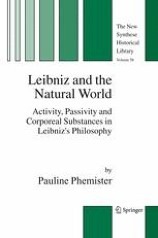
In the present book, Pauline Phemister argues against traditional Anglo-American interpretations of Leibniz as an idealist who conceives ultimate reality as a plurality of mind-like immaterial beings and for whom physical bodies are ultimately unreal and our perceptions of them illusory. Re-reading the texts without the prior assumption of idealism allows the more material aspects of Leibniz's metaphysics to emerge. Leibniz is found to advance a synthesis of idealism and materialism. His ontology posits indivisible, living, animal-like corporeal substances as the real metaphysical constituents of the universe; his epistemology combines sense-experience and reason; and his ethics fuses confused perceptions and insensible appetites with distinct perceptions and rational choice. In the light of his sustained commitment to the reality of bodies, Phemister re-examines his dynamics, the doctrine of pre-established harmony and his views on freedom.

These essays comprise a first attempt to assess overall the attention awarded to Leibniz’s philosophy in the English-speaking world in his own time and up to the present day. In addition to an introductory overview there are fourteen original and previously unpublished essays considering Leibniz’s connections with his English-speaking contemporaries and near contemporaries as well as the later reception of his thought in Anglo-American philosophy.
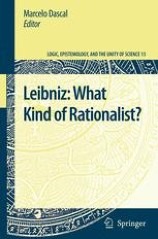
The chapters of the book are the result of intense discussion in the course of an international conference focused on the title question of this book, and were selected in view of their contribution to this topic. They are clustered in thematically organized parts. No effort has been made to hide the controversies underlying the different interpretations of Leibniz’s “rationalism” – in each particular domain and as a whole. On the contrary, the editor firmly believes that only through a variety of conflicting interpretive perspectives can the multi-faceted nature of an oeuvre of such a magnitude and variety as Leibniz’s be brought to light and understood as it deserves.
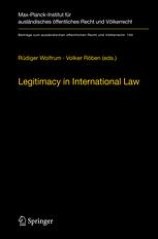
In recent years the question of the legitimacy of international law has been discussed quite intensively. Such questions are, for example, whether international law lacks legitimacy in general; whether international law or a part of it has yielded to the facts of power; whether adherence to international legal commitments should be subordinated to self-defined national interests; whether international law or particular rules of it – such as the prohibition of the use of armed force – have lost their ability to induce compliance (compliance pull); and what is the relevance of non-enforcement or failure to obey for the legitimacy of that particular international norm? This book contains fresh perspectives on these questions, offered at an international and interdisciplinary conference hosted by the Max Planck Institute for Comparative Law and International Law.
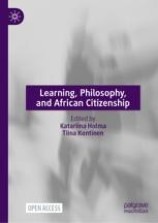
This book discusses and addresses the compelling questions concerning the ideals of citizenship, the processes of learning to fulfill these ideals, and possibilities of education in fostering citizenship. Rather than advocating for one framework, the authors demonstrate the continuously contested nature of the concept of citizenship as theoretically discussed and practically experienced. The monograph combines, in an unconventional way, selected philosophical accounts and everyday experiences from certain locations in Tanzania and Uganda.
Presents 8 novel approaches to measure and improve diagnostic competences with simulation. The book compares the effects of interventions on these diagnostic competences in both teacher and medical education. It includes analyses showing that important aspects of diagnostic competences and effects of instructional interventions aiming to facilitate them are comparable for teachers and doctors.
A collection of case studies that explore the learning that people do through community engagement. Developed within a network of Canadian researchers and their community partners, it explores learning that is organized by the learners themselves, collectively, rather than as individuals. Reflecting the contributors’ political priorities, the volume begins with groups that are highly marginalized in our society: immigrant women, sex trade workers, senior citizens, garment workers, women doing community economic development, and people who identify with disability and anti-poverty movements.
Learning Languages, Learning Life Skills offers an autobiographical reflexive approach to foreign language education. The orientation of the book is practical, containing rich descriptions of language learning situations including authentic language use and student stories.
Claudia Hofmann engages in a theoretical modelling of international learning processes and the substantiation of this model through three cases from international politics. She answers two questions: How may international actors learn as a collective? And how may the lessons learned influence actor behaviour and problem solving processes? As a foundation for answering these questions she examines the nature of actor behaviour within a social international system and integrates the diffusion of norms and values among macro-level actors.
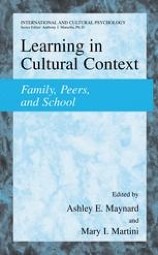
What events take place at the intersection of cultural identity, education, and experience? How can they be measured, replicated? How can teachers use such personal phenomena to enhance student performance?

سوريا - اتستراد درعا - غباغب
+963-15 2050 - 15 860 380 /1/2/3 - 11 662 3900