



Page 1
Page 1

Medical imaging systems : An introductory guide
Gives a complete and comprehensive introduction to the fields of medical imaging systems, as designed for a broad range of applications. The authors of the book first explain the foundations of system theory and image processing, before highlighting several modalities in a dedicated chapter. The initial focus is on modalities that are closely related to traditional camera systems such as endoscopy and microscopy. This is followed by more complex image formation processes: magnetic resonance imaging, X-ray projection imaging, computed tomography, X-ray phase-contrast imaging, nuclear imaging, ultrasound, and optical coherence tomography.

Intermediate Physics for Medicine and Biology
Intended this wide-ranging text bridges the gap between introductory physics and its application to the life and biomedical sciences. This extensively revised and updated fourth edition reflects new developments at the burgeoning interface between physics and biomedicine.

How AI Impacts Urban Living and Public Health ; 17th International Conference, ICOST 2019, New York City, NY, USA, October 14-16, 2019, Proceedings
This book cover topics such as: e-health technology design; well-being technology; biomedical and health informatics; and smart environment technology.

Handbook of Multilevel Analysis
Multilevel analysis is the statistical analysis of hierarchically and non-hierarchically nested data. The simplest example is clustered data, such as a sample of students clustered within schools. Multilevel data are especially prevalent in the social and behavioral sciences and in the bio-medical sciences. The models used for this type of data are linear and nonlinear regression models that account for observed and unobserved heterogeneity at the various levels in the data. This book presents the state of the art in multilevel analysis, with an emphasis on more advanced topics. These topics are discussed conceptually, analyzed mathematically, and illustrated by empirical examples. The authors of the chapters are the leading experts in the field.

Goodman and Gilman's the pharmacological basis of therapeutics ; 14th ed.
A collaboration between two friends and professors at Yale, Louis Goodman and Alfred Gilman. Over the years, “G&G” has been acclaimed as the “blue bible” of pharmacology. Surely much of that acclaim reflects the book’s purpose, delineated by the original authors and steadily adhered to over 81 years: to correlate pharmacology with related medical sciences, to reinterpret the actions and uses of drugs in light of advances in medicine and the basic biomedical sciences, to emphasize the application of pharmacodynamics to therapeutics, and to create a book that would be useful to students of pharmacology and to healthcare practitioners.

Goodman & Gilman's the pharmacological basis of therapeutics ; 13th ed.
Correlates pharmacology with related medical sciences, to reinterpret the actions and uses of drugs in light of advances in medicine and the basic biomedical sciences, to emphasize the applications of pharmacodynamics to therapeutics, and to create a book that would be useful to students of pharmacology and to physicians.
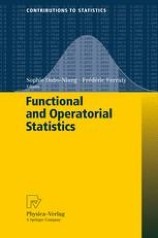
Functional and operatorial statistics
An increasing number of statistical problems and methods involve infinite-dimensional aspects. This is due to the progress of technologies which allow us to store more and more information while modern instruments are able to collect data much more effectively due to their increasingly sophisticated design. This evolution directly concerns statisticians, who have to propose new methodologies while taking into account such high-dimensional data (e.g. continuous processes, functional data, etc.). The numerous applications (micro-arrays, paleo-ecological data, radar waveforms, spectrometric curves, speech recognition, continuous time series, 3-D images, etc.) in various fields (biology, econometrics, environmetrics, the food industry, medical sciences, paper industry, etc.) make researching this statistical topic very worthwhile. This book gathers important contributions on the functional and operatorial statistics fields

Emerging Conceptual, Ethical and Policy Issues in Bionanotechnology
This volume provides a critical overview of the nature of nanotechnology (and its applications in the biomedical sciences, i.e. bionanotechnology) and the philosophical and ethico-legal issues it raises.

Current research and trends in dental and medical technology
Presents cutting-edge research and advancements in the rapidly evolving fields of dental technology and medical sciences. It offers new methodologies, interdisciplinary approaches, and case studies to illustrate real-world applications and scientific achievements in medicine.

Coherent sources of XUV radiation : Soft X-ray lasers and high-order harmonic generation
Extreme ultraviolet radiation, also referred to as soft X-rays or XUV, offers very special optical properties. The X-UV refractive index of matter is such that normal reflection cannot take place on polished surfaces whereas beam transmission through one micrometer of almost all materials reduces to zero. Therefore, it has long been a difficult task to imagine and to implement devices designed for complex optics experiments in this wavelength range. Thanks to new sources of coherent radiation - XUV-lasers and High Order Harmonics - the use of XUV radiation, for interferometry, holography, diffractive optics, non-linear radiation-matter interaction, time-resolved study of fast and ultrafast phenomena and many other applications, including medical sciences, is ubiquitous.

Cloud-Based Benchmarking of Medical Image Analysis
Presents the VISCERAL project benchmarks for analysis and retrieval of 3D medical images (CT and MRI) on a large scale, which used an innovative cloud-based evaluation approach where the image data were stored centrally on a cloud infrastructure and participants placed their programs in virtual machines on the cloud. The book presents the points of view of both the organizers of the VISCERAL benchmarks and the participants.
Literature-based Discovery
When Don Swanson hypothesized a connection between Raynaud’s phenomenon and dietary fish oil, the field of literature-based discovery (LBD) was born. During the subsequent two decades a steady stream of researchers have published articles about LBD and the field has made steady progress in laying foundations and creating an identity. LBD is an inherently multi-disciplinary enterprise where collaborations between the information and biomedical sciences are readily encountered. It is the hope and intention that this volume will plant a flag in the ground and inspire new researchers to the LBD challenge.

Life - As a Matter of Fat : The Emerging Science of Lipidomics
Lipids are as important for life as proteins, sugars, and genes. The present book gives a multi-disciplinary perspective on the physics of life and the particular role played by lipids and the lipid-bilayer component of cell membranes. The book is aimed at undergraduate students and young research workers within physics, chemistry, biochemistry, molecular biology, nutrition, as well as pharmaceutical and biomedical sciences. The emphasis is on the physical properties of lipid membranes seen as soft and molecularly structured interfaces. By combining and synthesizing insights obtained from a variety of recent studies, an attempt is made to clarify what membrane structure is and how it can be quantitatively described. Furthermore, it is shown how biological function mediated by membranes is controlled by lipid membrane structure and organization on length scales ranging from the size of the individual molecule, across molecular assemblies of proteins and lipid domains in the range of nanometers, to the size of whole cells. Applications of lipids in nano-technology and biomedicine are also described.

Atlas of topographical and pathotopographical anatomy of the head and neck
Presents the ultrasonic topographical and pathotopographical anatomy of the head and neck, offering further detail into these important areas for use by medical professionals. This atlas of topographic and pathotopographic human anatomy is a fundamental and practically important book designed for doctors of all specializations and students of medical schools. Here you can find almost everything that is connected with the topographic and pathotopographic human anatomy, including original graphs of logical structures of topographic anatomy and development of congenital abnormalities, topography of different areas in layers, pathotopography, computer and magnetic resonance imaging (MRI) of topographic and pathotopographic anatomy.

Artificial intelligence and machine learning in health care and medical sciences : Best practices and pitfalls
Provides a detailed review of the latest methods and applications of artificial intelligence (AI) and machine learning (ML) in medicine. With chapters focusing on enabling the reader to develop a thorough understanding of the key concepts in these subject areas along with a range of methods and resulting models that can be utilized to solve healthcare problems, the use of causal and predictive models are comprehensively discussed. Care is taken to systematically describe the concepts to facilitate the reader in developing a thorough conceptual understanding of how different methods and resulting models function and how these relate to their applicability to various issues in health care and medical sciences. Guidance is also given on how to avoid pitfalls that can be encountered on a day-to-day basis and stratify potential clinical risks.
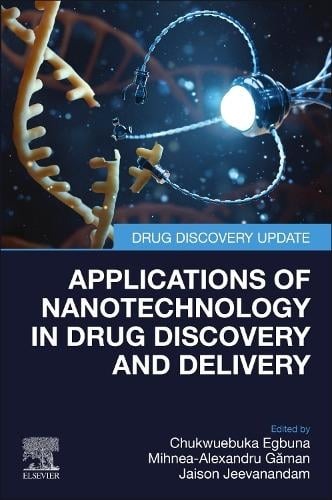
Applications of nanotechnology in drug discovery and delivery
Presents complete coverage of the application of nanotechnology in the discovery of new drugs and efficient target delivery of drugs. The book highlights recent advances of nanotechnology applications in the biomedical sciences, starting with chapters that provide the basics of nanotechnology, nanoparticles and nanocarriers. Part II deals with the application of nanotechnology in drug discovery, with an emphasis on enhanced delivery of pharmaceutical products, with Part III discussing toxicological and safety issues arising from the use of nanomaterials

A practical guide on behaviour change support for self-managing chronic disease
Developed under the auspices of the Train4Health project, funded by the Erasmus+ program of the European Union, the book contains six chapters written by international contributors from different disciplines. Chapter one introduces the competencies necessary for delivering effective behavior change support, based on an established program of work, and related learning outcomes. The four following chapters describe how these competencies can be acquired, focusing on concepts and theories, assessing self-management behaviors, implementing change strategies and person-centered communication, using a practical approach.

A Guide to Methods in the Biomedical Sciences
A Guide to Methods in the Biomedical Sciences gives a basic description of common methods used in research. This is not intended to be a methods book. Rather, it is intended to be a book that outlines the purpose of the methods described, their limitations and provide alternative approaches as appropriate. Thousands of methods have been developed in the various biomedical disciplines and those covered in this book represent the basic, essential and most widely used methods in several different disciplines. The historical background (including some interesting anecdotes) leading to the development of ground-breaking techniques are described, especially those that significantly advanced the field of biomedical research. Advances that earned their inventors prestigious Nobel Prizes are emphasized. The book is divided into six sections, highlighting selected methods in protein chemistry, nucleic acids, recombinant DNA technology (including forensic based methods), antibody-based techniques, microscopy and imaging, and the use of animals in biomedical sciences.
