



Page 1
Page 1

RAS Family GTPases
This book is an excellent reference for students in the biomedical sciences and for investigators in the field.

Oral Implantology Review : A Study Guide ; 2nd ed. [Team-IRA]
Features over 800 practical questions on oral implantology, including over 100 new questions on medical evaluation of the patient, bone grafting, growth factors and platelet concentrates, and zygomatic and pterygoid implants. These new topics supplement the robust contents from the first edition, covering medical problems, biomedical sciences, radiology and computer-assisted technology, anatomy, biomechanics, patient data, treatment planning, principles of implantology, bone and soft tissue grafting, implant prosthodontics and occlusion , esthetics, maintenance, pharmacology, and complications. This book is perfect for board review or simply to sharpen your mind for all things implantology.

Optical Waveguide Sensing and Imaging
Explores various aspects of existing and emerging fiber and waveguide optics sensing and imaging technologies including recent advances in nanobiophotonics. The focus is on both fundamental and applied research as well as on applications in civil engineering, biomedical sciences, environment, security and defence. The main goal of the multi-disciplinary team of Editors was to provide an useful reference containing state-of-art overviews covering a variety of complementary topics on the interface of engineering and biomedical sciences.

Optical Imaging and Microscopy : Techniques and Advanced Systems
This text on contemporary optical systems is intended for optical researchers and engineers, graduate students and optical microscopists in the biological and biomedical sciences. This second edition contains two completely new chapters. In addition most of the chapters from the first edition have been revised and updated.

Intermediate Physics for Medicine and Biology
Intended this wide-ranging text bridges the gap between introductory physics and its application to the life and biomedical sciences. This extensively revised and updated fourth edition reflects new developments at the burgeoning interface between physics and biomedicine.

Goodman and Gilman's the pharmacological basis of therapeutics ; 14th ed.
A collaboration between two friends and professors at Yale, Louis Goodman and Alfred Gilman. Over the years, “G&G” has been acclaimed as the “blue bible” of pharmacology. Surely much of that acclaim reflects the book’s purpose, delineated by the original authors and steadily adhered to over 81 years: to correlate pharmacology with related medical sciences, to reinterpret the actions and uses of drugs in light of advances in medicine and the basic biomedical sciences, to emphasize the application of pharmacodynamics to therapeutics, and to create a book that would be useful to students of pharmacology and to healthcare practitioners.

Goodman & Gilman's the pharmacological basis of therapeutics ; 13th ed.
Correlates pharmacology with related medical sciences, to reinterpret the actions and uses of drugs in light of advances in medicine and the basic biomedical sciences, to emphasize the applications of pharmacodynamics to therapeutics, and to create a book that would be useful to students of pharmacology and to physicians.

Emerging Conceptual, Ethical and Policy Issues in Bionanotechnology
This volume provides a critical overview of the nature of nanotechnology (and its applications in the biomedical sciences, i.e. bionanotechnology) and the philosophical and ethico-legal issues it raises.
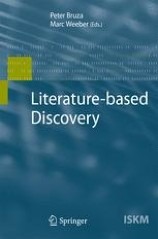
Literature-based Discovery
When Don Swanson hypothesized a connection between Raynaud’s phenomenon and dietary fish oil, the field of literature-based discovery (LBD) was born. During the subsequent two decades a steady stream of researchers have published articles about LBD and the field has made steady progress in laying foundations and creating an identity. LBD is an inherently multi-disciplinary enterprise where collaborations between the information and biomedical sciences are readily encountered. It is the hope and intention that this volume will plant a flag in the ground and inspire new researchers to the LBD challenge.
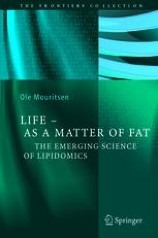
Life - As a Matter of Fat : The Emerging Science of Lipidomics
Lipids are as important for life as proteins, sugars, and genes. The present book gives a multi-disciplinary perspective on the physics of life and the particular role played by lipids and the lipid-bilayer component of cell membranes. The book is aimed at undergraduate students and young research workers within physics, chemistry, biochemistry, molecular biology, nutrition, as well as pharmaceutical and biomedical sciences. The emphasis is on the physical properties of lipid membranes seen as soft and molecularly structured interfaces. By combining and synthesizing insights obtained from a variety of recent studies, an attempt is made to clarify what membrane structure is and how it can be quantitatively described. Furthermore, it is shown how biological function mediated by membranes is controlled by lipid membrane structure and organization on length scales ranging from the size of the individual molecule, across molecular assemblies of proteins and lipid domains in the range of nanometers, to the size of whole cells. Applications of lipids in nano-technology and biomedicine are also described.
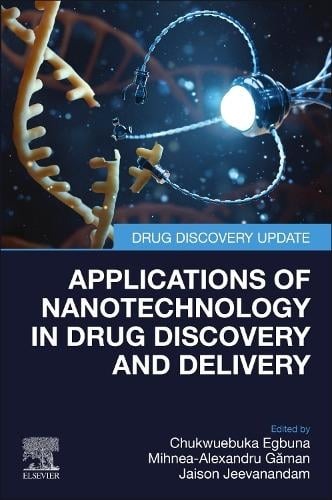
Applications of nanotechnology in drug discovery and delivery
Presents complete coverage of the application of nanotechnology in the discovery of new drugs and efficient target delivery of drugs. The book highlights recent advances of nanotechnology applications in the biomedical sciences, starting with chapters that provide the basics of nanotechnology, nanoparticles and nanocarriers. Part II deals with the application of nanotechnology in drug discovery, with an emphasis on enhanced delivery of pharmaceutical products, with Part III discussing toxicological and safety issues arising from the use of nanomaterials

A Guide to Methods in the Biomedical Sciences
A Guide to Methods in the Biomedical Sciences gives a basic description of common methods used in research. This is not intended to be a methods book. Rather, it is intended to be a book that outlines the purpose of the methods described, their limitations and provide alternative approaches as appropriate. Thousands of methods have been developed in the various biomedical disciplines and those covered in this book represent the basic, essential and most widely used methods in several different disciplines. The historical background (including some interesting anecdotes) leading to the development of ground-breaking techniques are described, especially those that significantly advanced the field of biomedical research. Advances that earned their inventors prestigious Nobel Prizes are emphasized. The book is divided into six sections, highlighting selected methods in protein chemistry, nucleic acids, recombinant DNA technology (including forensic based methods), antibody-based techniques, microscopy and imaging, and the use of animals in biomedical sciences.
