



Page 75
Page 75
Access to medicines and vaccines : Implementing flexibilities under intellectual property law
This book is the outcome of a Global Forum on Innovation, Intellectual Property and Access to Medicines held in December 2019 at the Max Plank Instititute in Munich, organised by the South Centre and the Max Plank Institute. The academics and experts from international organisations participating have contributed chapters to this book. The book is for policy makers (in Ministries of Health, Ministries of Trade, Ministries of Foreign Affairs, patent offices), but also relevant for academics (law, trade, public health), on the flexibilities available in the Agreement on Trade Related Aspects of Intellectual Property Rights (TRIPS) of the World Trade Organization to promote access to medicines.
Accelerated Partial Breast Irradiation : Techniques and Clinical Implementation
Accelerated partial breast irradiation (APBI) is being rapidly introduced into the clinical management of early breast cancer. APBI, in fact, encompasses a number of different techniques and approaches that include brachytherapy, intraoperative, and external beam techniques. There is currently no single source that describes these techniques and their clinical implementation. This text will be a concise handbook designed to assist the clinician in the implementation of APBI.

Academic Medicine : A Guide for Clinicians
Robert B. Taylor, has edited this book that introduces physicians and clinicians to an academic career in the health professions. Written from the clinician’s viewpoint, it guides readers who are considering or who have recently embarked upon such a career through the essentials.
Abord clinique en urologie = Clinical approach in urology
Seduced by the idea of commenting on the clinical experience they have acquired during their career, the authors have deliberately approached their specialty by describing the symptoms that give the chapters their titles. They nevertheless described the differential diagnoses, the diseases involved and the treatments. After a chapter devoted to the examination of the patient, including the detours of the interrogation, back pain or scrotal pain are analyzed. The authors then turned to voiding disorders and their causes. The peculiarities of hematuria, depending on their level of origin, are described and commented on. The semiology of tumor masses is carefully detailed and, conversely, the problem of prostate cancer screening by PSA is dealt with in a separate chapter. Erectile dysfunction and penile diseases are the last chapters. In the line of the “Clinical approach” collection, this manual is easy to consult thanks to a detailed index, easy to understand because it is written in clear language and, moreover, well illustrated (21 diagrams and 2 tables). In this little book, the authors have approached urology from a perspective close to how patients feel.
Abord Clinique en Obstétrique = Clinical approach in Obstetrics
This book aims to clarify and develop the particularities of the clinical examination in obstetrics; it deliberately excludes childbirth and the aftermath of childbirth.
Abord clinique du malade âgé = Clinic Approach for the Elderly Patient
The general practitioner and the specialists are brought to examine a growing number of elderly or very old patients. Until now, they have hardly been prepared for this very special clinical approach where each symptom can relate to several causes, where the diseases are almost always multiple, symptomatic, or ready to reveal themselves by a complication, where a diagnosis can be. hide another, where a history - key to the diagnosis - may have been forgotten or concealed.
Abord clinique des urgences traumatiques au cabinet du généraliste = Clinical approach to traumatic emergencies in the general practitioner's office
Cet ouvrage a été conçu comme une aide pour le médecin généraliste, confronté quotidiennement à la pathologie traumatique. Les deux auteurs, urgentistes expérimentés, apportent des réponses claires, concises et pratiques aux problèmes que posent les lésions traumatiques. Des gestes simples, un abord clinique détaillé, la nécessité de recourir ou non à des examens complémentaires ou à un avis spécialisé sont ici expliqués et justifiés. Le style est précis, concis, et un lexique complète les définitions et les matériels cités dans le texte. Les auteurs se sont entourés des avis de généralistes et de spécialistes pour définir des conduites à tenir simples et compatibles avec les nécessités du terrain.
Abord Clinique des Urgences au Domicile du Patient = Emergency Clinic at the Patient's Home
The general practitioner finds himself alone in the face of difficult and urgent situations. Her internship years taught her to work with the nursing team. At the patient's home, he must act alone with "the means at hand". To have known these difficulties, we conceived this work: it is intended to be a simple, effective and complete help. It sums up what we have learned from the “field”. It complies with scientific recommendations.
Abord clinique des malades de lalcool : En médecine générale = Clinical approach to patients with alcoholism : In general medicine
Les médecins généralistes sont destinataires d’un grand nombre d’informations sur l’alcool, son usage et ses conséquences pathologiques immédiates ou potentielles. Ces connaissances, émanant de médecins le plus souvent hospitaliers et spécialisés, ont conduit à des recommandations destinées à guider les médecins généralistes dans le repérage des malades de l’alcool et leur prise en charge thérapeutique. Cependant, la pertinence et l’applicabilité de la plupart de ces recommandations sont peu ou mal évaluées dans la pratique de la médecine générale. De ce fait, les médecins généralistes, parfois à l’encontre des recommandations, sont amenés à élaborer des concepts et des pratiques propres à leur clientèle et à leurs conditions de travail. L’originalité de ce livre vient de la confrontation des connaissances et des pratiques de deux médecins, soignant des malades de l’alcool dans des structures différentes.
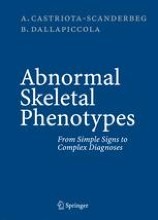
Abnormal Skeletal Phenotypes : From Simple Signs to Complex Diagnoses
This book focuses on the radiographic changes of malformation syndromes and skeletal dysplasias. It is structured such that the reader can identify the radiographic changes and relate them to specific disease entities. The aim is to provide an essential, practical guideline to the recognition of the key radiographic signs for diagnosing malformation syndromes and skeletal dysplasias.
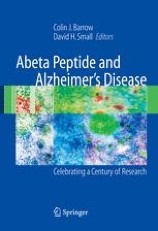
Abeta Peptide and Alzheimers Disease : Celebrating a Century of Research
Abeta Peptide and Alzheimer’s Disease summarizes current knowledge of beta-amyloid peptide (Aß) and its role as the major culprit in Alzheimer’s Disease (AD), shown by recent advances in genetics and brain biochemistry.the book covers fundamental biochemical studies on the Aß peptide, the genetic impact on Aß expression and processing, and various AD therapeutic strategies that target Aß. Although specifically focusing on Aß and AD, there is also some discussion on the similarity and differences of this peptide and AD with other amyloidogenic diseases.

A Pocket Guide to Epidemiology
A Pocket Guide to Epidemiology is a useful addition to the ready reference genre of epidemiological texts. … The text offers a comprehensive look at the salient fundamentals of epidemiology. … Organized logically and replete with classic examples, the text offers a firm foundation in epidemiological methodology. … this guide offers more examples and may be a better choice for the reader who desires to become better acquainted with epidemiology.
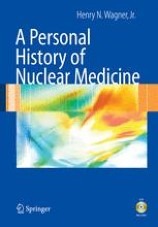
A Personal History of Nuclear Medicine
In A Personal History of Nuclear Medicine, Dr. Henry N. Wagner, Jr. outlines his significant contribution to the field of nuclear medicine over the past half-century, while also discussing the hurdles that the field faced in becoming a major component of modern medical practice. Further, the author explores challenges within the academic and medical establishments, which have often been known for resisting change
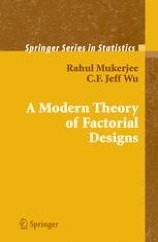
A Modern Theory of Factorial Design
Factorial design plays a fundamental role in efficient and economic experimentation with multiple input variables and is extremely popular in various fields of application, including engineering, agriculture, medicine and life sciences. Factorial experiments are often used in case studies in quality management and Design for Six Sigma (DFSS).Factorial design plays a fundamental role in efficient and economic experimentation with multiple input variables and is extremely popular in various fields of application, including engineering, agriculture, medicine and life sciences. Factorial experiments are often used in case studies in quality management and Design for Six Sigma (DFSS).
A Life Course Perspective on Health Trajectories and Transitions
This book examines health trajectories and health transitions at different stages of the life course, including childhood, adulthood and later life. It provides findings that assess the role of biological and social transitions on health status over time. The essays examine a wide range of health issues, including the consequences of military service on body mass index, childhood obesity and cardiovascular health, socio-economic inequalities in preventive health care use, depression and anxiety during the child rearing period, health trajectories and transitions in people with cystic fibrosis, and oral health over the life course.

A Legacy for Living Systems : Gregory Bateson as Precursor to Biosemiotics
This book represents a major attempt to revise this deficiency. Scholars from ecology, biochemistry, evolutionary biology, cognitive science, anthropology and philosophy discuss how Bateson's thinking might lead to a fruitful reframing of central problems in modern science. Most important perhaps, Bateson's bioanthropology is shown to play a key role in developing the set of ideas explored in the new field of biosemiotics. The idea that organismic life is indeed basically semiotic or communicative lies at the heart of the biosemiotic approach to the study of life.The only book of its kind, this volume provides a key resource for the quickly-growing substratum of scholars in the biosciences, philosophy and medicine who are seeking an elegant new approach to exploring highly complex systems.
A History of Radionuclide Studies in the UK : 50th Anniversary of the British Nuclear Medicine Society
The British Nuclear Medicine Society celebrates its 50th Anniversary with this booklet, which reflects the research of many of the pioneers in the use of radionuclides for the diagnosis and therapy of human disease. Since 1949 there have been remarkable advances in radionuclide techniques and imaging equipment: from the first devices “home-made” in the many physics departments throughout the UK, to the sophisticated multimodality imagers now in everyday use in Nuclear Medicine. The BNMS has been instrumental in promoting the use of radionuclide techniques in the investigation of pathology by supporting and providing education, research and guidelines on the optimum use of radiation to help patients.
A History of Plastic Surgery
Te frst section deals with anatomy and the healing of wounds, discusses You have in your hands a work that should become a old and new plastic surgical procedures, and outlines the milestone of our understanding of medical history. In it history of anaesthesia. Te second covers the methods Professor Paolo Santoni-Rugiu and Mr Philip Sykes trace used from ancient times to reconstruct various areas of the development of plastic surgery and much of medi- the body and is the most extensive. Te last section d- cine in general, over three millennia. With his extensive cusses the history of cosmetic surgery and the origin of knowledge of clinical plastic surgery, no one could be present day procedures. better placed than the senior author to gather this valu- Te pages ring with the names of giants of the medical able material from historical documents.
A History of Limb Amputation
This book traces humanity’s long experience of natural amputations due to congenital absence, disease, frostbite, toxins, domestic and wild animal trauma, and for non-medical reasons related to punitive, ritual, and legal actions, ultimately leading to the development of elective surgical amputation. While the evolution of surgical techniques forms a major chapter in the book, many ancillary problems are addressed including the control of hemorrhage and infection, the approach to pain relief, the development of suitable instruments and equipment, and the invention of prostheses, all suitably illuminated with case histories and relevant illustrations. In addition, alternative procedures designed to avoid amputation, increasingly important in the last two centuries, are debated, and factors associated with self-amputation in extremis, not rare according to press reports, are also examined. A separate chapter considers the philosophy and interpretations of society, patients, and surgeons faced with amputation, particularly before anesthesia.

A Guide to Methods in the Biomedical Sciences
A Guide to Methods in the Biomedical Sciences gives a basic description of common methods used in research. This is not intended to be a methods book. Rather, it is intended to be a book that outlines the purpose of the methods described, their limitations and provide alternative approaches as appropriate. Thousands of methods have been developed in the various biomedical disciplines and those covered in this book represent the basic, essential and most widely used methods in several different disciplines. The historical background (including some interesting anecdotes) leading to the development of ground-breaking techniques are described, especially those that significantly advanced the field of biomedical research. Advances that earned their inventors prestigious Nobel Prizes are emphasized. The book is divided into six sections, highlighting selected methods in protein chemistry, nucleic acids, recombinant DNA technology (including forensic based methods), antibody-based techniques, microscopy and imaging, and the use of animals in biomedical sciences.
