



Page 2
Page 2

Handbook of neurochemistry and molecular neurobiology : Amino acids and peptides in the nervous system
It is our belief that this volume of the Handbook of Neurochemistry and Molecular Neurobiology provides an excellent review of the tremendous advances of the past decades in the neurochemical and molecular biological aspects of cerebral ischemia. It is hoped that these advances will provide an impetus for basic scientists and clinicians to further their translational research and to promote the insights for development of therapeutic interventions for stroke.

Glycopeptides and Glycoproteins : Synthesis, Structure, and Application
Their structure, biosynthesis, and mode of action are summarized in the fth chapter. The last chapter covers current methods for the determination of high-resolution structures of glycopeptides and glycoproteins mainly based onNMRspectroscopy, X-raycrystallography,and molecular modeling.This series presents critical reviews of the present position and future trends in modern chemical research Short and concise reports on chemistry.

Ghrelin more than hunger hormone
Ghrelin is a stomach hormone that acts as an endogenous ligand of orphan G-protein-coupled receptor. Ghrelin is a 28-amino acid peptide existing in two major forms: n-octanoyl-modified ghrelin, which possesses an n-octanoyl modification on serine-3 and des-acyl ghrelin. Fatty acid modification of ghrelin is essential for ghrelin-induced growth hormone release from the pituitary and appetite stimulation. This acyl-modification of ghrelin is catalysed by ghrelin-O- acyl transferase recently identified.

General Principles of Tumor Immunotherapy : Basic and Clinical Applications of Tumor Immunology
Brings together the world’s leading authorities on tumor immunology. This book describes the basic immunology principles that form the foundation of understanding how the immune system recognizes and rejects tumor cells. The role of the innate and adaptive immune responses is discussed and the implications of these responses for the design of clinical strategies to combat cancer are illustrated through both experimental clinical trials and review of current standard of care therapeutic agents. This information will be invaluable to both students of immunology and cancer research and practicing physicians who have patients with cancer. The book provides a comprehensive overview of the field, demonstrates how advances in basic immunology can and are being applied to cancer, and describes the current status of approved immunotherapy regimens.

Energy Metabolism and Obesity : Research and Clinical Applications
Elucidate the most important aspects of genetic background, neuropeptide secretion and action, neuronal pathways, adipokines, gut hormones, and environmental influences (physical activity, pharmacologic agents, and surgical alteration of the gastrointestinal tract), as well as the complex interactions among them.

Drugs for Relapse Prevention of Alcoholism
whet there ought to be a reasonable hope that pharmacological drugs will be developed that interfere with an addiction memory, and as a result, finally lead to a cure? In this book, leading preclinical and clinical experts in the field of alcohol relapse prevention strive to furnish an answer to this question. None of the researchers or clinicians believes in a magic bullet that will be of help to all alcoholic patients in overcoming this disease. However, there is now convi- ing evidence demonstrating that specific subpopulations of alcoholic patients experience satisfactory benefit from currently available treatments.

Drug discovery targeting drug-resistant bacteria
Drug Discovery Targeting Drug-Resistant Bacteria explores the status and possible future of developments in fighting drug-resistant bacteria. The book covers the majority of microbial diseases and the drugs targeting them. In addition, it discusses the potential targeting strategies and innovative approaches to address drug resistance. It brings together academic and industrial experts working on discovering and developing drugs targeting drug-resistant (DR) bacterial pathogens. New drugs active against drug-resistant pathogens are discussed, along with new strategies being used to discover molecules acting via new modes of action. In addition, alternative therapies such as peptides and phages are included.

Dendritic Neurotransmitter Release
This book presents recent developments in the neurophysiology of dendritic release of several chemical classes of transmitters in a number of different areas of the mammalian central nervous system. Once released from a neuron, these substances can act as neurotransmitters and/or neuromodulators, to autoregulate the original neuron, its synaptic inputs, and adjacent cells or, by volume transmission, to affect distant cells.

Cyclized Helical Peptides : Synthesis, Properties and Therapeutic Applications
Constraint helical peptides have emerged as a solution to target previously undruggable protein-protein interactions, which feature large and complex surfaces. Cyclized Helical Peptides: Synthesis, Properties and Therapeutic Applications offers a review of the most current methodologies of constructing constrained helices. The authors noted experts on the topic include the information on the fundamental features of cyclized helical peptides and discuss their limitations. The book summarizes and explores the effects of chemical methods constructing helical peptides on helicity, binding affinity, cell penetration, and nonspecific toxicity

Current Drug Synthesis
Delivers an authoritative and comprehensive discussion of the medicinal chemistry of current drugs, as well as the cutting-edge science involved in their synthesis. The book demystifies the process of modern drug discovery for both industry practitioners and students, while capturing the state-of-the-art techniques used to discover some of the most impactful medicines on the market today. Covering six different disease areas – including infectious disease, cancer, cardiovascular and metabolic disease, the central nervous system, anti-inflammatory disease, and a miscellaneous section – the book explores 18 different drugs before concluding with chapters on computational drug discovery and peptide drugs.

CRP and the relation with heart disease
Cardiovascular diseases are the leading causes of mortality and morbidity in industrialized and developing countries. Many efforts have been undertaken during the last decades to identify environmental, behavioral and genetic factors modulating the risk of cardiovascular diseases.It will explain the role of CRP - an acute-phase protein- as indicator of potential cardiovascular disease as well as a predictor of the risk for heart disease and future heart attack

Combinatorial Chemistry on Solid Supports
In this volume, state-of-the-art solid-phase synthesis is presented from different angles. Ranging from methodology development to application in the synthesis of complex native and designed structures, a complete overview is presented. We are confident that addressing the fascinating interface between chemistry and biology is only possible by innovative methods in both disciplines. Combinatorial chemistry is surely one of these.This book, written by an international group of renowned experts in their respective field, covers recent advances in important topics regarding combinatorial chemistry on solid supports

Leptin
The discovery of leptin little more than a decade ago, as a hormone produced in white adipose tissue with an important role in satiety and energy expenditure, was a seminal event in our understanding of adiposity. This initial advance in the new endocrinology of obesity was soon followed by the realization that leptin was not only produced in adipose tissue, but in many different tissues of the body, and that receptors were similarly distributed. Additionally, the early recognition of infertility that was associated with leptin deficiency prompted research that identified roles for the polypeptide in virtually every area of reproductive biology.
Lantibiotics as alternative therapeutics
Explores alternative therapeutics, lantibiotics and other novel drugs. This book provides concrete information to readers regarding lantibiotics and various types of antimicrobial peptides with their mode of actions in treating various multidrug resistant organisms. It explains various techniques that are involved in analyzing antimicrobial peptides and their mode of actions. The development of antibiotic resistance has now reached a point of crisis where innovative methods and application of novel compounds and methods are required to prevent the spread of drug resistant infections.
La scuola dell’atopia = The school of atopy
The need to clarify the current concepts of atopy, which for too long have oscillated between a primitive purely clinical vision and a subsequent purely immunological one, had been ripe for some time. Understanding that the role of immunoglobulins E is not exhaustive and accepting the Solomonic division between intrinsic and extrinsic atopy were the first two fundamental steps. Recent discoveries of the role of innate immunity, and therefore of antimicrobial peptides, have opened fundamental spaces for understanding in atopy and beyond. What now appears clear is that atopy is not the disease of an organ but rather a defect in the membranes that delimit our "self". The fact that these membranes are called skin, intestines, conjunctiva, bronchi or whatever has artificially fragmented the understanding and treatment of a unitary phenomenon. This book seeks to summarize the different experiences but above all to be a stimulus to ensure that medicine focuses constructively on the same target. If this is the case, we will no longer see "religious wars" between scientists and practicing doctors or, even worse, between the different specialists vying for the patient. If atopy, as we believe, is a global problem, it can only be adequately addressed in a multidisciplinary context and in a collaborative atmosphere, not only between doctor and doctor but also between doctor and patient.

Class 2 · Transferases IV EC 2.4.1.1. -2.4.1.89 ; Vol.31
Springer Handbook of Enzymes provides data on enzymes sufficiently well characterized. It offers concise and complete descriptions of some 5,000 enzymes and their application areas. Data sheets are arranged in their EC-Number sequence and the volumes themselves are arranged according to enzyme classes. This new, second edition reflects considerable progress in enzymology: many enzymes are newly classified or reclassified. Each entry is correlated with references and one or more source organisms. New datafields are created: application and engineering (for the properties of enzymes where the sequence has been changed). The total amount of material contained in the Handbook has more than doubled so that the complete second edition consists of 39 volumes as well as a Synonym Index. In addition, starting in 2009, all newly classified enzymes are treated in Supplement Volumes.
Chlorophylls and Bacteriochlorophylls : Biochemistry, Biophysics, Functions and Applications
This book summarizes the chemical, physical, biological and medical aspects of chlorophyll (and bacteriochlorophyll) research and development, with a focus on the tremendous progress achieved over the past 15 years. Each section has an up-to-date introductory overview which is followed by a series of concise well-focused and fully-referenced chapters written by experts in (bio)chemistry, (bio)physics, photobiology and photomedicine.
Chemistry and Safety of Acrylamide in Food
Specifically covered are the following aspects: exposure from the environment and the diet; biomarkers of exposure; risk assessment; epidemiology; mechanism of formation in food; biological alkylation of amino acids, peptides, proteins, and DNA by acrylamide and its epoxide metabolite glycidamide; neurotoxicity, reproductive toxicity, and carcinogenicity; protection against adverse effects; and possible approaches to reducing levels in food. Cross-fertilization of ideas among several disciplines in which an interest in acrylamide has developed, including food science, pharmacology, toxicology, and medicine, will provide a better understanding of the chemistry and biology of acrylamide in food, and can lead to the development of food processes to decrease the acrylamide content of the diet.
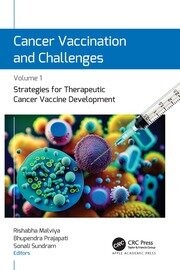
Cancer vaccination and challenges Vol.1 : strategies for therapeutic cancer vaccine development
Deals with different strategies of cancer vaccine development, focusing on techniques for the development of therapeutic cancer vaccines and the roles of tumor antigens, proteins/peptides, microbial genes, and stem cells for the development of vaccines for cancer management.

Biophysical characterization of functional peptides
Presents reproducible and step-by-step procedures for the peptide synthesis, their characterization and applications. The volume includes an introductory section on in silico modelling of new peptide molecules, Molecular Dynamics Simulations, Docking, Electrostatic fingerprinting of peptides, and other modelling tools for peptide designing and optimization. Further, it covers protocols for the solid phase peptide synthesis, chromatographic and mass spectrometric characterization of peptides. Importantly, it covers methods for biophysical characterizations of peptides for their potential applications as drug delivery vehicles, peptide nano-assembly, bionanocatalysis, protein aggregation diseases, and peptide-based anti-bacterial.
