



Page 121
Page 121

Foodborne Parasites
Microbiologists are being challenged as foodborne outbreaks are increasingly being observed worldwide. Most of these outbreaks are associated with viral and bacterial pathogens such as Campylobacter, Salmonella, and lately Escherichia coli O157:H7.Foodborne Parasites examines the two major parasite groups that are transmitted via water or foods: the protozoa, which are single celled organisms, and the helminths. The helminths are classified in three sub groups: cestodes (tapeworms), nematodes (round worms), and trematodes (flukes). To better understand their significance, each chapter covers the biology, mechanisms of pathogenesis, epidemiology, treatment, and inactivation of these parasites.

Foodborne Microbial Pathogens : Mechanisms and Pathogenesis
The author presents up-to-date information on molecular and cellular mechanism of several major foodborne microbial pathogens, including select agents for bioterrorism, virulence genes and their regulation in the host or the food environment, pathogenicity testing models, clinical symptoms, and prevention and control strategies. In order to understand the disease process, one must have certain understanding about the role of the immune system. Thus this book also covers the host parasite interaction to a level where the readers will have a better appreciation for the disease mechanism.

Food Safety Culture : Creating a Behavior-Based Food Safety Management System
Food safety awareness is at an all time high, new and emerging threats to the food supply are being recognized, and consumers are eating more and more meals prepared outside of the home. Accordingly, retail and foodservice establishments, as well as food producers at all levels of the food production chain, have a growing responsibility to ensure that proper food safety and sanitation practices are followed, thereby, safeguarding the health of their guests and customers. Achieving food safety success in this changing environment requires going beyond traditional training, testing, and inspectional approaches to managing risks. It requires a better understanding of organizational culture and the human dimensions of food safety. To improve the food safety performance of a retail or foodservice establishment, an organization with thousands of employees, or a local community, you must change the way people do things. You must change their behavior. In fact, simply put, food safety equals behavior.

Food Safety : A Practical and Case Study Approach
The ISEKI-Food book series is a collection where various aspects of food safety and environmental issues are introduced and reviewed by scientists specializing in the field. In all of the books special emphasis is placed on including case studies applicable to each specific topic. The books are intended for graduate students and senior level undergraduate students as well as professionals and researchers interested in food safety and environmental issues applicable to food safety."ISEKI-Food" is an acronym for "Integrating Safety and Environmental Knowledge Into Food Studies".

Food powders : Physical properties, processing, and functionality
Food Powders: Physical Properties, Processing, and Functionality is a comprehensive review on the characterization of ingredients, semi-processed and finished products when they are in a powdered form. It includes the description of different industrial unit operations such as drying, grinding, mixing, agglomeration, and encapsulation that supply food powders of different composition and microstructure. It also includes several analytical tools to characterize food powders by their particle size, size distribution, physical properties, and functionality.

Food physics : Physical properties : Measurement and applications
Food Physics deals with the physical properties of food, food ingredients and their measurement. Physical properties of food play a key role in all fields where modern technological processes are applied for the generation of food raw materials and the production of food. The determination of physical properties of food and related products are a pre-requisite for planning, production engineering and automation processes in today’s food, pharmaceutical and cosmetics industries as well as in all related quality control activities.This book describes the principles of food physics starting with the very basics and focuses on the needs of practitioners without omitting important basic principles.

Food nanotechnology
Nanotechnology is increasingly being utilized within the food industry to create innovative products with new or improved properties. This book introduces the history of nanotechnology applications in the food industry. It then discusses the key physicochemical and structural characteristics of the different kinds of nanoparticles found in foods, as well as showing how these characteristics lead to their unique functional attributes. Applications of nanotechnology in the food and agricultural industries are then covered, including the creation of nanopesticides, nanofertilizers, nutrient delivery systems, functional ingredients, smart packaging materials, nanofilters, and sensors, as well as for the conversion of waste materials into value-added products. Finally, the potential toxicity of both organic and inorganic nanoparticles found in foods is critically assessed. The author is a Distinguished Professor of food science who uses physics, chemistry, and biology to improve the quality, safety, and healthiness of foods. He has published over a thousand scientific articles and numerous books in this area and is currently the most highly cited food scientist in the world. He has won numerous awards for his scientific achievements.
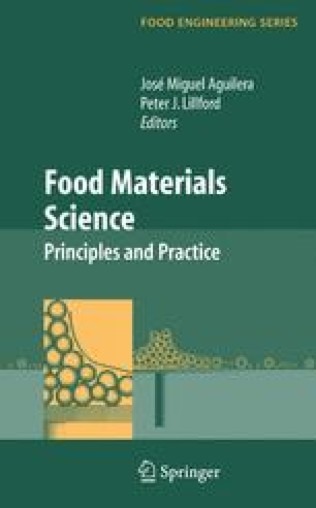
Food Materials Science : Principles and Practice
Food manufacture is about producing billions of units of standardized products which must be cheap, nutritious, safe and appealing to the consumer’s taste. Food products are complex multicomponent and structured edible materials that nevertheless must comply with the laws of physics and fundamentals of engineering sciences. In the last 20 years the design of food products with specific functionalities has advanced significantly by the application of scientific knowledge from disciplines such as polymer physics, colloidal and mesoscopic physics, materials science and new imaging and probing techniques borrowed from chemistry, biology and medicine. Our knowledge of the relationship between microstructure, processing, and macroscopic properties continues to increase as the science of food materials advances at a fast pace.
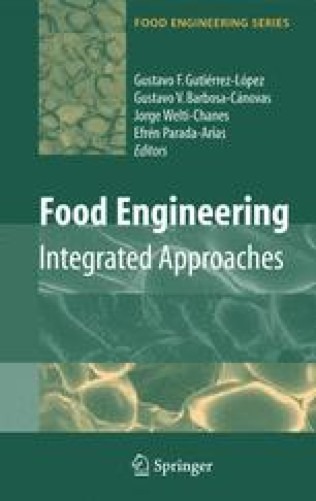
Food Engineering : Integrated Approaches
Food Engineering: Integrated Approaches presents an up-to-date review of important food engineering concepts, issues and recent advances in the field. Distinguished food engineers and food scientists from key institutions worldwide have contributed chapters that provide a deep analysis of their particular subjects. At the same time, each topic is framed within the context of a broader more integrated approach, demonstrating its relationship and interconnectedness to other areas. The premise of this work, therefore, is to offer both a comprehensive understanding of food engineering as a whole and a thorough knowledge of individual subjects. This approach appropriately conveys the basic fundamentals, state-of-the-art technology, and applications of the involved disciplines.

Food Emulsifiers and Their Applications
Thoroughly revised and updated, the second edition of Food Emulsifiers and their Applications integrates theoretical background with practical orientation and serves as the definitive reference on subject. It offers practitioners an overview of the manufacture, analysis, physical properties, interactions and applications of emulsifiers used in processed food. Written for food technologists as well as R & D and product development personnel, begins with the design and preparation of emulsifiers (including interactions with other food ingredients), which leads in to product categories, including dairy, infant nutrition, bakery, confectionery, and margarine, followed by nutrition improvement and processing techniques.

Food chemistry : A laboratory manual
FOOD CHEMISTRY A manual designed for Food Chemistry Laboratory courses that meet Institute of Food Technologists undergraduate education standards for degrees in Food Science Every chapter offers introductory summaries of key methodological concepts and interpretations of the results obtained from food experiments. The book provides a supplementary online Instructor’s Guide useful for adopting professors that includes a Solutions Manual and Preparation Manual for laboratory sessions.
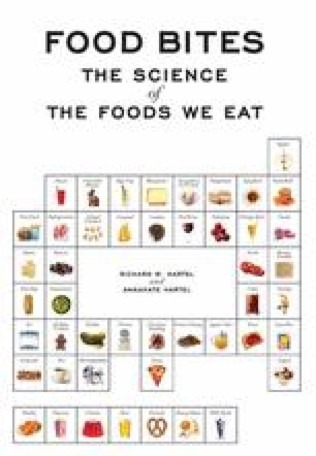
Food bites : The science of the foods we eat
Food Bites is an easy-to-read, often humorous book on the scientific basis of the foods we eat, and answers those pesky, niggling questions such as: Is the quality of beer really affected by the type of water used? and Processed foods: good or bad? Readers will be captivated by this superbly written book, especially so as their guides are Professor Richard Hartel, professor of Food Engineering at UW-Madison, along with his daughter, AnnaKate Hartel. Professor Hartel has for the last four years penned a witty and illuminating column on all aspects of food science for the Capital Times of Madison, and his weekly wisdom has now been collected into a single publication.

Food Biotechnology in Ethical Perspective
Agrifood biotechnology—the genetic transformation of plants and animals through recombinant means—has created controversy in the food system for more than twenty years. The new edition reflects lessons from the hotly contested debates over those issues in the intervening decade, and includes wholly new discussions on ethical issues associated with livestock cloning, the Precautionary Principle, and the transatlantic debate between United States and European perspectives on biotechnology.

Food biotechnology
This work, with only six chapters, covers a fraction of the vast area of food biotechnology … . the detailed information included in each chapter is meticulously referenced and complete. … the chapters are well written and easy to understand. The many examples used by the authors give the book a very practical feel, making it an easier read than one might expect.

Food Anxiety in Globalising Vietnam
This book approaches the anxieties inherent in food consumption and production in Vietnam. The country’s rapid and recent economic integration into global agro-food systems and consumer markets spurred a new quality of food safety concerns, health issues and distrust in food distribution networks that have become increasingly obscured. This edited volume further puts the eating body centre stage by following how gendered body norms, food taboos, power structures and social differentiation shape people’s ambivalent relations with food. It uncovers Vietnam’s trajectories of agricultural modernisation against which consumers and producers manoeuvre amongst food self-sufficiency, security and abundance. It provides social science perspectives on anxieties related to food and surrounding discourses that travel between the local and the global, the individual and society and into the body. Therefore, the book’s lens of food anxiety matters for social theory and for understanding the embeddedness and discontinuities of food globalizations in Vietnam and beyond.

Food and behavior
The effect of nutrition on behavior is one of the new topics that nutritionists are discussing at the present time. They have proven that there is a clear relationship between food, behavior and decisions. The aim of this research is to shed light on this new aspect of nutriti onal science, as we are presenting in this project some of the experiments, researches and statistics that scientists have reached and referred to this effect.

Folk Psychology Re-Assessed
FOLK PSYCHOLOGY, THEORY OF MIND AND SIMULATION The tasks we face in our day to day social lives are quite heterogeneous but many of them make a common demand upon us. They require us to understand and interact with other people and, in most social encounters, we exhibit a special sensitivity to our fellow human beings that is quite different from the way we respond to inanimate objects and most other species of organism. Social life is dependent, to a considerable degree, on our ability to understand what is distinctive about human behaviour and to successfully apply that understanding in all manner of situations.

Fog and boundary layer clouds : Fog visibility and forecasting
The e?ect of fog on human life was recognized in the early ages of mankind but its impact has signi?cantly increased during recent decades due to increasing air, marine, and road tra?c. In fact, the ?nancial and human losses related to fog and low visibility became comparable to the losses from other weather events, e.g., tornadoes or, in some situations, even hurricanes. The purpose of this review is to summarize the earlier works on fog and to lay a basis for the articles presented in this special issue and outline perspectives for future fog research.

Focused Access to XML Documents ; 6th International Workshop of the Initiative for the Evaluation of XML Retrieval, INEX 2007 Dagstuhl Castle, Germany, December 17-19, 2007. Selected Papers
This book constitutes the thoroughly refereed post-conference proceedings of the 6th International Workshop of the Initiative for the Evaluation of XML Retrieval, INEX 2007, held at Dagstuhl Castle, Germany, in December 2007.The 37 revised full papers presented were carefully reviewed and selected for presentation at the workshop from 50 initial submissions. The papers are organized in an ad hoc track and 6 topical sections on book search, XML-mining, entity ranking, interactive, link-the-wiki, and multimedia.

Focus on bacterial biofilms
Bacterial biofilms are colonies of bacterial cells embedded in their self-produced matrix composed of polysaccharides, DNA, and proteins. They protect bacterial cells against antibiotics, antibacterial agents, soaps and detergents, and shear stress. Some of the most common biofilm-associated infections in humans include urinary tract infections, infection of wounds and surgical sites, diabetic foot ulcers, dental caries (tooth decay) and gingivitis (gum inflammation), ventilator-associated infections, sinusitis, microbial keratitis, secondary infection related to Covid-19 and other viral infections, and so on. Bacterial resistance to common antibiotics (e.g., penicillin, gentamycin, erythromycin, ciprofloxacin, etc.) is driving us to a catastrophic failure of our health systems. Strategies to develop novel antibacterial agents and technology must be prioritized to combat and eradicate biofilms and their associated challenges. This book provides a comprehensive overview of biofilms with chapters on bacterial virulence factors, quorum sensing in bacteria, antimicrobial resistance in bacteria, strategies to develop new antibacterial agents, and much more.
