



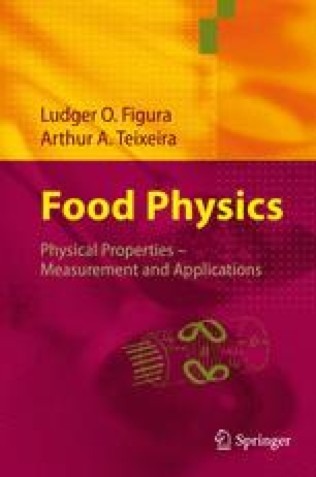
Food physics : Physical properties : Measurement and applications
Food Physics deals with the physical properties of food, food ingredients and their measurement. Physical properties of food play a key role in all fields where modern technological processes are applied for the generation of food raw materials and the production of food. The determination of physical properties of food and related products are a pre-requisite for planning, production engineering and automation processes in today’s food, pharmaceutical and cosmetics industries as well as in all related quality control activities.This book describes the principles of food physics starting with the very basics and focuses on the needs of practitioners without omitting important basic principles.
Related Books
Data Technology in Materials Modelling
This book discusses advances in semantic interoperability for materials modelling, aiming at integrating data obtained from different methods and sources into common frameworks, and facilitating the development of platforms where simulation services in computational molecular engineering can be provided as well as coupled and linked to each other in a standardized and reliable way.
Comprehensive utilization of magnesium slag by pidgeon process
This book introduces the harmless handling/recycling of magnesium slag , the process of magnesium silicothermic reduction (Pidgeon process)which the slag was produced, and . the magnesium resources, layout of the industry of the world. Examples and experimental data in this book are from the author group’s research programs, as well as the rencent researches in China. The book could provide precious reference to scientists and engineers in the field of recycling and environment friendly use of the industrial solid wastes. It could also be used for researchers and students who are interested in relevant field.
Adhesive Bonding of Aircraft Composite Structures: Non-destructive Testing and Quality Assurance Concepts
This book is under a CC BY 4.0 license. It presents the results of the ComBoNDT European project, which aimed at the development of more secure, time- and cost-saving extended non-destructive inspection tools for carbon fiber reinforced plastics, adhered surfaces and bonded joints. The book reports the optimal use of composite materials to allow weight savings, reduction in fuel consumptions, savings during production and higher cost efficiency for ground operations.

Austenitic TRIP/TWIP steels and steel-zirconia composites : Design of tough, transformation-strengthened composites and structures
This book presents a collection of the most up-to-date research results in the field of steel development with a focus on pioneering alloy concepts that result in previously unattainable materials properties.
