



Page 1
Page 1

Modeling and Simulation for RF System Design
The focus of Modeling and Simulation for RF System Design lies on RF specific modeling and simulation methods and the consideration of system and circuit level descriptions. It contains application-oriented training material for RF designers which combines the presentation of a mixed-signal design flow.

Mobile and Wireless Communications with Practical Use-Case Scenarios
While wireless technologies had a spectacular evolution over the past years, the present trend is to adopt a global heterogeneous network of shared standards that enables the provisioning of Quality of Service and Quality of Experience to the end-user. To this end, enabling technologies like Machine Learning, Internet of Things, Digital Twins, are seen as promising solutions for next generation networks that will enable an intelligent adaptive interconnected environment with support for prediction and decision making so that the heterogeneous applications and users requirements can be highly satisfied. The aim of this textbook is to provide the readers with a comprehensive technical foundation of the mobile communication systems and wireless network design, operations and applications of various radio access technologies. Additionally, it also introduces the reader to the latest advancements in technologies in terms of Internet of Things ecosystem, Machine Learning and Digital Twins for IoT-enabled intelligent environments. Furthermore, this textbook also includes practical use-case scenarios using Altair WinProp Software as well as Phyton, TensorFlow and Jupiter as support for practice-based laboratory sessions"

IOT control and surveillance system
An automated system is a combination of both software and hardware which is designed and programmed to work automatically without the need of any human operator to provide inputs and instructions for each operation. The Internet of Things (IoT) is a network of connected things. These ‘things’ (devices) communicate with each other using machine to machine communication (M2M). Information is traversed between devices so that processes can be automated, without the need for human intervention. By reducing the number of people involved in a business process, several advantages arise, including improved accuracy and up-time. We will build an IoT automated system to control access of humans and vehicles to a warehouse based on biometrics and image recognition techniques.

Introduction to Operating System Design and Implementation : The OSP 2 Approach
This book exposes students to many essential features of operating systems while at the same time isolating them from low-level, machine-dependent concerns. With its accompanying software, the book contains enough projects for up to three semesters.
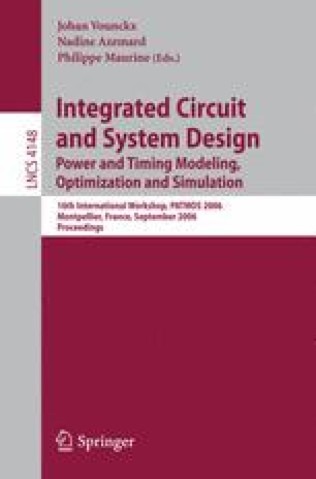
Integrated Circuit and System Design. Power and Timing Modeling, Optimization and Simulation ; Vol. 4148 ; 16th International Workshop, PATMOS 2006, Montpellier, France, September 13-15, 2006, Proceedings
Welcome to the proceedings of PATMOS 2006, the 16th in a series of international workshops. PATMOS 2006 was organized by LIRMM with CAS technical - sponsorship and CEDA sponsorship. Over the years, the PATMOS workshop has evolved into an important European event, where researchers from both industry and academia discuss and investigate the emerging challenges in future and contemporary applications, design methodologies, and tools required for the development of upcoming generations of integrated circuits and systems. The technical program of PATMOS 2006 contained state-of-the-art technical contributions, three invited talks, a special session on hearing-aid design, and an embedded tutorial. The technical program focused on timing, performance and power consumption, as well as architectural aspects with particular emphasis on modeling, design, characterization, analysis and optimization in the nanometer era. The Technical Program Committee, with the assistance of additional expert reviewers, selected the 64 papers presented at PATMOS. The papers were organized into 11 technical sessions and 3 poster sessions. As is always the case with the PATMOS workshops, full papers were required, and several reviews were received per manuscript.
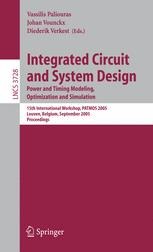
Integrated Circuit and System Design. Power and Timing Modeling, Optimization and Simulation ; Vol. 3728 ; 15th International Workshop, PATMOS 2005, Leuven, Belgium, September 21-23, 2005, Proceedings
Welcome to the proceedings of PATMOS 2005, the 15th in a series of international workshops.PATMOS2005wasorganizedbyIMECwithtechnicalco-sponsorshipfrom the IEEE Circuits and Systems Society. Over the years, PATMOS has evolved into an important European event, where - searchers from both industry and academia discuss and investigate the emerging ch- lenges in future and contemporary applications, design methodologies, and tools - quired for the developmentof upcominggenerationsof integrated circuits and systems. The technical program of PATMOS 2005 contained state-of-the-art technical contri- tions, three invited talks, a special session on hearing-aid design, and an embedded - torial. The technical program focused on timing, performance and power consumption, as well as architectural aspects with particular emphasis on modeling, design, char- terization, analysis and optimization in the nanometer era. The Technical Program Committee, with the assistance of additional expert revi- ers, selected the 74 papers to be presented at PATMOS. The papers were divided into 11 technical sessions and 3 poster sessions. As is always the case with the PATMOS workshops, the review process was anonymous, full papers were required, and several reviews were carried out per paper. Beyond the presentations of the papers, the PATMOS technical program was - riched by a series of speeches offered by world class experts, on important emerging research issues of industrial relevance. Prof. Jan Rabaey, Berkeley, USA, gave a talk on “Traveling the Wild Frontier of Ulta Low-Power Design”, Dr. Sung Bae Park, S- sung, gave a presentation on “DVL (Deep Low Voltage): Circuits and Devices”, Prof.

Integrated circuit and system design : Power and timing modeling, optimization and simulation ; 17th International Workshop, PATMOS 2007, Gothenburg, Sweden, September 3-5, 2007, Proceedings
Papers cover high level design, low power design techniques, low power analog circuits, statistical static timing analysis, power modeling and optimization, low power routing optimization, security and asynchronous design, low power applications, modeling and optimization, and more.

From Specification to Embedded Systems Application
Application documents recent approaches and results presented at the International Embedded Systems Symposium (IESS 2005), which was held in August 2005 in Manaus (Brazil) and sponsored by International Federation for Information Processing (IFIP). The topics which have been chosen for this working conference are very timely: design methodology, modeling, specification, software synthesis, power management, formal verification, testing, network, communication systems, distributed control systems, resource management and special aspects in system design.

Formal Methods for Components and Objects ; Vol. 3657 ; 3rd International Symposium, FMCO 2004, Leiden, The Netherlands, November 2-5, 2004, Revised Lectures
This book presents revised tutorial lectures given by invited speakers at the Third International Symposium on Formal Methods for Components and Objects, FMCO 2004, held in Leiden, The Netherlands, in November 2004. The 14 revised lectures by leading researchers present a comprehensive account of the potential of formal methods applied to large and complex software systems such as component-based systems and object systems. The book provides an unique combination of ideas on software engineering and formal methods that reflect the expanding body of knowledge on modern software systems.

Evaluation of text summaries based on linear optimization of content metrics
Covers both theoretical contributions and practical applications in security system design by applying the Internet of Things (IoT) and CI. It further explains the application of IoT in the design of modern security systems and how IoT blended with computational intel- ligence can make any security system improved and realizable. Key features: Focuses on the computational intelligence techniques of security system design Covers applications and algorithms of discussed computational intelligence techniques Includes convergence-based and enterprise integrated security systems with their applications Explains emerging laws, policies, and tools affecting the landscape of cyber security Discusses application of sensors toward the design of security systems This book will be useful for graduate students and researchers in electrical, computer engineering, security system design and engineering

Embedded System Design : Topics, Techniques and Trends; IFIP TC10 Working Conference: International Embedded Systems Symposium (IESS), May 30 - June 1, 2007, Irvine (CA), USA
Embedded systems have gained an enormous amount of processing power and functionality. Many of the formerly external components can now be integrated into a single System-on-Chip. This tendency has resulted in a dramatic reduction in the size and cost of embedded systems. As a unique technology, the design of embedded systems is an essential element of many innovations. This book including design methodology, specification and modeling, embedded software and hardware synthesis, networks-on-chip, distributed and networked systems, and system verification and validation. Particular emphaisis is paid to automotive and medical applications. A set of actual case studies and special aspects in embedded system design are included as well.

Efficient Learning Machines : Theories, Concepts, and Applications for Engineers and System Designers
Machine learning techniques provide cost-effective alternatives to traditional methods for extracting underlying relationships between information and data and for predicting future events by processing existing information to train models. Efficient Learning Machines explores the major topics of machine learning, including knowledge discovery, classifications, genetic algorithms, neural networking, kernel methods, and biologically-inspired techniques.

Digital Design and Implementation with Field Programmable Devices
The focus of this book is on a practical knowledge of digital system design for programmable devices. The book covers all necessary topics under one cover, and covers each topic just enough that is actually used by an advanced digital designer. In the three parts of the book, we cover digital system design concepts, use of tools, and systematic design of digital systems

Control Systems Design : A New Framework
This book will be of great interest to academics and institutional researchers in control system design and to those studying for higher degrees in this area

Conceptual Modeling - ER 2007 ; 26th International Conference on Conceptual Modeling, Auckland, New Zealand, November 5-9, 2007, Proceedings
Conceptual modeling is fundamental to the development of complex systems, because it provides the key communication means between systems developers, end-users and customers.Conceptua lmodeling provides languages,methods and tools to understand and represent the application domain;to elicitate,concepalize and formalize system requirements and user needs;to communicate systems designs to all stakeholders; to formally verify and validate system designs on high levels of abstractions; and to minimize ambiguities in system development. Initially, conceptual modeling mainly addressed data-intensive information s- tems and contributed to data modeling and database application engineering. The area of conceptual modeling has now matured to encompass all kinds of application areas such as e-applications (including e-business and e-learning), web-based systems (including the semantic web and ubiquitous systems), life science and geographic applications.

Computer organization and design, enhanced : The hardware / software interface ; 5th ed.
Contains new examples and material highlighting the emergence of mobile computing and the cloud. It explores this generational change with updated content featuring tablet computers, cloud infrastructure, and the ARM (mobile computing devices) and x86 (cloud computing) architectures. The book uses a MIPS processor core to present the fundamentals of hardware technologies, assembly language, computer arithmetic, pipelining, memory hierarchies and I/O.Because an understanding of modern hardware is essential to achieving good performance and energy efficiency, this edition adds a new concrete example, Going Faster, used throughout the text to demonstrate extremely effective optimization techniques. There is also a new discussion of the Eight Great Ideas of computer architecture.

Computer organization and design : The hardware / software interface ; 6th ed.
Designed to be used in modern computing environments such as cloud computing, mobile devices, and other embedded systems. With the post-PC era now upon us, Computer Organization and Design moves forward to explore this generational change with examples, exercises, and material highlighting the emergence of mobile computing and the Cloud. Updated content featuring tablet computers, Cloud infrastructure, and the x86 (cloud computing) and ARM (mobile computing devices) architectures is included

CMOS Hotplate Chemical Microsensors
Covers all aspects of successful sensor prototyping: theory of transducer modelling, microelectronics design considerations, system design issues, and issues related to system and device microfabrication, packaging, and testing. A variety of different hotplates for different operation conditions is detailed and a family of metal-oxide-covered microhotplate-based microsensor systems with increasing complexity is presented. These systems belong to a new generation of chemical microsensors and represent examples of the successful integration of nanomaterials, microtechnology and microelectronics.The book provides students, scientists and engineers with an accessible introduction to the field of microhotplate-based chemical sensing, with all the necessary fundamental knowledge included. Beyond that, it also provides detailed information on all important issues concerning complex high-performance CMOS chemical microsensor systems; hence it will also be valuable to experts already familiar with the field.

Business Information Systems ; 10th International Conference, BIS 2007, Poznan, Poland, April 25-27, 2007, Proceedings
This volume covers research trends as well as current achievements and cutting-edge developments in the area of modern business information systems. It contiants Business Process Management, Web Services, Ontologies, Information Retrieval, System Design, Agents and Mobile Applications, Decision Support, Social Issues, Specific MIS Issues.
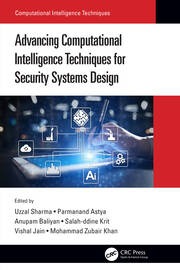
Advancing Computational Intelligence Techniques for Security Systems Design
Security systems have become an integral part of the building and large complex setups, and intervention of the computational intelligence (CI) paradigm plays an important role in security system architecture. This book covers both theoretical contributions and practical applications in security system design by applying the Internet of Things (IoT) and CI. It further explains the application of IoT in the design of modern security systems and how IoT blended with computational intel- ligence can make any security system improved and realizable. Focuses on the computational intelligence techniques of security system design / Covers applications and algorithms of discussed computational intelligence techniques / Includes convergence-based and enterprise integrated security systems with their applications / Explains emerging laws, policies, and tools affecting the landscape of cyber security / Discusses application of sensors toward the design of security systems
