



Page 4
Page 4

Digital Libraries : Research and Development; 1st International DELOS Conference, Pisa, Italy, February 13-14, 2007, Revised Selected Papers
This book presented similarity search, architectures, personalization, interoperability, evaluation, miscellaneous, preservation, video data management, 3D objects, and peer to peer.

Deepfake detection
Recently, various techniques of manipulating the video content have become available to everyone – online, one can find free applications e.g., for face swapping in videos. Such universal accessibility carries a notable risk of flooding online content with false information, affecting not only the greats of this world, but also the whole societies, also the rapid progress in synthetic image generation and manipulation has now come to a point where it raises significant concerns for the implications towards society. It is therefore necessary to develop a verification tool that will help assess the authenticity of the videos posted on the internet. This project describes the approach of using artificial intelligence solutions to detect doctored videos.

Deepfake
The technology used to create such digital content has quickly become accessible to the masses, such as “DEEPFAKE.” Deep fakes refer to manipulated videos, or other digital representations produced by sophisticated artificial intelligence, that yields to synthesize a sequence of face images and voices of characters corresponding to their identities, such as voice tone, facial expression, with a good lip synchronization. Therefore, this study is about developing real-time video generation software, which generates a target video from a single input image. Several methods and algorithms have been applied to detect, analyze personalize facial expression, voice and natural head poses to present a life-like image instead of a low quality one.

Deep learning methods for converting speech to text = تقنيات التعلم العميق في تحويل الصوت إلى نص
Aims to design and develop a system capable of extracting audio content from films and audio recordings and converting it into text using deep learning techniques. This is done by analyzing audio patterns, extracting sounds and words from the video, and then converting them into written text. Deep learning, a branch of artificial intelligence, is used to accomplish this task. The study also includes comparing different deep learning techniques to determine their effectiveness in this context.

Deep fake detection
Deep learning has been successfully applied to solve various complex problems ranging from big data analytics to computer vision and human-level control. Deep learning advances however have also been employed to create software that can cause threats to privacy, democracy and national security. One of those deep learning-powered applications recently emerged is “deepfake”. Deepfake algorithms can create fake images and videos that humans cannot distinguish them from authentic ones. The proposal of technologies that can automatically detect and assess the integrity of digital visual media is therefore indispensable.

Data Compression : The Complete Reference
This book of Data Compression provides an all-inclusive, thoroughly updated, and user-friendly reference for the many different types and methods of compression (especially audio compression, an area in which many new topics covered in this revised edition appear). Among the important features of the book are a detailed and helpful taxonomy, a detailed description of the most common methods, and discussions on the use and comparative benefits of different methods. The book’s logical, clear and lively presentation is organized around the main branches of data compression.

Crime detection camera
This paper presents a comprehensive crime detection system that uses a combination of hardware and software to monitor homes and communities in real time. The system consists of a Raspberry Pi 4B, a Raspberry Pi Camera V2, a flame sensor, an MQ-6 gas sensor, and a microphone, which are all connected to a database management system powered by MySQL. The data collected from these devices is analyzed by machine learning algorithms to detect crimes, such as theft or robbery, as well as fires and gas leaks. The system also includes a mobile app, ‘Safe Home’ which provides live video monitoring and real-time notifications to users, and an employee dashboard to monitor all statistics and manage all implemented systems.

Creating Web-based Laboratories
Remote web-based experimentation, enabling students and researchers to access the laboratory anytime via the Internet, is becoming an increasingly attractive way to complement or even replace traditional laboratory sessions. Placing a video camera & microphone before the equipment and apparatus to capture what is actually happening in the laboratory allows the images and audio data to be streamed to the client side. Researchers in different countries can share equipment and conduct research cooperatively and remotely. The authors summarise their research and discuss the development of the 5 web-based laboratories launched from the National University of Singapore. The principles, structure, and technologies required for the creation of Internet remote experimentation systems are discussed with particular emphasis on the integration of hardware and software systems. Also highlighted is the design and development of interfaces and components for use in typical web-based laboratories or similar web-control applications.

Creating New Learning Experiences on a Global Scale ; 2nd European Conference on Technology Enhanced Learning, EC-TEL 2007, Crete, Greece, September 17-20, 2007, Proceedings
It is holding more than 500 pages of combined wisdom on Technology Enhanced Learning (TEL) in your hands! With the advance of metadata, standards, learning objects, Web 2. 0 approaches to rip, mix and burn learning, wikis, blogs, syndication, user-generated content, W- based video, games and the ubiquitous availability of computing devices we can and have to offer more flexible learning services on a global scale.It provided a unique forum for all research related to technology enhanced learning, including its interactions with knowledge management, business processes and work environments.
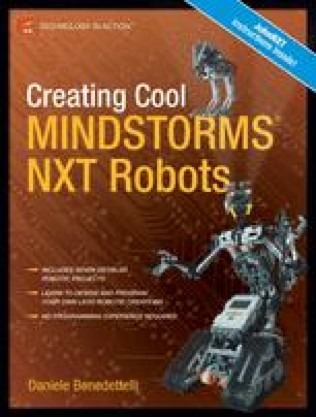
Creating Cool MINDSTORMS® NXT Robots
Build and program MINDSTORM NXT robots with Daniele Benedettelli, one of the world's most respected NXT robot builders. He shows you how to build and program them from scratch, starting with the simplest robots and progressing in difficulty to a total of seven award–winning robots! You can download all the code, along with low–resolution videos that show how your robot works when it's finished. You don't need to be a programmer to develop these cool robots, because all the code is provided, but advanced developers will enjoy seeing the secrets of Benedettelli's code and techniques revealed.

Cooperative tool
Online collaboration is fast becoming a permanent feature of the modern workplace. Companies and organizations are attracted by the cost-effective technology allowing employees to work together anywhere, at any time using any internet-enabled device. Online collaboration gives team members the tools they need to work with others from any location, including from home and while travelling. This drastically reduces “downtime” and allows people to be productive when it best suits them therefore we propose a website that provides content (videoconference, real-time Chat, whiteboard).

Computer vision systems ; 6th International conference, ICVS 2008 Santorini, Greece, May 12-15, 2008 Proceedings
This book constitutes the refereed proceedings of the 6th International Conference on Computer Vision Systems, ICVS 2008, held in Santorini, Greece, May 12-15, 2008.

Computer vision and graphics ; International Conference, ICCVG 2020, Warsaw, Poland, September 14–16, 2020, Proceedings
This book constitutes the refereed proceedings of the International Conference on Computer Vision and Graphics, ICCVG 2020, held in Warsaw, Poland, in September 2020. The 20 full papers were selected from 49 submissions. The contributions cover topics such as: modelling of human visual perception; computational geometry; geometrical models of objects and scenes; illumination and reflection models and methods; image formation; image and video coding; image filtering and enhancement; biomedical image processing; biomedical graphics; colour image processing; multispectral image processing; pattern recognition in image processing

Computer vision : Algorithms and applications
Explores the variety of techniques commonly used to analyze and interpret images. It also describes challenging real-world applications where vision is being successfully used, both for specialized applications such as medical imaging, and for fun, consumer-level tasks such as image editing and stitching, which students can apply to their own personal photos and videos.

Computer vision : Algorithms and applications
Explores the variety of techniques used to analyze and interpret images. It also describes challenging real-world applications where vision is being successfully used, both in specialized applications such as image search and autonomous navigation, as well as for fun, consumer-level tasks that students can apply to their own personal photos and videos. Suitable for an upper-level undergraduate or graduate-level course in computer science or engineering, this textbook focuses on basic techniques that work under real-world conditions and encourages students to push their creative boundaries. Its design and exposition also make it eminently suitable as a unique reference to the fundamental techniques and current research literature in computer vision.

Computer Vision – ACCV 2007 ; 8th Asian Conference on Computer Vision, Tokyo, Japan, November 18-22, 2007, Proceedings, Part II
Contains sections on shape and texture, fitting, calbration, detection, image and video processing, applications, face and gesture, tracking, camera networks, and face/gesture/action detection and recognition. This book also covers learning, motion and tracking, retrival and search, and human pose estimation.

Computer Vision – ACCV 2007 ; 8th Asian Conference on Computer Vision, Tokyo, Japan, November 18-22, 2007, Proceedings, Part I
Contains sections on shape and texture, fitting, calbration, detection, image and video processing, applications, face and gesture, tracking, camera networks, and face/gesture/action detection and recognition. This book also covers learning, motion and tracking, retrival and search, and human pose estimation.

Management of Multimedia Networks and Services ; 8th International Conference on Management of Multimedia Networks and Services, MMNS 2005, Barcelona, Spain, October 24-26, 2005, Proceedings
We are delighted to present the proceedings of the 8th IFIP/IEEE International Conference on Management of Multimedia Networks and Services (MMNS 2005). The MMNS 2005 conference was held in Barcelona, Spain on October 24–26, 2005. As in previous years, the conference brought together an international audience of researchers and scientists from industry and academia who are researching and developing state-of-the-art management systems, while creating a public venue for results dissemination and intellectual collaboration. This year marked a challenging chapter in the advancement of management systems for the wider management research community, with the growing complexities of the “so-called” multimedia over Internet, the proliferation of alternative wireless networks (WLL, WiFi and WiMAX) and 3G mobile services, intelligent and high-speed networks scalable multimedia services and the convergence of computing and communications for data, voice and video delivery. Contributions from the research community met this challenge with 65 paper submissions; 33 high-quality papers were subsequently selected to form the MMNS 2005 technical program. The diverse topics in this year’s program included wireless networking technologies, wireless network applications, quality of services, multimedia, Web applications, overlay network management, and bandwidth management.

Machine Learning Techniques for Multimedia : Case Studies on Organization and Retrieval
This book provides a comprehensive coverage of the most important machine learning techniques used and their application in this domain. Arising from the EU MUSCLE network, a program that drew together multidisciplinary teams with expertise in machine learning, pattern recognition, artificial intelligence, and image, video, text and crossmedia processing, the book first introduces the machine learning principles and techniques that are applied in multimedia data processing and analysis. The second part focuses on multimedia data processing applications, with chapters examining specific machine learning issues in domains .

Machine Learning for Multimodal Interaction ; 4th International Workshop, MLMI 2007, Brno, Czech Republic, June 28-30, 2007, Revised Selected Papers
This book contains a selection of revised papers from the 4th Workshop on Machine Learning for Multimodal Interaction (MLMI 2007), which took place in Brno, Czech Republic, during June 28 30, 2007. As in the previous editions of the MLMI series, the 26 chapters of this book cover a large area of topics, from multimodal processing and human computer interaction to video, audio, speech and language processing. The application of machine learning techniques to problems arising in these felds and the design and analysis of software
