



Page 109
Page 109

A vision-based system to early detection of drowning incidents in swimming pools
Being one of the leading causes of death; drowning has become a severe problem in the past few years. Our goal from this project is to focus on the comprehensive survey of drowning detection and prevention techniques. There are various methodologies put up in the domain of swimming pool safety using different intelligent control systems. Various methods have been adopted for drowning detection using the concepts of image processing, pressure and motion sensing. The main objectives of this work are to detect the drowning person in an indoor swimming pool and send an alarm to the lifeguard to rescue if the previously detected person is missing for a specific amount of time.
A Theory of Distributed Objects : Asynchrony - Mobility - Groups - Components
Distributed and communicating objects are becoming ubiquitous. In global, Grid and Peer-to-Peer computing environments, extensive use is made of objects interacting through method calls. So far, no general formalism has been proposed for the foundation of such systems. Caromel and Henrio are the first to define a calculus for distributed objects interacting using asynchronous method calls with generalized futures, i.e., wait-by-necessity -- a must in large-scale systems, providing both high structuring and low coupling, and thus scalability. The authors provide very generic results on expressiveness and determinism, and the potential of their approach is further demonstrated by its capacity to cope with advanced issues such as mobility, groups, and components.
A Programmers Introduction to C#2.0
A Programmer's Introduction to C# 2.0, Third Edition is a critical update to the highly successful second edition. It is written by a member of the original C# language-design team and a C# program manager, so you can be certain this book contains the expertise you're looking for.

A Practical Programming Model for the Multi-Core Era ; 3rd International Workshop on OpenMP, IWOMP 2007, Beijing, China, June 3-7, 2007 Proceedings
This book constitutes the thoroughly refereed post-workshop proceedings of the Third International Workshop on OpenMP, IWOMP 2007, held in Beijing, China, in June 2007.The 14 revised full papers and 8 revised short papers presented were carefully reviewed and selected from 28 submissions. The papers address all topics related to OpenMP, such as OpenMP performance analysis and modeling, OpenMP performance and correctness tools and proposed OpenMP extensions, as well as applications in various domains, e.g., scientific computation, video games, computer graphics, multimedia, information retrieval, optimization, text processing, data mining, finance, signal and image processing, and numerical solvers.
A Practical Guide to TPM 2.0 : Using the New Trusted Platform Module in the New Age of Security
A Practical Guide to TPM 2.0: Using the Trusted Platform Module in the New Age of Security is a straight-forward primer for developers. It shows security and TPM concepts, demonstrating their use in real applications that the reader can try out. Simply put, this book is designed to empower and excite the programming community to go out and do cool things with the TPM. The approach is to ramp the reader up quickly and keep their interest.A Practical Guide to TPM 2.0: Using the Trusted Platform Module in the New Age of Security explains security concepts, describes the TPM 2.0 architecture, and provides code and pseudo-code examples in parallel, from very simple concepts and code to highly complex concepts and pseudo-code.
A Platform-Centric Approach to System-on-Chip (SOC) Design
The book proposes a new methodology for realizing platform-centric design of complex systems, and presents a detailed plan for its implementation. The proposed plan allows component vendors, system integrators and product developers to collaborate effectively and efficiently to create complex products within budget and schedule constraints.
A Matrix Algebra Approach to Artificial Intelligence
The book consists of two parts: the first discusses the fundamentals of matrix algebra in detail, while the second focuses on the applications of matrix algebra approaches in AI. Highlighting matrix algebra in graph-based learning and embedding, network embedding, convolutional neural networks and Pareto optimization theory, and discussing recent topics and advances, the book offers a valuable resource for scientists, engineers, and graduate students in various disciplines
A High-Performance Logical Framework -- All About Maude : How to Specify, Program, and Verify Systems in Rewriting Logic
This book gives a comprehensive account of Maude, a language and system based on rewriting logic. Many examples are used throughout the book to illustrate the main ideas and features of Maude, and its many possible uses. Maude modules are rewrite theories. Computation with such modules is - cient deduction by rewriting. Because of its logical basis and its initial model semantics,aMaude module defines a precise mathematical model.This means that Maude and its formal tool environment can be used in three, mutually reinforcing ways: • as a declarative programming language; • as an executable formal specification language; and • as a formal verification system. Maude’s rewriting logic is simple, yet very expressive. This gives Maude good representational capabilities as a semantic framework to formally represent a wide range of systems, including models of concurrency, distributed al- rithms, network protocols, semantics of programming languages, and models of cell biology. Rewriting logic is also an expressive universal logic,making Maude a fiexible logical framework in which many difierent logics and - ference systems can be represented and mechanized. This makes Maude a useful metatool to build many other tools, including those in its own formal tool environment. Thanks to the logic’s simplicity and the use of advanced semi-compilation techniques, Maude has a high-performance implementation, making it competitive with other declarative programming languages.

A healthcare professionals training system
The Objective Structured Clinical Examination (OSCE) is a type of examination often used in health sciences. It is designed to test clinical skill performance and competence in a range of skills. It is a practical, real-world approach to learning and assessment. Comprises a circuit of short (5-10 minutes) stations, in which each candidate is examined on a one-to-one basis with one or two impartial examiner(s) and patients who are either real or simulated (actors or electronic patient simulators). Each station has a different examiner; in comparison, the traditional method of clinical examination is when a candidate is assigned to an examiner for the entire examination.
A Guide to Graph Algorithms
Offers high-quality content in the research area of graph algorithms and explores the latest developments in graph algorithmics. The reader will gain a comprehensive understanding of how to use algorithms to explore graphs. It is a collection of texts that have proved to be trend setters and good examples of that. The book aims at providing the reader with a deep understanding of the structural properties of graphs that are useful for the design of efficient algorithms. These algorithms have applications in finite state machine modelling, social network theory, biology, and mathematics. The book contains many exercises, some up at present-day research-level. The exercises encourage the reader to discover new techniques by putting things in a clear perspective.
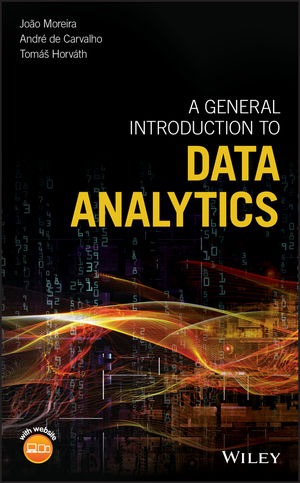
A General introduction to data analytics
A guide to the principles and methods of data analysis that does not require knowledge of statistics or programming. A guide to the reasoning behind data mining techniques. A unique illustrative example that extends throughout all the chapters. Exercises at the end of each chapter and larger projects at the end of each of the text’s two main parts
A First Course in Statistical Inference
Offers a modern and accessible introduction to Statistical Inference, the science of inferring key information from data. Aimed at beginning undergraduate students in mathematics, it presents the concepts underpinning frequentist statistical theory. Written in a conversational and informal style, this concise text concentrates on ideas and concepts, with key theorems stated and proved. Detailed worked examples are included and each chapter ends with a set of exercises, with full solutions given at the back of the book. Examples using R are provided throughout the book, with a brief guide to the software included. Topics covered in the book include: sampling distributions, properties of estimators, confidence intervals, hypothesis testing, ANOVA, and fitting a straight line to paired data.

A Computer Scientists Guide to Cell Biology
Provides a succinct treatment of the general concepts of cell biology, furnishing the computer scientist with the tools necessary to read and understand current literature in the field.After a brief introduction to cell biology, the text focuses on the principles behind the most-widely used experimental procedures and mechanisms, relating them to well-understood concepts in computer science. The presentation of the material has been prepared for the reader’s quick grasp of the topic: comments on nomenclature and background notes can be ascertained at a glance, and essential vocabulary is boldfaced throughout the text for easy identification.
A Classical Introduction to Cryptography Exercise Book
A Classical Introduction to Cryptography Exercise Book for A Classical Introduction to Cryptography: Applications for Communications Security covers a majority of the subjects that make up today's cryptology, such as symmetric or public-key cryptography, cryptographic protocols, design, cryptanalysis, and implementation of cryptosystems. Exercises do not require a large background in mathematics, since the most important notions are introduced and discussed in many of the exercises.

6G Mobile Wireless Networks
Specifically, this book covers the following topics: 6G Use Cases, Requirements, Metrics and Enabling Technologies, PHY Technologies for 6G Wireless, Reconfigurable Intelligent Surface for 6G Wireless Networks, Millimeter-wave and Terahertz Spectrum for 6G Wireless, Challenges in Transport Layer for Tbit/s Communications, High-capacity Backhaul Connectivity for 6G Wireless, Cloud Native Approach for 6G Wireless Networks, Machine Type Communications in 6G, Edge Intelligence and Pervasive AI in 6G, Blockchain: Foundations and Role in 6G, Role of Open-source Platforms in 6G, and Quantum Computing and 6G Wireless.
501 Math Word Problems
Contains only word problems - the kinds you encounter at school and on high stakes tests. Gaining familiarity with this specific question type is a proven technique for increasing test scores. The Skill Builder in Focus method provides the targeted practice on these questions necessary to attain higher scores. Questions are divided into six chapters: algebra, geometry, fractions, percents, decimals, and miscellaneous math. Within each chapter, questions move from easy to advanced, giving test-takers the opportunity to gain confidence in each math area. Each chapter contains questions, answers, and detailed explanations to reinforce learning and understanding. Diagrams and useful terminology help clarify math rules for effective studying and retention.
50 Years of Artificial Intelligence : Essays Dedicated to the 50th Anniversary of Artificial Intelligence
This Festschrift volume, published in celebration of the 50th Anniversary of Artificial Intelligence, includes 34 refereed papers written by leading researchers in the field of Artificial Intelligence. The papers were carefully selected from the invited lectures given at the 50th Anniversary Summit of AI, held at the Centro Stefano Franscini, Monte Verità, Ascona, Switzerland, July 9-14, 2006. The summit provided a venue for discussions on a broad range of topics.
3-D Shape Estimation and Image Restoration : Exploiting Defocus and Motion-Blur
Images contain information about the spatial properties of the scene they depict. When coupled with suitable assumptions, images can be used to infer three-dimensional information. This useful volume concentrates on motion blur and defocus, which can be exploited to infer the 3-D structure of a scene—as well as its radiance properties—and which in turn can be used to generate novel images with better quality. 3-D Shape Estimation and Image Restoration presents a coherent framework for the analysis and design of algorithms to estimate 3-D shape from defocused and motion blurred images, and to eliminate defocus and motion blur to yield "restored" images. It provides a collection of algorithms that are optimal with respect to the chosen model and estimation criterion.

3D Segmentation for medical images (OsteoVision) = التقطيع ثلاثي الأبعاد للصور الطبية
With the increasing integration of AI across various sectors, artificial intelligence (AI) is already playing a significant role in the healthcare industry, and its use is expected to grow further. AI systems used in image processing and computer vision algorithms have shown a significant ability to perform many operations such as segmentation, classification, and detection. This project presents the application of computer vision algorithms in the field of medical imaging for diagnostic, therapeutic, and interventional purposes. This thesis explores the use of several computer vision algorithms to address different pathologies, specifically brain tumors (glioma) (see Appendix A) and knee osteoarthritis (OA), as well as tracking the progression of knee osteoarthritis using the Kellgren and Lawrence (KL) grading system, a common method for classifying the severity of OA into five grades. To achieve the desired impact, the project employs various techniques, including 3D segmentation for brain tumors, 2D segmentation for knee joints, and multinomial classification for determining the severity of knee OA injuries. The primary aims of the project are to enhance diagnostic accuracy, assist in creating treatment plans, provide an assistive tool for healthcare providers to make more informed decisions, leverage AI's capabilities to detect abnormalities that might escape the human eye, and streamline workflow. To facilitate these goals, the project incorporates a user-friendly UI, a website, and a Flutter-based mobile application, enabling healthcare providers to efficiently integrate these tools into their practice and improve patient care.
3D Imaging, Analysis and Applications
This textbook is designed for postgraduate studies in the field of 3D Computer Vision. It also provides a useful reference for industrial practitioners; for example, in the areas of 3D data capture, computer-aided geometric modelling and industrial quality assurance. This second edition is a significant upgrade of existing topics with novel findings. Additionally, it has new material covering consumer-grade RGB-D cameras, 3D morphable models, deep learning on 3D datasets, as well as new applications in the 3D digitization of cultural heritage and the 3D phenotyping of crops.
