



Page 10
Page 10

Mathematics for Computer Graphics
In thirteen chapters you will rediscover - and hopefully discover for the first time a new way of understanding - the mathematical techniques required to solve problems and design computer programs for computer graphic applications. Each chapter explores a specific mathematical topic and takes you forward into more advanced areas until you are able to understand 3D curves and surface patches, and solve problems using vectors.

Mathematical Tools for Data Mining : Set Theory, Partial Orders, Combinatorics
Mathematics is presented in a thorough and rigorous manner offering a detailed explanation of each topic, with applications to data mining such as frequent item sets, clustering, decision trees also being discussed. More than 400 exercises are included and they form an integral part of the material. Some of the exercises are in reality supplemental material and their solutions are included. The reader is assumed to have a knowledge of elementary analysis.

Mathematical Morphology : 40 Years On ; Proceedings of the 7th International Symposium on Mathematical Morphology, April 18-20, 2005
Mathematical Morphology is a speciality in Image Processing and Analysis, which considers images as geometrical objects, to be analyzed through their interactions with other geometrical objects. It relies on several branches of mathematics, such as discrete geometry, topology, lattice theory, partial differential equations, integral geometry and geometrical probability. It has produced fast and efficient algorithms for computer analysis of images, and has found applications in bio-medical imaging, materials science, geoscience, remote sensing, quality control, document processing and data analysis. This book contains the 43 papers presented at the 7th International Symposium on Mathematical Morphology, held in Paris on April 18-20, 2005. It gives a lively state of the art of current research topics in this field. It also marks a milestone, the 40 years of uninterrupted development of this ever-expanding domain.

IP operations and management ; 8th IEEE International workshop, IPOM 2008, Samos Island, Greece, September 22-26, 2008. Proceedings
Constitutes the refereed proceedings of the 8th IEEE Workshop on IP Operations and Management, IPOM 2008, held on Samos Island, Greece, on September 22-26, 2008, as part of the 4th International Week on Management of Networks and Services, Manweek 2008. The 12 revised full papers presented in this volume were carefully reviewed and selected from 30 submissions. The papers are organized in topical sections on network anomaly detection; traffic engineering, protection, and recovery; network measurements and applications; and network management and security.

IP Networking over Next-Generation Satellite Systems ; International Workshop, Budapest, July 2007
Highlights the very latest research output of several EU satellite-related projects and addresses many unresolved issues in next-generation satellite systems, such as efficient deployment of IPv6 over satellites, working with WLAN and WiMax, QoS provisioning over multi-segment networks (including satellite networks), multicast networks and security.

IoT-enabled Smart Healthcare Systems, Services and Applications
In IoT-Enabled Smart Healthcare Systems, Services and Applications, an accomplished team of researchers delivers an insightful and comprehensive exploration of the roles played by cutting-edge technologies in modern healthcare delivery. The distinguished editors have included resources from a diverse array of learned experts in the field that combine to create a broad examination of a rapidly developing field.

IoT and AI Technologies for Sustainable Living : A Practical Handbook
Brings together all the latest methodologies, tools and techniques related to the Internet of Things and Artificial Intelligence in a single volume to build insight into their use in sustainable living. The areas of application include agriculture, smart farming, healthcare, bioinformatics, self-diagnosis systems, body sensor networks, multimedia mining, and multimedia in forensics and security. Provides a comprehensive discussion of modeling and implementation in water resource optimization, recognizing pest patterns, traffic scheduling, web mining, cyber security and cyber forensics. It will help develop an understanding of the need for AI and IoT to have a sustainable era of human living. The tools covered include genetic algorithms, cloud computing, water resource management, web mining, machine learning, block chaining, learning algorithms, sentimental analysis and Natural Language Processing (NLP).
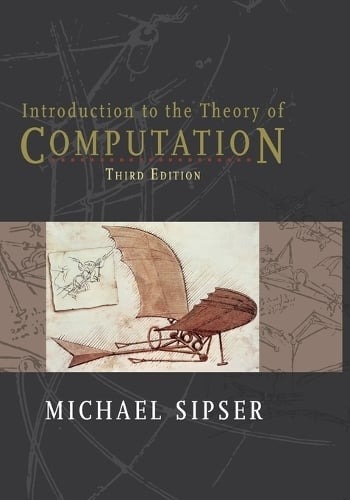
Introduction to the theory of computation
Gain a solid understanding of the fundamental mathematical properties of computer hardware, software, and applications with a blend of practical and philosophical coverage and mathematical treatments, including advanced theorems and proofs.

Introduction to Scientific Programming with Python
This book offers an initial introduction to programming for scientific and computational applications using the Python programming language. The presentation style is compact and example-based, making it suitable for students and researchers with little or no prior experience in programming.

Introduction to robotics : Analysis, control, applications
Offers a guide to the fundamentals of robotics, robot components and subsystems and applications. The author—a noted expert on the topic—covers the mechanics and kinematics of serial and parallel robots, both with the Denavit-Hartenberg approach as well as screw-based mechanics. In addition, the text contains information on microprocessor applications, control systems, vision systems, sensors, and actuators.

Introduction to Reliable Distributed Programming
Guerraoui and Rodrigues present an introductory description of fundamental reliable distributed programming abstractions as well as algorithms to implement these abstractions. The authors follow an incremental approach by first introducing basic abstractions in simple distributed environments, before moving to more sophisticated abstractions and more challenging environments. Each core chapter is devoted to one specific class of abstractions, covering reliable delivery, shared memory, consensus and various forms of agreement. This textbook comes with a companion set of running examples implemented in Java. These can be used by students to get a better understanding of how reliable distributed programming abstractions can be implemented and used in practice. Combined, the chapters deliver a full course on reliable distributed programming. The book can also be used as a complete reference on the basic elements required to build reliable distributed applications.

Introduction to PHP for Scientists and Engineers : Beyond JavaScript
This text presents key information needed to write your own online science and engineering applications, including reading, creating and manipulating data files stored as text on a server, thereby overcoming the limitations of a client-side language.

Introduction to Machine Learning with Applications in Information Security
Provides a classroom-tested introduction to a wide variety of machine learning and deep learning algorithms and techniques, reinforced via realistic applications. The book is accessible and doesn't prove theorems, or dwell on mathematical theory. The goal is to present topics at an intuitive level, with just enough detail to clarify the underlying concepts. The book covers core classic machine learning topics in depth, including Hidden Markov Models (HMM), Support Vector Machines (SVM), and clustering. Additional machine learning topics include k-Nearest Neighbor (k-NN), boosting, Random Forests, and Linear Discriminant Analysis (LDA). The fundamental deep learning topics of backpropagation, Convolutional Neural Networks (CNN), Multilayer Perceptrons (MLP), and Recurrent Neural Networks (RNN) are covered in depth. A broad range of advanced deep learning architectures are also presented, including Long Short-Term Memory (LSTM), Generative Adversarial Networks (GAN), Extreme Learning Machines (ELM), Residual Networks (ResNet), Deep Belief Networks (DBN), Bidirectional Encoder Representations from Transformers (BERT), and Word2Vec.

Introduction to Intelligent Construction Technology of Transportation Infrastructure
Expounds on the related technologies of intelligent transportation infrastructure construction. Based on the essential characteristics of intelligent construction, "perception, analysis, decision-making, and execution," the basic structure of intelligent construction technology (ICT) is established. With the integration of engineering construction technologies, the analyses of the essence of intelligent algorithms and the feasibility of Artificial Intelligence (AI) are provided. The book introduces the essential characteristics of Big Data and the Internet of Things and their relationship with engineering construction. On this basis, the feasibility and implementation plan of intelligent technology applications in design, construction, and maintenance are analyzed and demonstrated with engineering examples.

Introduction to Geometric Computing
The geometric ideas in computer science, mathematics, engineering, and physics have considerable overlap and students in each of these disciplines will eventually encounter geometric computing problems. The topic is traditionally taught in mathematics departments via geometry courses, and in computer science through computer graphics modules. This text isolates the fundamental topics affecting these disciplines and lies at the intersection of classical geometry and modern computing.
Introduction to development engineering
Introduces the emerging field of development engineering and its constituent theories, methods, and applications. It is both an instructional text for students and a resource for researchers and practitioners involved in the design and scaling of technologies for low-resource communities. The scope is broad, ranging from the development of mobile applications for low-literacy users to hardware and software solutions for providing electricity and water in remote environments. It is also highly interdisciplinary, drawing on methods and theories from the social sciences as well as engineering and the natural sciences.
Introduction to Cryptography : Principles and Applications
In the first part, this book covers the key concepts of cryptography on an undergraduate level, from encryption and digital signatures to cryptographic protocols. In the second part, more advanced topics are addressed, such as the bit security of one-way functions and computationally perfect pseudorandom bit generators.

Introduction to Computer Graphics : Using Java 2D and 3D
This book introduces the most important basic concepts of computer graphics, coupling the technical background and theory with practical examples and applications throughout. Its user-friendly approach enables the reader to gain understanding through the theory at work, via the many example programs provided. With only elementary knowledge of the programming language Java, the reader will be able to create their own images and animations immediately, using Java 2D and/or Java 3D.

Introduction to C++ : 500+ Difficulty-Scaled Solved Programming Exercises
Includes more than 500 exercises and examples of progressive difficulty to aid the reader in understanding the C++ principles and to see how concepts can materialize in code. The examples are designed to be short, concrete, and substantial, quickly giving the reader the ability to understand how to apply correctly and efficiently the features of the C++ language and to get a solid programming know-how. Rest assured that if you are able to understand this book's examples and solve the exercises, you can safely go on to edit larger programs, you will be able to develop your own applications, and you will have certainly established a solid fundamental conceptual and practical background to expand your knowledge and skills

Introduction to Advanced System-on-Chip Test Design and Optimization
SOC test design and its optimization is the topic of Introduction to Advanced System-on-Chip Test Design and Optimization. It gives an introduction to testing, describes the problems related to SOC testing, discusses the modeling granularity and the implementation into EDA (electronic design automation) tools. The book is divided into three sections: i) test concepts, ii) SOC design for test, and iii) SOC test applications.
