



Page 1
Page 1

New Frontiers in Environmental and Social Labeling
The attractiveness of product labeling stems from their voluntary nature to achieve environmental and social goals. It is argued that through product price premia which reflect the willingness of consumers to pay more for green and socially conscious products, labels have the potential to generate changes in production techniques. In addition, labeling of products has become the preferred instrument for solving high profile trade disputes amongst members of the World Trade Organization. The contributions in this volume provide an indepth look at labeling and its relation to the governance of global trade. The book aims at bridging the research gaps related to the link between consumers’ perception of a label with their willingness to pay, the impact and the limitations of labeling in the event of food safety hazards, and the trade and development dimensions of labeling.

National security exceptions in international trade and investment agreements : Justiciability and standards of review
provides a comprehensive analysis of national security exceptions in international trade and investment agreements. The subject has gained particular relevance in the past few years, as both the United States and the Russian Federation have invoked national security as justification for trade-restrictive measures in the context of WTO dispute settlement proceedings. describes the evolution of security exceptions in international economic law, from the GATT 1947 to the most recent economic treaties, such as the 2017 Buenos Aires Protocol for Intra-Mercosur Investment and the 2018 USMCA.

Invasive Species in Forests and Rangelands of the United States : A Comprehensive Science Synthesis for the United States Forest Sector
This book describes the serious threat of invasive species to native ecosystems. Invasive species have caused and will continue to cause enormous ecological and economic damage with ever increasing world trade.

Intellectual Property in the Global Trading System : EU-China Perspective
Having explored multifaceted issues of IPR enforcement, this book argues that IPR enforcement problem is not an actual outcome of Confucian philosophy and "to steal a book" is not an "elegant offence." This book demonstrates that counterfeiting and piracy are common inevitable consequences of inadequate economic development and a by-product of a unique set of socioeconomic crises deriving from the development of a dysfunctional institutional regime. By examining areas of compatibilities between European and Chinese cultures and analysing painful lessons from the US-China negotiations over IPR protection.

Explosion-Resistant Buildings : Design, Analysis, and Case Studies
This excellent book highlights all aspects of the analysis and design of buildings subject to impact, explosion and fire. It is a definitive reference book and contains 10 chapters from a wide international prospective. Three-dimensional finite element and discrete element techniques are included. They are applied to buildings such as the World Trade Center (WTC Twin Towers) and the Federal Building in Oklahoma on the basis of the designers drawings, data and other information. Many small case studies are also included. The book has a comprehensive bibliography and a large appendix providing background analysis and computer subroutines of recently developed programs.
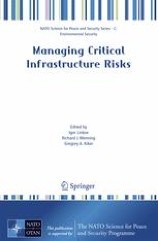
Managing Critical Infrastructure Risks
At the beginning of each year, there is a deluge of top-10 lists on just about every subject you can imagine. A top-10 list of biggest news stories, best-selling books, most popular music and movies, richest companies, and best places to visit or live. It seems everyone has his or her own top-10 list, reflecting, perhaps, differences in regional, national, and cultural values. Companies and governments most often tend to focus their top-10 lists on economic priorities, or priorities related to national defense, security, public health, and new infrastructure. This year, 2007, was no exception. Yet, increasingly, we see governments, private organizations, and companies advocating a new type of prioritization. This framework needs to reach beyond the realms of economics, world trade, and corporate management to include the environment, stakeholders, public preferences, and social goals. Moreover, corporations and individuals are not only interested in generic 10-best lists; they want lists tailored to their values, goals, and current economic and social state. For example, the U. S.
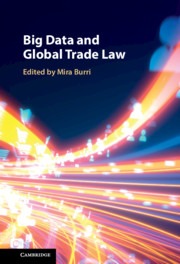
Big Data and Global Trade Law
Explores the relevance of global trade law for data, big data and cross-border data flows. Contributing authors from different disciplines including law, economics and political science analyze developments at the World Trade Organization and in preferential trade venues by asking what future-oriented models for data governance are available and viable in the area of trade law and policy. The collection paints the broad picture of the interaction between digital technologies and trade regulation as well as provides in-depth analyses of critical to the data-driven economy issues, such as privacy and AI, and different countries' perspectives.

Access to medicines and vaccines : Implementing flexibilities under intellectual property law
This book is the outcome of a Global Forum on Innovation, Intellectual Property and Access to Medicines held in December 2019 at the Max Plank Instititute in Munich, organised by the South Centre and the Max Plank Institute. The academics and experts from international organisations participating have contributed chapters to this book. The book is for policy makers (in Ministries of Health, Ministries of Trade, Ministries of Foreign Affairs, patent offices), but also relevant for academics (law, trade, public health), on the flexibilities available in the Agreement on Trade Related Aspects of Intellectual Property Rights (TRIPS) of the World Trade Organization to promote access to medicines.
