



Page 1
Page 1
International Perspectives on Natural Disasters : Occurrence, Mitigation, and Consequences
Reports of natural disasters fill the media with regularity. Places in the world are affected by natural disaster events every day. Such events include earthquakes, cyclones, tsunamis, wildfires – the list could go on for considerable length. In the 1990s there was a concentrated focus on natural disaster information and mitigation during the International Decade for Natural Disasters Reduction (IDNDR). The information was technical and provided the basis for major initiatives in building structures designed for seismic safety, slope stability, severe storm warning systems, and global monitoring and reporting. Mitigation, or planning in the event that natural hazards prevalent in a region would suddenly become natural disasters, was a major goal of the decade-long program. During the IDNDR, this book was conceptualized, and planning for its completion began.

Forest and Rangeland Soils of the United States Under Changing Conditions : A Comprehensive Science Synthesis
This book synthesizes leading-edge science and management information about forest and rangeland soils of the United States. It offers ways to better understand changing conditions and their impacts on soils, and explores directions that positively affect the future of forest and rangeland soil health.
Climate-Smart Food
This book asks just how climate-smart our food really is. It follows an average day's worth of food and drink to see where it comes from, how far it travels, and the carbon price we all pay for it. From our breakfast tea and toast, through breaktime chocolate bar, to take-away supper, Dave Reay explores the weather extremes the world’s farmers are already dealing with, and what new threats climate change will bring. Readers will encounter heat waves and hurricanes, wildfires and deadly toxins, as well as some truly climate-smart solutions. In every case there are responses that could cut emissions while boosting resilience and livelihoods. Ultimately we are all in this together, our decisions on what food we buy and how we consume it send life-changing ripples right through the global web that is our food supply.
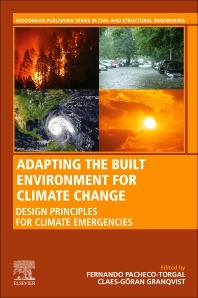
Adapting the built environment for climate change : Design principles for climate emergencies
Adapting the Built Environment for Climate Change: Design Principles for Climate Emergencies analyzes several scenarios and proposes various adaptation strategies for climate emergencies (heat waves, wildfires, floods, and storms). Divided into three themes, the book offers an organized vision of a complex and multi-factor challenge. It covers climatic resilience and building refurbishment, implications for service life prediction and maintainability, and climate adaptation in the maintenance and management of buildings. Sections cover infrastructure materials, climate emergency adaptation and building adaptation to heat waves, wildfires, floods and storms.
