



Page 1
Page 1

Nature-Based Flood Risk Management on Private Land : Disciplinary Perspectives on a Multidisciplinary Challenge
This book addresses the various disciplinary aspects of nature-based solutions in flood risk management on private land. In recent decades, water management has been moving towards nature-based solutions. These are assumed to be much more multi-purpose than traditional “grey infrastructures” and seem to be regarded as a panacea for many environmental issues. At the same time, such measures require more – and mostly privately owned – land and more diverse stakeholder involvement than traditional (grey) engineering approaches. They also present challenges related to different disciplines. Nature-based solutions for flood risk management not only require technical expertise, but also call for interdisciplinary insights from land-use planning, economics, property rights, sociology, landscape planning, ecology, hydrology, agriculture and other disciplines to address the challenges of implementing them. Ultimately, nature-based flood risk management is a multi-disciplinary endeavor.

Monitoring and Modelling Lakes and Coastal Environments
Habitat environments of lakes and coastal wetlands are deteriorating due to their exploitative use and improper management. As rapid development and population growth continue in coastal areas, environmental degradation and over exploitation will further erode the biodiversity and undermine the productivity of these unique ecosystems. An earnest attempt has been made in the present book to find ways for restoration, conservation and management of lakes and coastal wetlands.

Integration of Information for Environmental Security : Environmental Security - Information Security - Disaster Forecast and Prevention - Water Resources Management
Currently the necessary information exists in a multitude of forms and formats geographically and physically scattered over different countries, institutes and organisations, and are subject to widely different data policies and management schemes. Moreover, there is no complete and updated overview of the existing information, e.g. in the form of a metadata catalogue. As a result, integration of this information in case of emergencies has proven to be extremely difficult, if not impossible. Although in some cases, interesting and impressive "demonstrations" have been shown of the possibilities of the integration of information, for a number of reasons these have reached the "operational" stage.

Integrated Water Management : Practical Experiences and Case Studies
This book introduced a whole range of specific definitions, objectives and constraints regarding the various aspects of water management, including water quality management, policies, economic aspects, ecology, price, and sustainable development. These issues all require the formulation of common, integrated, sustainable approaches for managing the water system from a multidisciplinary perspective, and the definition of new professional skills, requirements which become even more evident where transboundary areas are concerned.

Integrated River Basin Management through Decentralization
Drawing upon a worldwide survey of river basin organizations and in-depth studies of eight river basins in a variety of locations around the globe, this book examines how institutional arrangements for managing water resources at the river-basin level have been designed and implemented, what the impetus for these arrangements has been, and what institutional features appear to be associated with greater or lesser success in river basin management.

Implementing Integrated Water Resources Management in Central Asia
This volume reproduces the proceedings of an Advanced Research Workshop held in Bishkek, which brought together all the most senior water resource managers in Central Asia, from Ministers to local experts and eminent academics.

Groundwater Management in Asian Cities : Technology and Policy for Sustainability
The number of city dwellers who do not have access to piped water and rely on groundwater is also increasing. In many Asian cities, groundwater is not only the source of domestic water but also an important resource for industrial development, making better management of groundwater resources essential for sustainable development. Because groundwater is easier to access and costs less than water from piped systems, groundwater abstraction cannot be easily regulated. Policies for groundwater management adopted in Japan and other Asian countries are compared, and technologies for efficient use of groundwater are elucidated. Groundwater contamination is also a serious problem that exacerbates water scarcity in Asian cities. Case studies illustrate the cause and consequences of naturally occurring contaminants such as arsenic and fluoride, and groundwater contamination due to anthropogenic contaminants is described. Also discussed are technologies for treating contaminated groundwater to reduce the health risks of drinking contaminated groundwater.
Governance of Arctic Shipping : Rethinking Risk, Human Impacts and Regulation
This is a result of the Dalhousie-led research project Safe Navigation and Environment Protection, supported by a grant from the Ocean Frontier Institute’s the Canada First Research Excellent Fund (CFREF).

Governance for drought resilience : Land and water drought management in Europe
This book will aid regional water authorities and other relevant stakeholders interested in governance assessment, whether that context is about water, more specifically about drought or flooding events, or other environmental issues. Further, the GAT can and has also been applied more broadly to a range of governance contexts for water management and beyond.

Freshwater Governance for the 21st Century
The objective of this book is to broadly illustrate the key aspects of water governance, mapping the spectrum of decision-making from techno-centric and eco-centric approaches, to hybrid concepts and people-centric approaches. Topics covered include the challenges for water-governance models, the polycentric model, the integration challenge, water in the decision-making hierarchy, and the rise of water-sensitive design, while also taking into account interdependencies between stakeholders, as well as the issue of scale.

Flood Risk Management in Europe : Innovation in Policy and Practice
This valuable edition brings together 26 peer reviewed articles on technical, socio-economic, environmental and policy aspects of flood risk management. These articles contribute to the five sections with the general themes: i) flood risk management practice, ii) flood events and impacts, iii) flood analysis and modelling iv) flood forecasting and v) flood risk management policy. Some emerging technologies are presented and several future challenges are identified.

European water law and hydropolitics : An inquiry into the resilience of transboundary water governance in the European Union
provides the first comprehensive assessment of the various issues faced by countries in the European Union, where progressing climate change and urbanization pose significant cooperative challenges in a large number of river basins. Conducting a thorough analysis of the intricate web of EU water governance, it reveals that the hydropolitical stability of the European Union is already at risk. Further, given the structural nature of the shortcomings in EU water policy—e.g. the rigidity of the EU’s founding treaties or the institutional complacency of the European Commission— argues that these risks are likely to turn into sources of prolonged conflict, unless EU decision-making bodies take steps to address the new hydrological realities early on.

European Large Lakes Ecosystem changes and their ecological and socioeconomic impacts
Large lakes offer socio-economic benefits and can be used in many ways, and are often areas in which economic, cultural and political interests overlap. In this book the problems regarding the present status of European large lakes and the directions of change are discussed. Threats caused by direct human impact and by climate change, protection needs and restoration measures are considered.
Environmental Governance of the Baltic Sea
This edited volume presents a comprehensive and coherent interdisciplinary analysis of challenges and possibilities for sustainable governance of the Baltic Sea ecosystem by combining knowledge and approaches from natural and social sciences. Focusing on the Ecosystem Approach to Management (EAM) and associated multi-level, multi-sector and multi-actor challenges, the book provides up-to-date descriptions and analyses of environmental governance structures and processes at the macro-regional Baltic Sea level.

Eating, Drinking: Surviving : The International Year of Global Understanding - IYGU
This publication addresses the global challenges of food and water security in a rapidly changing and complex world. The essays highlight the links between bio-physical and socio-cultural processes, making connections between local and global scales, and focusing on the everyday practices of eating and drinking, essential for human survival. Written by international experts, each contribution is research-based but accessible to the general public.

Coping with Water Deficiency : From Research to Policymaking
In line with the Water Framework Directive, this book stresses the need for an Integrated Water Resources Management (IWRM) approach to balance the competing demands on water-domestic, agricultural, industrial, tourism and environmental/ecological- and promote economically efficient, socially equitable and environmentally sustainable water use in selected regions from Southern Europe, the Mediterranean and the developing world. Results from the research projects covered by this book, demonstrate that effective water management tools and decisions-making practices, are needed in order to complement integrated interventions for increasing the availability of supply and/or managing the growing demand for scarce water supplies. Further, the book attempts to bridge the gap between ideas and actions endorsed at the research-oriented environmental debate, and their translation into policy making structures and programs in developed and developing countries.
Louisiana's response to extreme weather : A coastal state's adaptation challenges and successes
Takes an in-depth look at Louisiana as a state which is ahead of the curve in terms of extreme weather events, both in frequency and magnitude, and in its responses to these challenges including recovery and enhancement of resiliency.
Knowing the Salween River : Resource Politics of a Contested Transboundary River
Focuses on the Salween River, shared by China, Myanmar, and Thailand, that is increasingly at the heart of pressing regional development debates. The basin supports the livelihoods of over 10 million people, and within it there is great socio-economic, cultural and political diversity. The basin is witnessing intensifying dynamics of resource extraction, alongside large dam construction, conservation and development intervention, that is unfolding within a complex terrain of local, national and transnational governance. With a focus on the contested politics of water and associated resources in the Salween basin, this book offers a collection of empirical case studies that highlights local knowledge and perspectives. Given the paucity of grounded social science studies in this contested basin, this book provides conceptual insights at the intersection of resource governance, development, and politics of knowledge relevant to researchers, policy-makers and practitioners at a time when rapid change is underway.
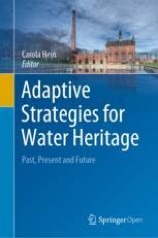
Adaptive Strategies for Water Heritage: Past, Present and Future
This book, building on research initiated by scholars from the Leiden-Delft-Erasmus Centre for Global Heritage and Development (CHGD) and ICOMOS Netherlands, presents multidisciplinary research that connects water to heritage.
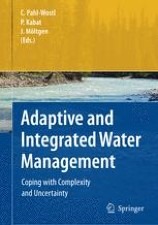
Adaptive and Integrated Water Management : Coping with Complexity and Uncertainty
Includes selected contributions on conceptual and methodological innovations and empirical insights from case studies on important themes such as multi-level governance, change management, vulnerability assessment, environmental flows, uncertainty analysis and the impacts of climate change. The book addresses a wide interdisciplinary audience of scientists and professionals from academia, industry, and involved in policy making.
