



Page 1
Page 1

Information visualization : Human-centered issues and perspectives
This book is the outcome of the Dagstuhl Seminar on "Information Visualization -- Human-Centered Issues in Visual Representation, Interaction, and Evaluation" held at Dagstuhl Castle, Germany, from May 28 to June 1, 2007.Information Visualization (InfoVis) is a relatively new research area, which focuses on the use of visualization techniques to help people understand and analyze data.This book documents and extends the findings and discussions of the various sessions in detail.
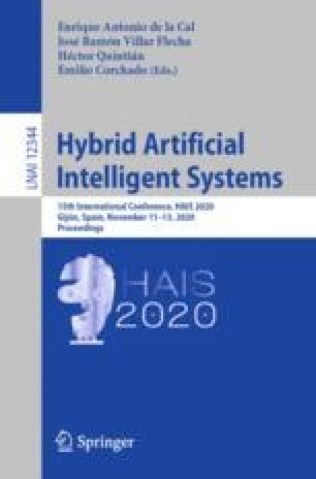
Hybrid Artificial Intelligent Systems ; 15th International Conference, HAIS 2020, Gijón, Spain, November 11-13, 2020, Proceedings
This book constitutes the refereed proceedings of the 15th International Conference on Hybrid Artificial Intelligent Systems, HAIS 2020, held in Gijón, Spain, in November 2020. The 65 regular papers presented in this book were carefully reviewed and selected from 106 submissions. The papers are grouped into these topics: advanced data processing and visualization techniques; bio-inspired models and optimization; learning algorithms; data mining, knowledge discovery and big data; and hybrid artificial intelligence applications.

GPU-Based Interactive Visualization Techniques
This book focuses on efficient visualization techniques, which are the prerequisite for the interactive exploration of complex data sets. High performance is primarily achieved by devising algorithms for the fast graphics processing units (GPUs) of modern graphics hardware. Other aspects discussed in the book include parallelization on cluster computers with several GPUs, adaptive rendering methods, multi-resolution models, and non-photorealistic rendering techniques for visualization. Covering both the theoretical foundations and practical implementations of algorithms, this book provides the reader with a basis to understand and reproduce modern GPU-based visualization approaches.

Earthquake disaster simulation of civil infrastructures : From tall buildings to urban areas
Covers a range of numerical modeling approaches, higher performance computation methods, and high fidelity visualization techniques for earthquake disaster simulation of tall buildings and urban areas. It also demonstrates successful engineering applications of the proposed methodologies to typical landmark projects (e.g., Shanghai Tower and CITIC Tower, two of the world's tallest buildings; Beijing CBD and San Francisco Bay Area).

Data visualization and analysis in second language research
This introduction to visualization techniques and statistical models for second language research focuses on three types of data (continuous, binary, and scalar), helping readers to understand regression models fully and to apply them in their work. Garcia offers advanced coverage of Bayesian analysis, simulated data, exercises, implementable script code, and practical guidance on the latest R software packages.

Knowledge mining : Proceedings of the NEMIS 2004 final conference
The book presents results from the application of knowledge mining techniques in various sector of the academic and indystrial research. The results are increased scientific understanding along with improvements in research quality and value.
Block Copolymers II
Block coplolymers have been studied for several decades, a period that has been punctuated by a number of books and review articles on the topic. Despite this history, the subject is far from exhausted and, if anything, has experienced a strong renewal in recent years. This has been speartheaded by a vast variety of new block copolymers, the important development of powerful visualization techniques, AFM in particular, that have become readily available, as well as motivating visions of nanotechnological applications. In this context, this new two-volume book, with its focus on the most recent developments in the area, is timely,
Block Copolymers I
Block copolymers have been studied for several decades, a period that has been punctuated by a number of books and review articles on the topic. Despite this history, the subject is far from exhausted and, if anything, has experienced a strong renewal in recent years. This has been spearheaded by a vast variety of new block copolymers, the important development of powerful visualization techniques, AFM in particular, that have become readily available, as well as motivating visions of nanotechnological applications. In this context, this new two-volume book, with its focus on the most recent developments in the area, is timely
Bioinformatics technologies
Solving modern biological problems requires advanced computational methods. Bioinformatics evolved from the active interaction of two fast-developing disciplines, biology and information technology. The central issue of this emerging field is the transformation of often distributed and unstructured biological data into meaningful information. This book describes the application of well-established concepts and techniques from areas like data mining, machine learning, database technologies, and visualization techniques to problems like protein data analysis, genome analysis and sequence databases. Chen has collected contributions from leading researchers in each area. The chapters can be read independently, as each offers a complete overview of its specific area, or, combined, this monograph is a comprehensive treatment that will appeal to students, researchers, and R&D professionals in industry who need a state-of-the-art introduction into this challenging and exciting young field.
