



Page 1
Page 1
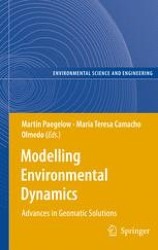
Modelling Environmental Dynamics : Advances in Geomatic Solutions
Modelling environmental dynamics is critical to understanding and predicting the evolution of the environment in response to the large number of influences including urbanisation, climate change and deforestation. Simulation and modelling provide support for decision making in environmental management.

Housing as Intervention : Architecture towards social equity
Across the world, the housing crisis is escalating. Mass migration to cities has led to rapid urbanisation on an unprecedented scale, while the withdrawal of public funding from social housing provision in Western countries, and widening income inequality, have further compounded the situation.

Green new deal landscapes : Architectural design
Explores the principles behind the Green New Deal and how they apply to the architectural and landscape professions. Whatever form the Green New Deal will take and is taking, it will be materialised through infrastructure, buildings, landscapes and various other constructed forms. The contributors to this AD examine the theoretical frameworks and design practices within which the protocols of the Green New Deal could be integrated. Initially, such a goal requires a survey of the available design tools and methodologies necessary to achieve a transition to a decarbonised economy in an equitable manner. The articles feature design practices who are transforming their existing modes of operation to work in environments were fossil fuels are kept well below ground, and to explore renewable forms of local, regional and planetary urbanisation.

Employment Deconcentration in European Metropolitan Areas : Market Forces versus Planning Regulations
Spatial deconcentration of economic activities, particularly the growth of suburban office, retail and entertainment concentrations, has become a prime concern in European metropolitan areas. This book provides a cross-national comparative perspective on employment deconcentration within selected metropolitan areas in Europe. Whereas most debate over urban sprawl and deconcentration is oriented towards the North American context, this book aims at a better understanding of this phenomenon in the European context, emphasizing the location of economic activities rather than residential patterns. It provides insights on whether different governance attributes produce particular forms of deconcentration versus the influence of market attributes and local specificities, also commenting on quality of life impacts and possible governance and policy implications of the deconcentration process. Introduction of a comparative framework is followed by eight case study chapters, three representing northern Europe, three the southern European-Mediterranean region and two post-communist central Europe. Most chapters examine two metropolitan areas, usually a large one and a smaller one. The comparison reveals considerable variations in the magnitude, form, and process of employment deconcentration, only partly in line with expected influences of governance systems. Evidence does not fully confirm an anticipated distinction between Northern and Mediterranean Europe; the Czech Republic and Israel seem to diverge most from prevailing European trends.

Deltas in the Anthropocene
The Anthropocene is the human-dominated modern era that has accelerated social, environmental and climate change across the world in the last few decades. This open access book examines the challenges the Anthropocene presents to the sustainable management of deltas, both the many threats as well as the opportunities.

Asian century … on a knife-edge : A 360 degree analysis of Asia's recent economic development
This book delves into the widely held belief that the 21st century will be the "Asian Century" by examining the Asia's rapid economic development in the post-war era and the challenges it faces in forging ahead of world leaders in the West. The impact of the current turbulent global political climate on Asia is critically analyzed, employing a holistic and multidisciplinary approach, combining economic, social, political and geopolitical perspectives. Written in an accessible style, the book offers students, business, government, and civil society players powerful insights on Asia.

Aquaponics Food Production Systems : Combined Aquaculture and Hydroponic Production Technologies for the Future
This book, written by world experts in aquaponics and related technologies, provides the authoritative and comprehensive overview of the key aquaculture and hydroponic and other integrated systems, socio-economic and environmental aspects. Aquaponic systems, which combine aquaculture and vegetable food production offer alternative technology solutions for a world that is increasingly under stress through population growth, urbanisation, water shortages, land and soil degradation, environmental pollution, world hunger and climate change.
