



Page 1
Page 1

Neighbourhoods in Transition : Brownfield Regeneration in European Metropolitan Areas
This book is focused on the intersection between urban brownfields and the sustainability transitions of metreopolitan areas, cities and neighbourhoods. It provides both a theoretical and practical approach to the topic, offering a thorough introduction to urban brownfields and regeneration projects as well as an operational monitoring tool.
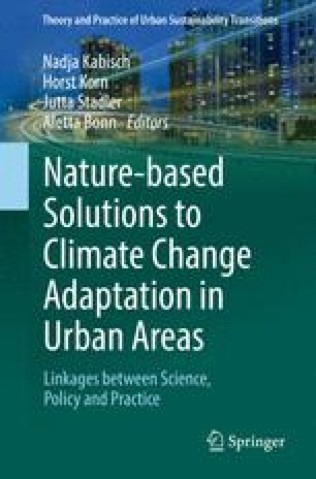
Nature-Based Solutions to Climate Change Adaptation in Urban Areas : Linkages between Science, Policy and Practice
This book is open access under a CC BY 4.0 license.This book brings together research findings and experiences from science, policy and practice to highlight and debate the importance of nature-based solutions to climate change adaptation in urban areas. Emphasis is given to the potential of nature-based approaches to create multiple-benefits for society

Messung von Ressourceneffizienz mit der ESSENZ-Methode : Integrierte Methode zur ganzheitlichen Bewertung = Measuring resource efficiency with the ESSENCE method : Integrated method for holistic evaluation
Develops a reliable method for evaluating the use of resources. This is necessary because the strong economic growth of the last decades has led to an intensive use of natural resources. With their increasing use, there are also additional burdens on the environment and restrictions on the availability of resources. For these reasons, efficient use of resources is required as an important contribution to sustainable development.
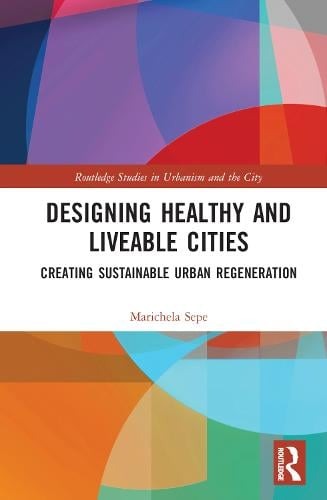
Designing healthy and liveable cities : Creating sustainable urban regeneration
Aim of this book is, after the definition of the field of investigation concerning sustainable regeneration trough topics such as resilience, adaptation, health and mixed connections, to illustrate the present-day approaches to the analysis and design of healthy places, and in particular the original Healthy Pl@ce Design method, flexible and repeatable in different contexts. The method aims at: identifying sustainable urban liveability and healthy and the factors which make places liveable and healthy from the user's point of view and identifying design interventions to enhance or create both urban liveability and health. Emblematic case studies carried out in Europe, USA and China - Bordeaux, Copenhagen, Hamburg, Madrid, Newcastle, Nice, Dublin, Vancouver and Wuhan - constitute the empirical part of the Book detailed with surveys, questionnaires, images and maps.
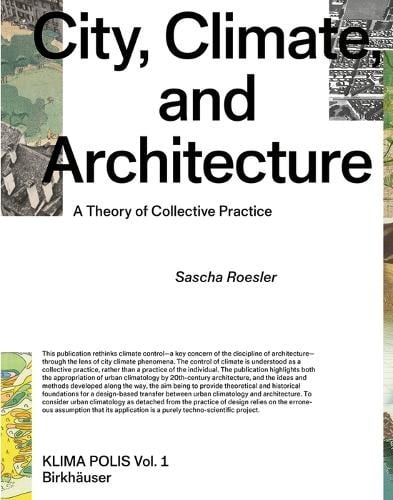
City, climate, and architecture : A theory of collective practice
Based on a history of climate control on urban scales, it promotes the integration of indoors and outdoors in order to reduce environmental and thermal loads in cities. Just as heating and cooling practices inside the buildings are affecting the (urban) climate outdoors, urban heat islands are influencing the energy requirements and thermal conditions inside the buildings. While the first part of the book focuses on the interwar period in Europe, the publication’s second part considers examples from all over the globe, tracing the growing significance of ecological thinking for the design of urban environments.
Advances in Urban Ecology : Integrating Humans and Ecological Processes in Urban Ecosystems
The future of Earth’s ecosystems is increasingly influenced by the pace and patterns of urbanization. One of the greatest challenges for natural and social scientists is to understand how urbanizing regions evolve through the complex interactions between humans and ecological processes. Questions and methods of inquiry specific to our traditional disciplinary domains yield partial views that reflect different epistemologies and understandings of the world. In order to achieve the level of synthesis required to see the urban ecosystem as a whole we must change the way we pose questions and search for answers. Cities are the result of human and ecological processes occurring simultaneously in time and in space and the legacy of the simultaneous processes of the past. Urban ecology is the study of the co-evolution of human-ecological systems. Scholars of both urban systems and ecology must challenge the assumptions and world views within their disciplines and work towards a hybrid theory that builds on multiple world views.
