



Page 1
Page 1

Information and communication technologies in tourism 2022 ; Proceedings of the ENTER 2022 eTourism Conference, January 11-14, 2022
The book provides an extensive overview of how information and communication technologies can be used to develop tourism and hospitality. It covers the latest research on various topics within the field, including augmented and virtual reality, website development, social media use, e-learning, big data, analytics, and recommendation systems. The readers will gain insights and ideas on how information and communication technologies can be used in tourism and hospitality.

Information and communication technologies in tourism 2021 ; Proceedings of the ENTER 2021 eTourism Conference, January 19–22, 2021
This book is the proceedings of the International Federation for IT and Travel & Tourism (IFITT)’s 28th Annual International eTourism Conference, which assembles the latest research presented at the ENTER21@yourplace virtual conference January 19–22, 2021.

Emerging Technologies and Information Systems for the Knowledge Society ; 1st World Summit on the Knowledge Society, WSKS 2008, Athens, Greece, September 24-26, 2008. Proceedings
This book, in conjunction with the volume CCIS 19, constitutes the refereed proceedings of theFirst World Summit, WSKS 2008, held in Athens, Greece, in September 2008.
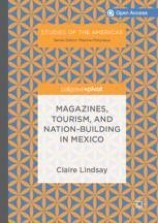
Magazines, Tourism, and Nation-Building in Mexico
This book discusses the relationship between periodicals, tourism, and nation-building in Mexico. It enquires into how magazines, a staple form of the promotional apparatus of tourism since its inception, articulated an imaginative geography of Mexico at a time when that industry became a critical means of economic recovery and political stability after the Revolution. Notwithstanding their vogue, popularity, reach, and close affiliations to commerce and state over several decades, magazines have not received any sustained critical attention in the scholarship on that period.
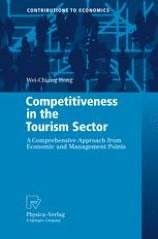
Competitiveness in the Tourism Sector : A Comprehensive Approach from Economic and Management Points
International tourism is expected to be a major vehicle of economic development in industrializing countries in the 21st century, especially for Asia. To generate long-term growth, countries with tourism-based economies must develop strategies for employing their comparative advantages to achieve competitive advantages. However, competitiveness in the tourist industry is multi-dimensional and complex. This study evaluates the competitiveness of the Taiwanese tourism sector by a multi-dimensional framework. The theoretical model proposes that the competitiveness of tourist destinations should be composed of Ricardian comparative advantages (like the conditions of natural endowments and the degree of technological change); Porterian competitive advantages; tourism management, i.e., providing high quality education and job training, public goods, support services and reduced transaction costs to enhance comparative and competitive advantages; and environmental conditions.
