



Page 1
Page 1

Critical practices in architecture : The unexamined
Embraces the idea that in today's complex world, multiple, emerging perspectives are critical to the design fields, the environment, and society. It also brings authors into conversation to focus on the built environment from the perspective of critical practice.
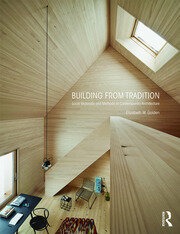
Building from tradition : Local materials and methods in contemporary architecture
Examines the recent resurgence of interest in the handmade building and the use of local and renewable materials in contemporary construction. In the past, raw materials were shaped to provide shelter and to accommodate the cultural, social, and economic needs of individuals and communities. This is still true today as architects, engineers, and builders turn once again to local resources and methods, not simply for constructing buildings, but also as a strategy for supporting social engagement, sustainable development, and cultural continuity. Building from Tradition features global case studies that allow readers to understand how building practices-developed and refined by previous generations-continue to be adapted to suit a broad range of cultural and environmental contexts. The book provides: a survey of historical and technical information about geologic and plant-based materials such as: stone, earth, reed and grass, wood, and bamboo; 24 detailed case studies examining the disadvantages and benefits to using traditional materials and methods and how they are currently being integrated with contemporary construction practices

Architectural styles : A visual guide
A guide to architectural styles across the centuries and around the world. Modeled after an architect's plein air sketchbook, the volume features hundreds of detailed drawings by esteemed architectural illustrator Robbie Polley alongside incisive and informative descriptions. This unique guidebook takes readers from Europe and the Americas to Egypt, China, and India. It covers a host of historical and contemporary architectural styles, from ancient and classical to Pre-Columbian, Romanesque, Renaissance, Palladian, art nouveau, Brutalist, and biomorphic. It describes the histories and characteristics of the building traditions of each era and region of the world, and looks at key architectural elements such as buttresses, spandrels, curtain walls, and oculi. The book also includes a section on building parts-from domes and columns to towers, arches, roofs, and vaulting-along with a detailed glossary and bibliography. Comprehensive and authoritative, 'Architectural Styles' is an essential resource for architects and designers and a must-have illustrated guide for anyone interested in architecture or drawing.
A Language of Contemporary Architecture : An Index of Topology and Typology
Provides an index of ideas, theories, projects, and definitions that string into a methodology for evaluating the contemporary language of architecture described as “contemporism” through a review of topology (form) and typology (system and elements). Trying to answer the postmodern question of how to move beyond modernism through a thread of architectural styles that tried to respond to deficiencies from the modern promise and contextual changes. Yet, the question remains, should this ongoing struggle to move beyond modernism be a stylistic battle? Has the present architectural practice ever left the modernist tendencies, and is there a structure for a contemporary language in architecture?. Presents a collection of highly illustrated projects that have worked under these parameters to break away from modernism in order to present a holistic integration of topology and typology as a language for “contemporism.” The index is illustrated with individual spreads, which can be read sequentially or independently, and encourages the reader to make their own connections. It also includes interviews and contributions from Toyo Ito, Anthony Vidler, Ben van Berkel, Christian Kerez, and Greg Lynn.
