



Page 1
Page 1

Models and methods for management science
Introduces systems science as an entry point to present a basic introduction to research models and methods in management science (operation research). This textbook selects the classic quantitative models and methods as well as rich cases and detailed examples, which are suitable for students with a certain management and economics knowledge for further study, and helps to develop the abilities of using the basic models in real life

Mechanical System Dynamics
This textbook gives a clear and thorough presentation of the fundamental principles of mechanical systems and their dynamics. It provides both the theory and applications of mechanical systems in an intermediate theoretical level, ranging from the basic concepts of mechanics, constraint and multibody systems over dynamics of hydraulic systems and power transmission systems to machine dynamics and robotics.

Introduction to Discrete Event Systems
Introduction to Discrete Event Systems is a comprehensive introduction to the field of discrete event systems, offering a breadth of coverage that makes the material accessible to readers of varied backgrounds. The book emphasizes a unified modeling framework that transcends specific application areas, linking the following topics in a coherent manner: language and automata theory, supervisory control, Petri net theory, Markov chains and queueing theory, discrete-event simulation, and concurrent estimation techniques

Intelligent Organizations : Powerful Models for Systemic Management
This innovative book opens a path to overcoming the crisis of management in the face of complexity. The systems approach on which this work is grounded enables the development of the new kind of intelligent organizations so urgently needed. Powerful models, grounded in organizational cybernetics and system dynamics
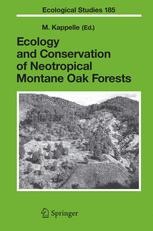
Ecology and Conservation of Neotropical Montane Oak Forests
Covers the range of natural and managed oak forests in the highlands of tropical America. Providing an understanding of ecological patterns and processes that determine the structure and functioning of these forests, this volume aims to serve as a basis for sustainable forest management and biodiversity conservation.

Continuous System Simulation
Continuous System Simulation describes systematically and methodically how mathematical models of dynamic systems, usually described by sets of either ordinary or partial differential equations possibly coupled with algebraic equations, can be simulated on a digital computer.
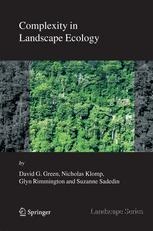
Complexity in landscape ecology
Interactions matter. To understand the distributions of plants and animals in a landscape you need to understand how they interact with each other, and with their environment. The resulting networks of interactions make ecosystems highly complex. Recent research on complexity and artificial life provides many new insights about patterns and processes in landscapes and ecosystems. This book provides the first overview of that work for general readers. It covers such topics as connectivity, criticality, feedback, and networks, as well as their impact on the stability and predictability of ecosystem dynamics. With over 60 years of research experience of both ecology and complexity, the authors are uniquely qualified to provide a new perspective on traditional ecology.
Complex dynamics : Advanced system dynamics in complex variables
Complex Dynamics: Advanced System Dynamics in Complex Variables is a graduate-level monographic textbook. It is designed as a comprehensive introduction into methods and techniques of modern complex-valued nonlinear dynamics with its various physical and non-physical applications.
Cells and Robots : Modeling and Control of Large-Size Agent Populations
Cells and Robots is an outcome of the multidisciplinary research extending over Biology, Robotics and Hybrid Systems Theory. It is inspired by modeling reactive behavior of the immune system cell population, where each cell is considered as an independent agent. In our modeling approach, there is no difference if the cells are naturally or artificially created agents, such as robots. This appears even more evident when we introduce a case study concerning a large-size robotic population scenario. Under this scenario, we also formulate the optimal control of maximizing the probability of robotic presence in a given region and discuss the application of the Minimum Principle for partial differential equations to this problem. Simultaneous consideration of cell and robotic populations is of mutual benefit for Biology and Robotics, as well as for the general understanding of multi-agent system dynamics.The text of this monograph is based on the PhD thesis of the first author. The work was a runner-up for the fifth edition of the Georges Giralt Award for the best European PhD thesis in Robotics, annually awarded by the European Robotics Research Network (EURON).
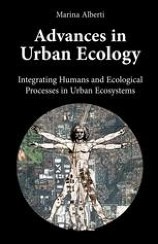
Advances in Urban Ecology : Integrating Humans and Ecological Processes in Urban Ecosystems
The future of Earth’s ecosystems is increasingly influenced by the pace and patterns of urbanization. One of the greatest challenges for natural and social scientists is to understand how urbanizing regions evolve through the complex interactions between humans and ecological processes. Questions and methods of inquiry specific to our traditional disciplinary domains yield partial views that reflect different epistemologies and understandings of the world. In order to achieve the level of synthesis required to see the urban ecosystem as a whole we must change the way we pose questions and search for answers. Cities are the result of human and ecological processes occurring simultaneously in time and in space and the legacy of the simultaneous processes of the past. Urban ecology is the study of the co-evolution of human-ecological systems. Scholars of both urban systems and ecology must challenge the assumptions and world views within their disciplines and work towards a hybrid theory that builds on multiple world views.
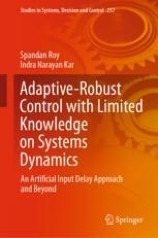
Adaptive-robust control with limited knowledge on systems dynamics : An artificial input delay approach and beyond
investigates the role of artificial input delay in approximating unknown system dynamics, referred to as time-delayed control (TDC), and provides novel solutions to current design issues in TDC. Its central focus is on designing adaptive-switching gain-based robust control (ARC) for a class of Euler–Lagrange (EL) systems with minimal or no knowledge of the system dynamics parameters. The newly proposed TDC-based ARC tackles the commonly observed over- and under-estimation issues in switching gain. The consideration of EL systems lends a practical perspective on the proposed methods, and each chapter is supplemented by relevant experimental data
