



Page 1
Page 1

Natural Disasters as Interactive Components of Global-Ecodynamics
This book opens a new approach to the study of global environmental changes having unfavourable character for mankind and other living systems. The main advantage of the book consists in the accumulation of knowledge from different sciences to parametrize the global ecodynamic process. Natural catastrophes are considered as an interactive element of global natural dynamics which are described by means of simulation models of global nature/society. The realization of this approach allows the integration within a complex structure of all international and national means of environmental monitoring and provides a tool for objective evaluation of the environmental quality. The main purpose of this book is to develop a universal information technology to estimate the state of environmental subsystems functioning under various climatic and anthropogenic conditions.
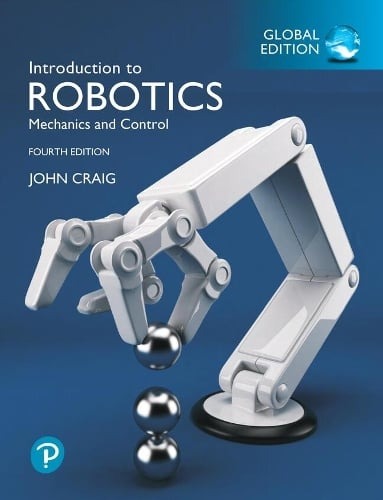
Introduction to robotics : Analysis, control, applications
Offers a guide to the fundamentals of robotics, robot components and subsystems and applications. The author—a noted expert on the topic—covers the mechanics and kinematics of serial and parallel robots, both with the Denavit-Hartenberg approach as well as screw-based mechanics. In addition, the text contains information on microprocessor applications, control systems, vision systems, sensors, and actuators.
Fundamentals of Robotic Mechanical Systems : Theory, Methods, and Algorithms
Fundamentals of Robotic Mechanical Systems, Third Edition addresses robots at large - such as multi-fingered hands, walking machines, flight simulators, and machine tools - that rely on mechanical systems to perform their tasks. The author establishes the foundations on which the design, control, and implementation of the underlying mechanical subsystems are based. The treatment assumes familiarity with some calculus, linear algebra, and elementary mechanics; however, the elements of rigid-body mechanics and linear transformations are reviewed in the first chapters, making the presentation self-contained.

Event-Triggered and Time-Triggered Control Paradigms
Event-Triggered and Time-Triggered Control Paradigms presents a valuable survey about existing architectures for safety-critical applications and discusses the issues that must be considered when moving from a federated to an integrated architecture. The book focuses on one key topic--the amalgamation of the event-triggered and the time-triggered control paradigm into a coherent integrated architecture. The architecture provides for the integration of independent distributed application subsystems by introducing multi-criticality nodes and virtual networks of known temporal properties.

Elastic Multibody Dynamics : A Direct Ritz Approach
This textbook is an introduction to and exploration of a number of core topics in the field of applied mechanics: On the basis of Lagrange's Principle, a Central Equation of Dynamics is presented which yields a unified view on existing methods. From these, the Projection Equation is selected for the derivation of the motion equations of holonomic and of non-holonomic systems. The method is applied to rigid multibody systems where the rigid body is defined such that, by relaxation of the rigidity constraints, one can directly proceed to elastic bodies. A decomposition into subsystems leads to a minimal representation and to a recursive representation, respectively, of the equations of motion.
Lunar and planetary rovers : The wheels of apollo and the Quest for Mars
Provides extensive quotes from the astronauts who drove the LRV on the Moon from interviews conducted especially for the book. It also details new material from interviews of engineers and managers at the Jet Propulsion Laboratory covering the robotic rovers, Sojourner, Sprit and Opportunity. The Foreword is written by David R. Scott, Commander of Apollo 15. Chapter 1: From Concept to Reality; Chapter 2: Lunar Roving Vehicle Subsystems; Chapter 3: Training for the Moon; Chapter 4: To the Hadley Plains; Chapter 4: Mysterious and Unknown Descartes; Chapter 5: Destiny at Taurus-Littrow; Chapter Six: The Quest for Mars-Chapter Seven: The New Vision of Exploration.
Biology and Control Theory : Current Challenges
Creating some links between control feedback and biology modeling communities based on similarities in modeling, observing and perceiving alive structures, and analyzing interconnections between biological structures and subsystems was the main objective of this volume. The idea of this book was conceived in the context mentioned above with the objective to help in claiming many of the problems for control researchers, starting discussions and opening interactive debates between the control and biology communities, and, finally, to alert graduate students to the many interesting ideas at the frontier between control feedback theory and biology.
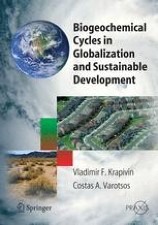
Biogeochemical cycles in globalization and sustainable development
This valuable study of environmental subsystems functioning under various climatic and anthropogenic conditions provides a unique insight into the social context of global changes in biogeochemical cycles and demonstrates current understanding of globalization and sustainable development.

AIU asset management system (Assettracker)
Assets can be defined as something of value that can be converted into cash, as all institutions and companies own assets and the larger the size of the organization, the greater the need to manage its owned assets. Some companies have resorted to manually tracking their assets by making paper data, but later, with the continuation of this approach, it has been noted that these data are largely lacking in organization and create difficulties in searching and tracking the life cycle of each asset separately. Here comes the role of our project, which is a software project based on automating assets and converting them from traditional methods to digital methods with the aim of obtaining the maximum benefit from assets in the organization by avoiding wasting assets, and issuing detailed reports indicating the decision-making process, in addition to the ability to deal with operations Effectively maintain assets.
